
Perspectives
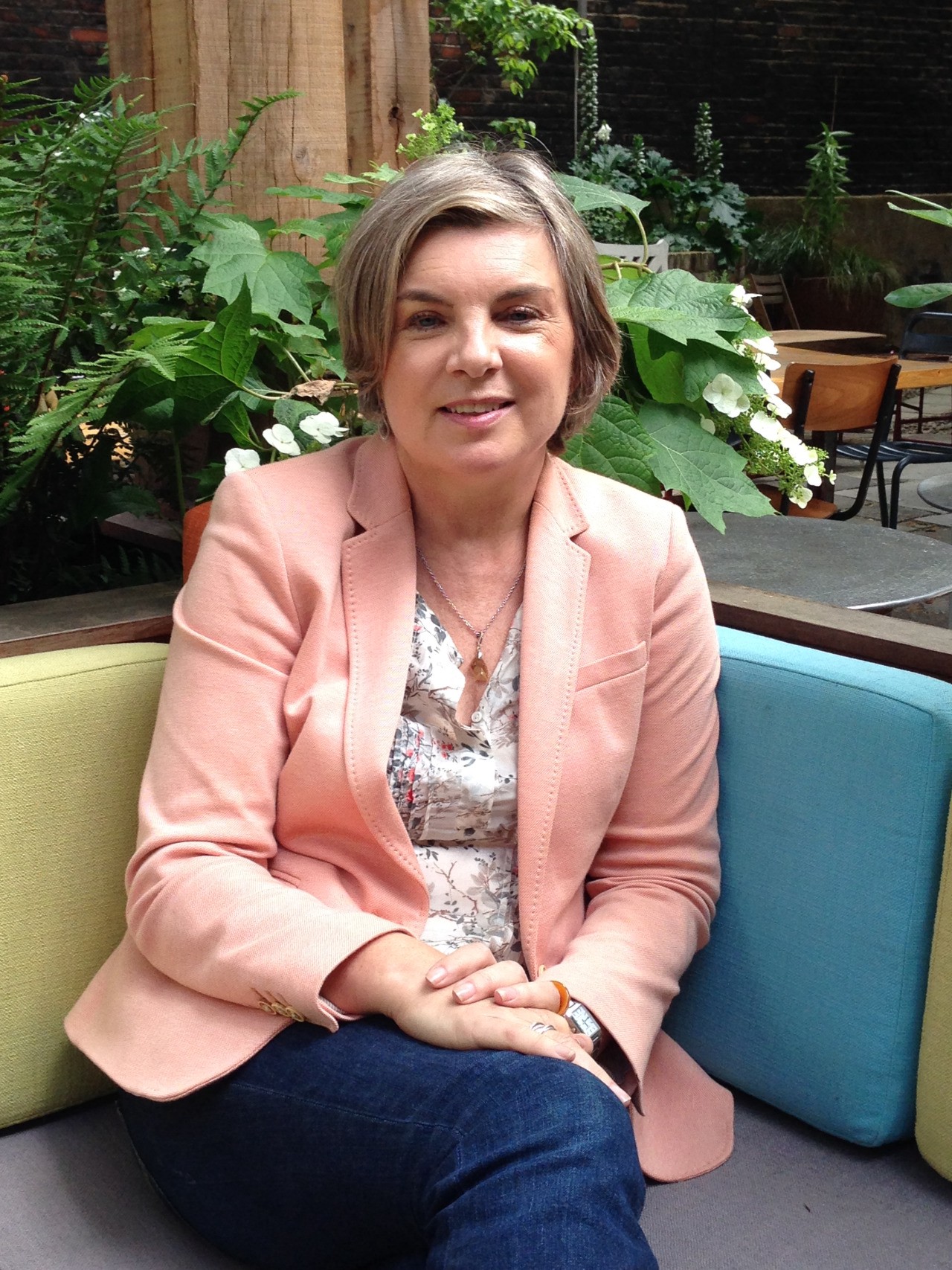
Prof. Lesley Symons
Vol 1, Issue 01, February 2019
Lesley Symons is a Leadership Coach and Facilitator. She is also the founder of ‘The Case for Women’ which promotes women’s leadership and presence in business, business schools and education sector learning tools such as case papers. She is passionate about improving the presence of women at managerial and leadership levels in business and universities.
Lesley: I have been a leadership coach and group facilitator for over 11 years now and founded The Case for Women in 2014. Prior to my coaching experience, I worked for many years in leadership positions in large multinational organisations such as Selfridges, L’Oréal and the Estee Lauder Companies. I have worked across 3 continents.
As a coach, I am predominantly interested in people developing their leadership capabilities. I facilitate workshops on how to develop a leader identity, on gender diversity and speak about my recent research on women’s presence (or lack thereof) in business school case studies. Leadership identity work is shown to assist women to buffer the bias and stereotypes that can occur in the workplace.
I also have a Master’s degree from INSEAD. Whist studying at INSEAD I was struck by the lack of female representation across the campus, in front of the classroom and in the case material handed out on my course and decided to focus my thesis on researching this topic. It’s now become a passion of mine and consequently, a new business! My Thesis “Where are the women leaders? Invisible selves: writing women leaders into business school case papers” (2014) is the subject of a Harvard blog and has been published by INSEAD. Through The Case for Women I want to advocate for increased presence of women in business school case studies, business schools and the higher education sector in general where women are grossly under-represented. I really hope that by doing this I can make a difference in getting the message out that this is an area where we need to see change and a healthier gender balance.
Lesley: The reason why the research attracted attention was due, I believe, to this research being the first of its kind to look in-depth at the overt and covert messages business school case studies are sending students. Secondly the outcome of the research was so shocking – women are not present in management case studies. In fact, when they are depicted, it is from either marginalised communities or from the world of modelling and media. There were few female leaders or managers represented. Finally there is a drive to get more women into leadership positions and on boards. Business schools are in a unique position to foster this development. Case studies are the main area of learning for MBA students. Together with a lack of female students, female professors and board members at business schools, students are not reading, seeing or hearing women in leadership roles, which can have a hugely negative impact on their future as leaders and for their organisations.
Lesley: I was most flattered to be asked and honoured to co-write a case paper with Debapratim Purkayastha. This was really my first experience of writing a paper in an area of which I had been highly critical of! That of case papers!
The topic though immediately grabbed my attention. The case What’s Good for the Goose is Good for the Gander? is about a female (Jill Abramson) leader in a male dominated environment. She was the first women to be promoted to the head of this organisation - The New York Times. She was also the first leader to be sacked in the way she was. The abrupt firing raised questions on gender disparity, discrimination in salaries and incentives. It was quite clear on investigating this case that all the first and second generation biases seemed to be present. It was also clear that Abramson had learnt her leader style from being the “visible other” in the business and thus took on some of the social culture aspects of the organisation. Thus, she led in quite a masculine way. Thus she hit the double bind of not being liked.
This case enabled me to really dig deep in to the social, cultural and deep gender issues that play out in an organisation. It really highlights the potential pitfalls for women leaders.
Initially I found the process of writing the case/teaching note really difficult. It was only after I realised that there was so much to write about and that it was all useful and meaningful to the case that I was able to write. It took many attempts and iterations. Thankfully with Debapratim's guidance I think it worked.
There are not enough cases like this- Cases that bring out the somewhat “darkside” or unspoken topics within or around organisations and their cultures.
This is a useful case for both men and women to reflect on and debate. Particularly around bias, organisational culture and gender issues at leader level.
Lesley: This is a big question. Even in the most egalitarian societies women experience bias in the workplace. In fact we all experience bias in some way. However because the overriding “norm” in business and the business world is that managers are men at all levels women in those positions in some way experience bias. Therefore being able to practice new skills in the workplace is particularly hard for women. Women are often judged much more harshly than men and therefore this makes it difficult for women to take risks and to make mistakes which are critical for growing and learning.
When starting out in the workplace, women often don’t recognise bias and the stereotypes. Most commonly the second generation biases that are the most pernicious. Second-generation gender bias describes practices and patterns that appear gender neutral but in fact benefit men and put women at a disadvantage.
These can include: lack of role models, few women in leadership positions, work practices and structures that are inflexible, lack of sponsors and environments that are predominantly male.
No wonder more and more women are opting out and setting up their own companies.
Things get worse for women as they rise up the corporate ladder (or glass elevator) as they become more and more “visible”. Visibility comes from being “not the norm” or being different to most leaders, who are men. Thus women often want to fit into the norm which can often mean they take on leadership attributes that are masculine (or of the majority). This then leads to the double-bind effect. For instance if as a women leader you are “nice” and people like you then you are often deemed incompetent however if you are assertive you are disliked but deemed competent.
Women also experience all the bias around working as potential mothers, as mothers or as carers. If we could just make the workplace more flexible for men and women alike I think we would see real change here.
Last and definitely not least, one of the biggest challenges for women is to receive equal pay for equal work. Transparency around salaries would go a long way to rectify this.
Lesley: I encountered bias as most women do however in places I had not expected to. Once I had made the decision to study for a master’s degree I was so excited to find a course at INSEAD. INSEAD is listed in the top ten business schools in the world. My excitement however soon turned to amazement—amazement tinged with a little (okay a lot) of frustration. Walking around the campus, I wondered where the other female students were. In the class room - where were the women professors? Although 48% of students on my course were women, it was clear that most other courses did not share this gender balance. After a while, I also noticed the lack of case material that featured women as a leader or manager, or even mentioned women at all. In fact, across my eight modules studied, I read one paper with a woman in it and as the leader she doubted herself instead of exhibiting confidence or strong leadership! Where was I? Why was I being taught the latest in leadership theory and not seeing women anywhere? I had nothing that showed a possible “me” in the course material, in front of the class or on campus.
At work, I experienced bias. I especially experienced it after having my child and going back to work. I experienced inflexible work hours, many days away from home and meetings being called late into the evening. I also had an incident of being paid a bonus of much less than my male general manager counterparts despite having the most successful year of all.
Lesley: The lack of women on business school campuses, in front of the class room and in case papers made it easy for me to decide where to focus the topic of my thesis. I couldn’t believe that institutions that propose to teach students how to lead were not showing a balanced gender view of leadership. I made a decision then and there to focus my thesis on the presence of women in business school case studies. What I found was astounding:-
Across the five years and 53 different case studies, women are simply absent in 45%, or 24 of them. Women feature as a protagonist in only seven case studies. Moreover, two of the seven women protagonists, both of whom are from award-winning cases (on Levendary Cafe and United Cereal), were actually men; the case author, who felt there weren’t enough cases featuring women, simply changed the name, and therefore the sex of the protagonist.
Taking this into consideration, only five of the 53 award-winning and best selling cases actually describe the leadership of an actual women protagonist – about 9%. But counting the number of protagonists is only scratching the surface. We identified four key areas where gender plays a huge role:
- Women protagonists are mostly found in “pink” industries, organizations, or roles.
- They are often the only woman in a significant role described in the case study.
- They are described in less depth and length than important male protagonists described within the same case study.
- Not a single teaching note for the case studies with women protagonists raised the issue of gender as a point of relevance or discussion. These teaching notes are widely used to guide instructors on how to approach the cases in the classroom.
I have thus set up The Case for Women to champion the change in business school case studies and in schools in general. I am passionate about women seeing themselves in print when reading about business. I must admit however I am finding it hard as I am getting many people from the institutions agreeing with me on the problem however very little action being taken to change.
The situation in the workplace for me was a little different to above. I was ignorant and blind to the “gender pay gap” situation. I believed I was getting a fair reward for achieving my set KPI’s by the company. I didn’t question what others were being paid. In truth it was the fact that I was reporting into the local market as well as also reporting into the global head office in New York. It was my boss in New York who asked the question of my direct local manager. I had no knowledge of this until I was told my bonus and pay was to be adjusted to be in line with others.
The lesson for me here was firstly you need sponsors - someone looking out for you and secondly – get with it, be aware that gender bias exists and take it into consideration with everything you do and everything you hear.
Lesley: Oh, goodness where do we start? :-) First and foremost recognising that bias exists is really important. Recognising your own bias and being open to what biases your work colleagues may have. When women don’t recognise the bias of others they can often “feel” that something is not quite right. However often they look inwards at what they are doing instead of looking outwards to what is happening unconsciously and consciously around them.
Take responsibility for your career. Ask questions of yourself such as: where do I want to go? who am I? How do I want to lead? What is my bigger meaning for being a leader? From this then what skills do I need to acquire?
Get politically savvy: get sponsors, mentors and a coach if needs be. Network, join societies and clubs that may help you meet the people you need to know.
Be yourself but also realise that when practising new skills you may feel “inauthentic” initially but keep going through this until the new skill has been integrated into who you are.
Lesley: Clumping women into diversity programs is not working. As customers, students and members of the talent pool and overall population women are not a minority. Women are the majority. When did gender diversity or to that fact any diversity become that which is different to white, middle class men?!
How do organizations change this? The latest thought is that both genders need to be involved in the solution at all levels of the organization. Gender issues in the workplace are not a female problem it is a business issue. In fact it is critical to get men involved otherwise change just won’t happen. Enabling women to reach their full potential in the workforce is becoming an economic imperative.
The underlying philosophy is that a commitment to “gender balanced” organizations needs to be driven through all parts of an organization. How can organizations get all areas of the business gender balanced?
My thoughts are informed by Women Mean Business by Avivah Wittenberg-Cox and Bridging the Gender Gap by Roseberry & Roos.
The cornerstone to beginning the journey is as follows:-
At the beginning:-
-
Recognize the importance of being gender balanced to the business model
- It’s an economic imperative
- It’s fair – it’s right
-
Leaders behind it
-
Leaders responsible for driving the change through the organization
- Men with women both involved in driving change
-
Leaders responsible for driving the change through the organization
-
Get going:-
-
Gender audit
- Do a comprehensive audit of the organization’s gender balance
- Audit bias and stereotypical thinking
- Pay audit
-
Gender audit
-
Let’s do it
-
Training
- Train on biases and stereotypes
- Re-align hiring polices/ HR polices
- Sell the benefits to all/ explain what is happening
- Assist women with assertive and confidence building programs
-
Have a plan and track it
- Plan how to change the divide/ have achievable goals
- Get all involved
- Track progress per area- make all responsible
- Publish it — hold yourself accountable to your staff/ customers/ business partners/ shareholders
-
Training