
Coke: Ethical Issues
🌐 International Buyers — Pay via PayPal
Details
BECG014
12
2002
YES
0
The Coca-Cola Company
Food & Beverage
US
Accountability
Abstract
The case discusses the crisis faced by Coke in Europe when people fell ill after consuming its products. The case also brings out the ethical dimensions involved in Coke’s exclusive school contracts, which was done to promote soft drink sales among school children. The case is designed to help students critically analyse the ethical issues involved during Coke’s European crisis and the exclusive school contracts controversy in the US. Students must appreciate the role of sound ethics in doing business.
Learning Objectives
The case is structured to achieve the following Learning Objectives:
- Unethical Practices by companies.
Contents
“Our product is quite healthy. Fluid replenishment is a key to health. Coke does a great service because it encourages people to take in more and more liquids.”
- Michael Douglas Ivester, Coke’s Chairman and CEO.
“Public schools are funded by the public to educate the children as provided by state law. It is totally inappropriate that its facilities and employees are being used by corporations to increase their own profits on public time and with public dollars.”
- Dr. Brita Butler-Wall, Executive Director, Citizens’ Campaign for Commercial-Free Schools, US.
On June 13, 1999, Coca-Cola (Coke) recalled over 15 million cans and bottles after the Belgian Health Ministry announced a ban on Coke?s drinks, which were suspected of making more than 100 school children ill in the preceding six days. This recall was in addition to the 2.5 million bottles that had already been recalled in the previous week. The company?s products namely Coke, Diet Coke and Fanta had been bottled2 in Antwerp, Ghent and Wilrijk, Belgium while some batches of Coke, Diet Coke, Fanta and Sprite were also produced in Dunkirk, France.
Children at six schools in Belgium had complained of headache, nausea, vomiting and shivering which ultimately led to hospitalization after drinking Coke's beverages. Most of them reported an 'unusual odor' and an 'off-taste' in the drink. In a statement to Reuters, Marc Pattin, a spokesman for the Belgian Health Ministry explained the seriousness of the issue: “Another 44 children had become ill with stomach pains, 42 of them at a school in Lochristi, near Ghent, northwest Belgium. We have had five or six cases of poisoning of young people who had stomach pain after drinking (the suspect beverages).”
In the same week, the governments of France, Spain and Luxembourg also banned Coke's products while Coke's Dutch arm recalled all products that had come from its Belgium plant. The entire episode left more than 200 Belgians and French, mostly school children, ill after drinking the Coke produced at Antwerp and Dunkirk. The company had to assure its British customers that the products made in its UK factories were safe. By June 15, 1999, Coke had recalled about 30 million cans and bottles, the largest ever product recall in its 113-year history. For the first time, the entire inventory of Coke?s products from one country were banned from sale.
As part of a damage control exercise, Coke sent a team of scientists to Europe. During its visit to Europe after a week of these incidents, Coke?s chairman and CEO Michael Douglas Ivester said, “We deeply regret any problems encountered by our European consumers in the past few days.” Coke Belgium even announced that it would reimburse the medical costs for people who had become ill after consuming its products. The recall had a significant negative impact on Coke's financial performance with its second-quarter net income coming down by 21% to $942 million. Moreover, the entire operation cost Coke $103m (£66m) while its European bottling venture showed a 5% fall in revenues.
Analysts felt that the Belgium recall was one of the worst public relations problems in Coke's history. One analyst alleged that the company had information about people who had become ill weeks prior to the above incidents. Coke had an opportunity to disclose this information but it did not do so. He blamed Coke for being unethical in not disclosing the information, “The instinct is to pull information in, and that is almost always wrong. The right move is to focus on the health of the customer. Even though you don't think this information is relevant, you should get it out –because that allows people who might think it is relevant to go through whatever process they want to go through. Coke might have done a lot more than it did in the opening days of the crisis.” Another issue, which worried analysts, was the illness caused to the innocent school children. They blamed Coke's promotion strategy to sell soft drinks to school children which had raised lot of controversies in the US.
Dr. John Pemberton, an Atlanta-based pharmacist, developed the original formula of Coke in 1886. It was based on a combination of oils, extracts from coca leaves (cola nut) and various other additives. The ingredients were refined to create a refreshing carbonated soda. Pemberton's bookkeeper, Frank Robinson, suggested that the product be named 'Coca-Cola'. He even developed a way of lettering Coca-Cola in a distinctively flowing script. On May 8, 1886, Coke went on sale for the first time in the Joe Jacobs Drug Store. The first Coke advertisement appeared in 'The Atlanta Journal' on May 29, 1886. Pemberton, with modest help from several investors, spent $73.96 on advertising, but was able to sell only 50 gallons of syrup at $1 per gallon. The product slowly gained acceptance after a heavy outpouring of free sample drinks.
In 1888, after Pemberton's death, Asa Candler, Pemberton's friend and a wholesaler druggist purchased a stake in the company. Coke sales soared even without much advertising and as many as 61,000 servings (8 ounces) was sold during 1889. Sensing the potential of the business, Candler decided to wind up his drug business and be associated with the Coke full time. As the business expanded, Candler also increased the advertising outlay. By 1891, Candler had complete control of Coke for $2,300. In 1892, Candler formed 'The Coca-Cola Company' and, a year later, registered 'Coca-Cola' as a trademark. Only Candler and associate Robinson knew the formula. It was then passed on by word of mouth and became known as the 'most closely guarded secret in the American industry'. Despite occasional rumors, company sources maintained that cocaine was not an ingredient in Coke's formula.
By 1895, Coke was sold in all parts of the US, primarily through distributors and fountain owners. When it was first launched, Coke had been advertised as a drink, which relieved mental and physical exhaustion, and cured headache. Later, Candler and Robinson repositioned Coke as a refreshment drink.
In the beginning of the 20th century, corporations in the US drew flak for promoting adulterated products and resorting to misleading advertising. Coke was an ideal target for such attacks. The US government passed the Pure Food and Drugs Act in June 1906. A case was registered against Coke and the trial, which opened in March 1911, attracted widespread attention. Coke, eventually, won the case. The decision, however, was reversed in the Supreme Court. Finally, the case was settled out of court in 1917 with Coke agreeing to reduce the caffeine content by 50%.
In 1919, Coke was sold to an investment group headed by Ernest Woodruff for $25 million – $10 million in cash and $15 million in preferred stock. Woodruff's major decision after taking over was the establishment of a Foreign Department to make Coke popular overseas. While expanding in foreign markets, Coke faced several problems. Initially, it had to rely on local bottlers who did not promote the product aggressively, or on wealthy entrepreneurs who were unfamiliar with the beverages business. The company also faced problems regarding government regulations, trademarks registration, languages, and culture.
By 1927, Coke's sales climbed to nearly 23 million gallons. Even though Pepsi Cola emerged as a major competitor to Coke in the 1930s, Coke continued to do well and flourished during the war. By the time the US entered the Second World War, Coke was over fifty years old and well established.
In 1962, Paul Austin (Austin) became Coke's tenth president and four years later, became the chairman and CEO of the company. One of Austin's first initiatives was the launch of a diet drink. By 1965, soft drink sales in the US had risen to the level of 200 drinks per capita and Coke's market share had risen to 41% against Pepsi's 24%. In 1964, Coke also acquired a coffee business. The company developed drinks with new flavors and also targeted food chains, which were fast gaining popularity.
In the 1970s, Coke faced stiff competition from Pepsi. Pepsi's advertising budget exceeded that of Coke. In 1978, figures also revealed that Pepsi had beaten Coke in terms of supermarket sales with its dominance of the vending machine and fountain outlets. Coke also faced problems in the 1970s when the Food and Drug Administration (FDA) ruled that saccharin, an important ingredient in Coke, was harmful and a potential source of cancer.
Coke's performance continued to decline in the late 1970s as Austin led the company into new businesses such as shrimp farming, water projects and viniculture. The political and social unrest in countries like Iran, Nicaragua and Guatemala also affected Coke's market share. The company's poor performance and the increasing discontent among its employees, led to Austin's exit and the nomination of Roberto Goizueta, a 48-year-old chemical engineer, as the new CEO in 1980.
Goizueta quickly concluded that the obsession with market share was doing little good to the company, and in certain businesses, the Return on Capital Employed (ROCE) was actually less than the cost of capital. Goizueta drafted a strategic statement, which made it clear that the company had to earn profits at „a rate substantially in excess of inflation?, in order to give shareholders an above average return on their investment. He sold the non-performing businesses such as wine, coffee, tea, industrial water treatment, and aquaculture.
Coke faced a major scare in 1993, when the markets reacted violently and the stocks of big companies, including Coke, tumbled. The event popularly referred to as Marlboro Friday, involved a drastic price cut by Philip Morris in response to price undercutting by private cigarette brands. Coke stock fell by about 10% in the weeks following Marlboro Friday. Coke executives embarked upon a major public relations exercise to undo the damage. They stressed that brands were more profitable than private labels at retail stores and that branded soft drinks were far less vulnerable than branded cigarettes.
In mid-1998, health experts and CCFPE in the US criticized Coke for targeting school children through exclusive contracts. The controversy intensified further when a district administrator of Coke in Colorado Springs, Colorado, sent a memo to all the school principals in the district. The memo asked the principals to encourage the sale of Coke products because the district risked failing to meet its contractual obligation to sell at least 70,000 cases of Coke products. Falling short of target would significantly reduce payments from Coke to these schools over the next seven years. Several newspapers and journals, including Denver Post, Harper’s Magazine, The Washington Post (Post), and The New York Times criticized the memo.
The exclusive school contracts allowed Coke exclusive rights to sell its products – soda, juices, and bottled water - in all the public schools of a district. Under the plan, the schools got $350,000 as an 'up front' money and a percentage which ranged from 50 percent to 65 percent of total sales. The exclusive contract with Coke represented one of the fastest growing areas of commercialism of schoolhouses (Exhibit I). According to the Center for Commercial-Free Public Education (CCFPE) in April 1998, there were 46 exclusive contracts between school districts and soft drink bottlers in 16 states in the US. By July 1999, it increased to 150 contracts across 29 states.
Critics said that these contracts represented the growing trend of commercialization on school campuses. When students saw products advertised in their schools, they frequently thought that it was something that the schools were endorsing. By displaying its logos prominently in public schools, Coke hoped to re-establish brand loyalty and brand recognition. A study found that the average American teenager could identify some 1,000 corporate logos, but could not name even ten plants and animals in the area where he or she lived.
Parents were concerned about the proliferation of logos on school scoreboards, walls, buses and textbooks. Some groups opposed the commercialization in schools saying that it was unethical, immoral and exploitative. They criticized the education community for encouraging commercialization in schools. Alex Molnar, Professor of Education, University of Wisconsin, Milwaukee said, “It is an erosion in our culture between what is public and what is private. It represents a subversion of the idea that the school is for the public welfare.”
Health experts expressed concerns about the increase in consumption of soft drinks by young people consume, and the consequent harm to their health (Exhibit II). In less than 30 years, the annual consumption of soda per person had more than doubled from 22.4 gallons in 1970 to 56.1 gallons in 19986. The Post reported that Coke's exclusive contract with the District of Columbia's public schools allowed for nearly twice as many beverage vending machines in high schools, middle schools and elementary schools as were there before the contract. In a Post article, Andrew Hagelshaw of the CCFPE said, “What we have seen in just about every exclusive contract around the country is a resulting increase in the amount of soda consumed by students … There?s almost always an increase in the number of vending machines and they're put into schools that previously didn't have them.”
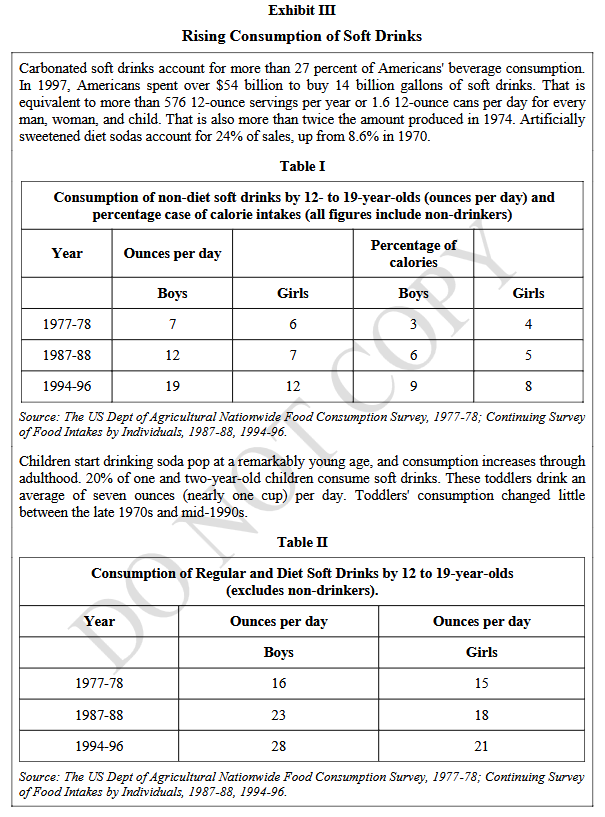
Another report titled Liquid Candy said that compared to 20 years ago, the teenagers today drank twice as much soda as milk. According to Colleen Dermody, communication director, Center for Science in the Public Interest (CSPI) “Vending machines in schools created a preference for soda over milk, juice, and water.” In 1994-96, CSPI's analysis of teenagers between the age of 12 and 19 showed that about 5 percent of male softdrink consumers drank at least 19 ounces per day and 5 percent of female consumers drank at least 12 ounces per day (Exhibit III).
Richard Troiano said that the data on soda consumption suggested a link with childhood obesity. According to Troiano, overweight children tend to consume more calories from soda than those who were not. Childhood obesity rates in the US had increased by 100 percent in the past 20 years. Studies had also shown the negative effect of caffeine9 on children, an additive present in most of the cola drinks. Analysts10 concluded that soft drink makers were encouraging teenagers to consumer more drinks, which would cause serious health problems for a whole generation.
Another analyst suggested, “If the schools must have vending machines, they should concentrate on healthy choices, like bottled water.” However, the exclusive contracts put pressure on schools to increase the number of vending machines to increase sales of soft drinks. Post reported that prior to signing an exclusive contract with Coke, few schools had vending machines. After signing the contract, most high schools had four machines, middle schools had three, and elementary schools one.
Another study said that in the last 20 years in the US, school enrolment had increased 6.8 percent, while participation in school meal programs had surprisingly declined by 1.2 percent. One major factor was that vending machines filled mostly with junk food competed with school meal programs. The school meal program provided nutritious meals for nearly 27 million children in US schools. The US government had allocated $5.46 billion in 1999 for the school meal programs. A traditional school meal included two ounces of protein, three-fourths cup of fruit and vegetables, approximately two servings of grain products and a half-a-pint of milk.
In 2000, the American Federation of Teachers denounced the sale of competitive foods, calling them detrimental to students? health and development of sound eating habits. The Seattle Education Association adopted similar resolutions against commercialization in Seattle's public schools.
By mid-2001, 240 district schools in 31 states had entered into an exclusive contracts with Coke. According to the National Soft Drinks Association (NSDA), sixty percent of all public and private middle schools and high schools sold soda in the US. The NSDA challenged the information presented by health advocates, calling it “an insult to consumer intelligence.” They said that any attempt to link soft drinks to health problems was not supported by facts. According to the association, no direct connection had been established between increased soda consumption and obesity.
While Coke faced a lot of criticism from health experts and public agencies for targeting school children during 1998-1999, the company received a major setback during the European crisis in which school children were the major victims. After the crisis, Coke investigated the problem by testing the suspect batches for chemicals. The company claimed that the tests showed nothing toxic in the beverages. However, to explain the whole crisis, Philippe Lenfant, general manager of Coke Belgium, said that there had been separate errors at two plants. The products from the Antwerp plant had a strange odor due as some fungicide had accidentally fallen on the exterior of the cans. In addition, Coke had determined that the strange taste was the result of a sub-standard gas used to carbonate the products. The plant in Dunkirk had some cans which had been contaminated with a wood preservative during shipping.
In the last week of June 1999, the Belgium government lifted the ban on all Coke products, with the exception of Coke and Sprite. France allowed one of the two Coke plants to reopen, but the ban remained on all Coke products imported from Belgium. In late June 1999, after inconclusive tests and review of procedures by Coke and European health inspectors, Belgium and France lifted the ban on Coke completely. By the end of June 1999, the second French plant was back in business.
In a letter to shareholders dated July 12, 1999, almost a month after the incidents, Ivester said that there was never a problem with the actual Coke products. The letter said, “In the space of a few days, our system experienced two very limited quality problems at bottling/canning plants in Belgium and France. At no point was any health hazard present in our products. However, these problems resulted in an off taste and off smell of products and packages, and some consumers reported feeling ill after drinking our beverages. Any quality issue, of course, is unacceptable. Nothing is more important to us than the integrity of our products, and I have apologized to our consumers for any discomfort or inconvenience. Many outstanding Coke people responded quickly to the situation, working diligently to recall the products, determine the causes and share our findings.”
Analysts said that Coke had not handled the situation well and its media message was confusing, inconsistent and muddled. Coke alternately claimed that pesticide residue on the can or bottle, or a bad batch of carbon dioxide, was to be blamed for the “off” taste. On the other hand, the company also insisted that there was never any health threat. A company spokesman assured consumers, “It may make you feel sick, but it is not harmful.”
In August 1999, the European Commission reprimanded Coke, asserting that the company had not cooperated adequately and its explanations were “not entirely satisfactory.” It also suggested that while Coke blamed suppliers outside its sphere of influence, “One cannot exclude that errors were committed in the selection of plants or the dosage of extracts in Coke's own concentrate.” While no deaths were linked to the Coke problems, it had a significant negative impact on the public confidence in Europe.
1. What ethical issues did Coke face during the European crisis? Do you think Coke handled the situation in the right manner?
2. Examine the ethical issues involved in the Coke-District Schools exclusive contract deals. What measures must Coke and the schools take to minimize the negative impact of its products on students' health?
3. What measures should the government have taken to solve the exclusive school contracts controversy and minimize the negative impact of soft drinks on children?
Exhibit I
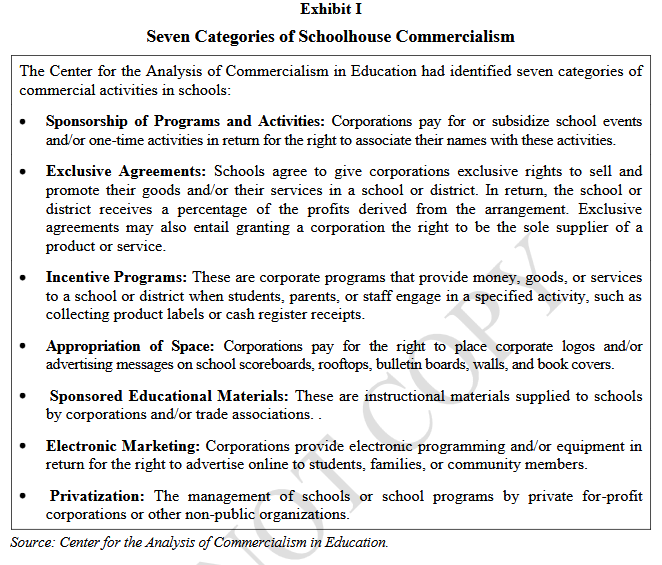
Exhibit II
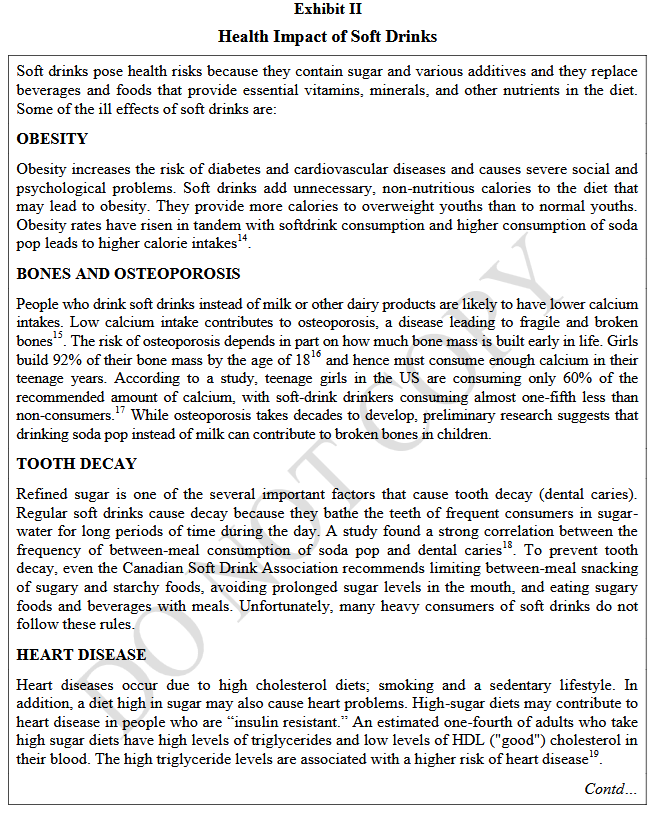
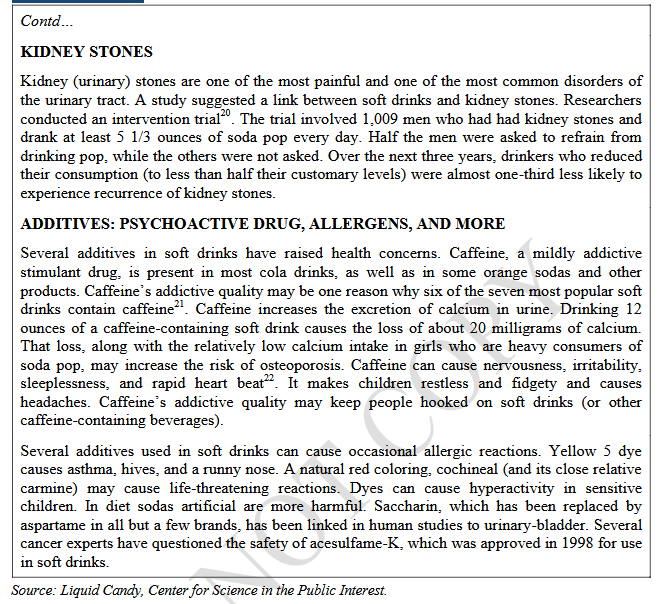
Exhibit III
Keywords
Coca-Cola, District schools controversy, Exclusive school contracts, Public relations problem, Unethical business practices, Harmful effects of soft drinks, Belgium controversy
Related Case Studies
| Case Title | Details | Price | Add to Cart |
|---|---|---|---|
|
Case Title When AI Goes Off Script: The Air Canada Chatbot Liability CaseCase Code: BECG203 |
Details | 300 | Add to Cart |
|
Case Title When AI Goes Off Script: The Air Canada Chatbot Liability CaseCase Code: BECG203 |
Details | 300 | Add to Cart |
|
Case Title Johnson & Johnson’s Talcum Powder Controversy: Putting Profits before Consumer Safety?Case Code: CLBE024 |
Details | 200 | Add to Cart |
|
Case Title OSI China in Food ScandalCase Code: BECG142 |
Details | 500 | Add to Cart |
|
Case Title Volkswagen Defeat Device ScandalCase Code: BECG139 |
Details | 700 | Add to Cart |