
Life Insurance Corporation of India: Future Prospects
Details
BSTR110
26
2002
YES
500
Life Insurance Corporation
Insurance
India
Corporate Strategy,Growth Strategy
Abstract
The case provides a detailed insight into the strategies adopted by Indian insurance major Life Insurance Corporation (LIC) of India in various areas. The case provides information about the company's history, its evolution, subsidiaries and the products offered, and examines its marketing, finance, and human resources strategies. Details about the IT initiatives taken up by the company in its technology drive are also covered. The case also provides an insight into the life insurance industry's structure in India and the changes that took place after the entry of private players into the market. The case examines how LIC is gearing up to combat the competition from private players and provides a detailed note on the Indian insurance market.
Learning Objectives
The case is structured to achieve the following Learning Objectives:
- The changes sweeping the Indian insurance industry after the entry of private players
- The steps taken by LIC in order to combat the competition
- The Indian insurance market and the various private players present in the industry.
Contents
Life Insurance Corporation of India
"To be identified as an epitome of customer care and concern in the entire Service industry – globally, we would need individual excellence woven into a fabric of team spirit, where the enterprise of leadership would transcend organizational hierarchy and geographical boundaries leaving a trajectory of history with untold success stories."
– www.licindia.com
INTRODUCTION
The Life Insurance Corporation of India (LIC), a public sector enterprise, is the largest insurance company in India, selling insurance products and related services. In March 2001, LIC had a total asset base of Rs 1936.2 billion and a total premium income of Rs 342.07 billion. By April 2002, the total sum assured under 23.2 million policies stood at Rs 1925.7 billion.
LIC had a variety of insurance plans to cater to various categories of people and their diverse needs. The company offered life insurance and group insurance. It also provided social security schemes and pension schemes. Each of its business products offered a variety of different plans to suit different customers and situations. Investment in LIC was considered by a majority of its customers to be reliable and secure. Housing loans were granted through its subsidiary and LIC sold its market savings and investment products through its mutual fund subsidiary, LIC Mutual Fund Ltd.
To serve its 140 million policyholders (2001 end), the insurance giant had 1.25 lakh employees and 6.51 lakh agents across the country. The company, which was based in Mumbai, had seven zonal offices, 100 divisional offices, and 2,048 branch offices that spanned the country. LIC‘s penetration in rural areas was very high; 18% of its total business came from rural areas.
Since LIC enjoyed monopoly status for over four decades, it emerged as one of the key public fundraisers in India. However, things began changing in the mid-1990s, when the Government of India decided to privatize the insurance sector. The Malhotra committee‘s (formed to explore the possibility/feasibility? of privatizing the Indian insurance industry) recommendations in 1994 brought about a sea change in the industry.
LIC found itself in a difficult situation when the newly formed Insurance Regulatory Development Authority (IRDA) issued licences to many private insurance companies (starting November 2000). To sustain its growth in an intensely competitive environment, the company, on the recommendations of Booze, Allen and Hamilton, started initiated organizational changes and became more customer-focussed initiatives. The company‘s attitude towards the changing insurance scenario was summarized by its Managing Director, N C Sharma, "The element of competition will bring out the best (in us)."
HISTORY
LIFE INSURANCE IN INDIA
The concept of life insurance came to India when two British insurance companies were established in the country – the Oriental Life Insurance Company (in Calcutta in 1818) and Bombay Life Assurance Company (in Bombay in 1823). Over the next few decades, the life insurance business, which grew in an unregulated environment, concentrated on urban areas and catered primarily to the higher strata of society. In 1912, the Indian Life Assurance Companies Act was passed to regulate the life insurance business.
Later, in 1928, the Indian Insurance Companies Act was enacted to enable the government to collect statistical information on both life and non-life insurance business transacted in India by Indian and foreign insurers, including provident insurance societies. In 1938, the earlier legislation was consolidated and amended by the Insurance Act, 1938, to protect the interests of the insuring public.
The Insurance Act of 1938 was amended in 1950, and brought about far-reaching changes in the insurance sector. These included a statutory requirement of equity capital for companies carrying on life insurance business, a ceiling on share holdings in such companies, stricter control on investments, and submission of periodical returns relating to investments and other such information to the controller. The controller could also call for the appointment of administrators and could put a ceiling on the expenses of management and agency commission for mismanaged companies.
By 1956, there were 154 life insurance companies in India. Malpractices and mismanagement had crept into the management of several of these companies. More than 50 private insurance companies had been liquidated or swindled the policyholders. There were complaints of different types of malpractices by many insurance companies. These included falsification and denial of claims, and inter-locking of funds.
To protect the public, the government nationalized the insurance industry. On January 19, 1956, the management of the life insurance business of 245 Indian and foreign insurers and provident insurance societies then operating in India were taken over by the central government. The main objective of the nationalization of life insurance was to channel insurance funds for the benefit of the community at large.
THE PRE-LIBERALIZATION ERA
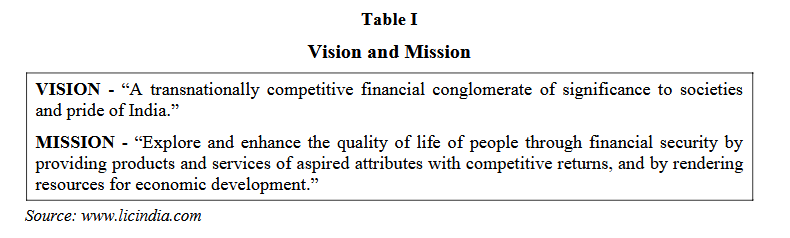
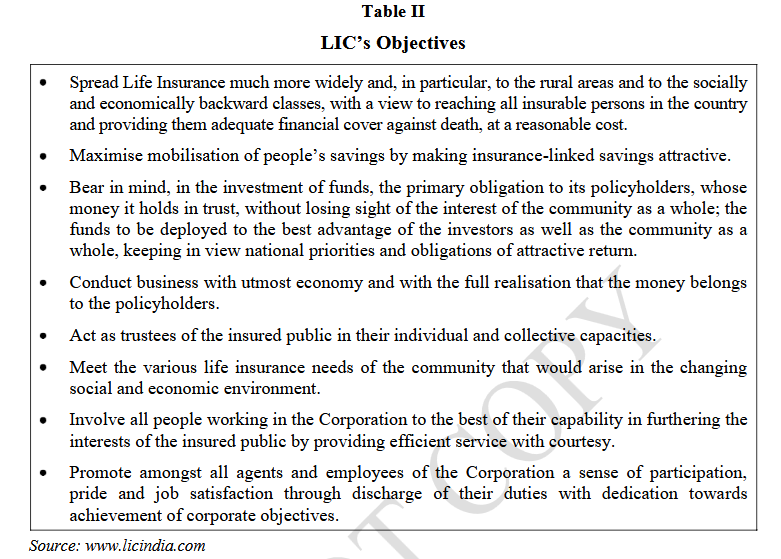
LIC was established in September 1956, through the LIC Act 1956, with a capital contribution of Rs 50 million. One of the company‘s main tasks was to provide financial security to as many Indians as possible, and thus to contribute to the country‘s overall economic development (Refer Table I for LIC‘s vision and mission and Table II for its objectives).
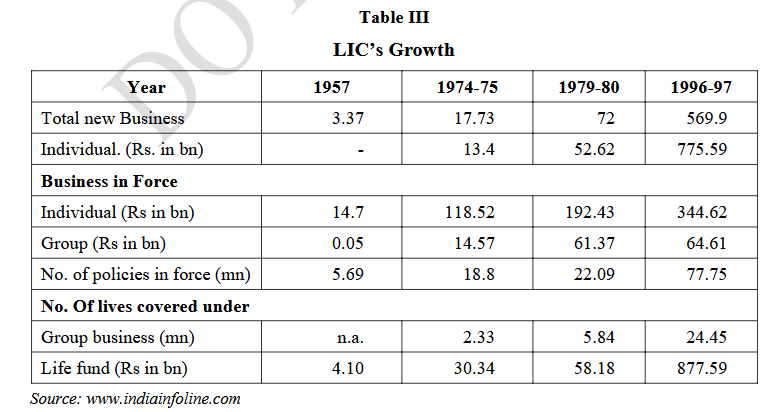
During the 1960s and 1970s, investment in insurance by the public was almost negligible. There were many factors like low rates of savings, low investment, inadequate infrastructure, mass illiteracy and poverty, that hindered the growth of LIC. However, the changes in the economy after 1980s, such as the growth in industry, infrastructure, the capital market, the savings rate and capital formation, resulted in a tremendous growth in the life insurance business and subsequently, the growth of LIC as well (Refer Table III).
LIC‘s rural business increased phenomenally during 1980s. The company launched several schemes specifically aimed at further expanding its coverage in the rural areas. Many group and individual insurance schemes, designed for rural and industrial labor, were started during the late 1980s. It started the Landless Agricultural Labourers Group Insurance Scheme (LALGI) in 1987, for beneficiaries of the Integrated Rural Development Programme (IRDP1). A Social Security Fund was set up in 1990, to meet the insurance requirements of the weaker and vulnerable sections of society. In August 1995, the Rural Group Life Insurance Scheme (RGLIS), a group insurance scheme which provided a life cover of Rs 5,000 for persons in rural areas, was started. In 1996, Jeevan Suraksha, a pension plan for senior citizens, was launched.
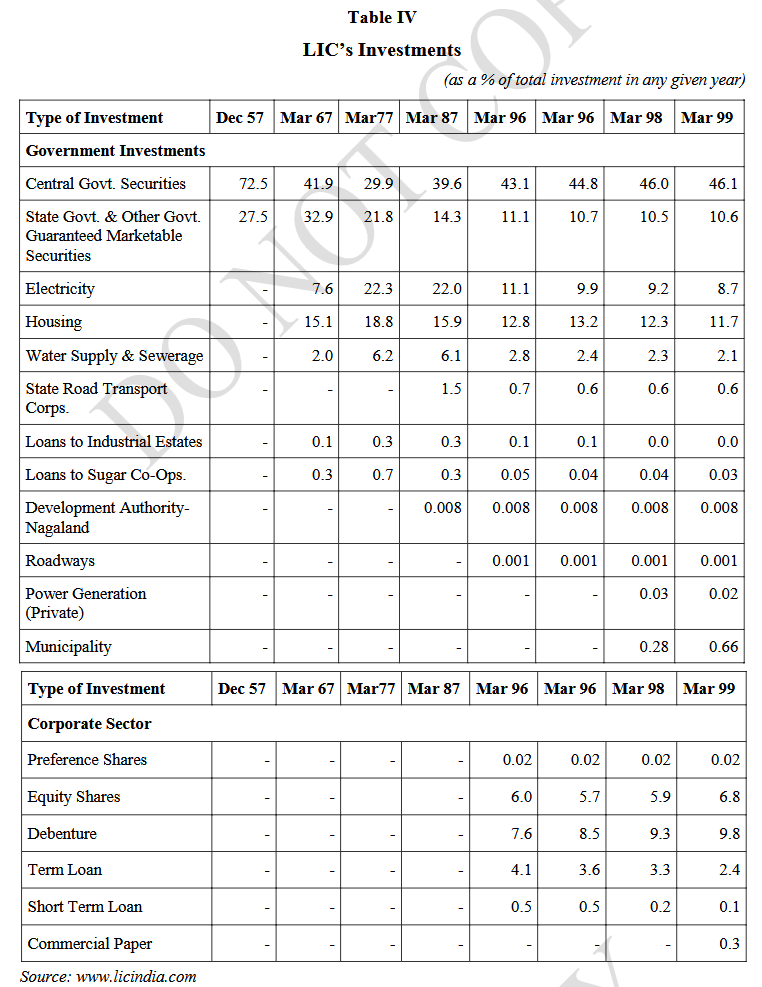
Though the business of LIC changed over the decades, its investment pattern was constant till the late 1990s. As per the investment regulations stipulated by the Insurance Act 1938, LIC had to invest not less than 20 % of its life fund in central government securities, a minimum of 5% in the National Housing Bank, not less than 25% in state government securities including government-guaranteed marketable securities, and a minimum of 25% in the social sector. The company was free to invest the remaining 25% in the private sector and as loans to policyholders. Thus, 75% of the funds raised were invested in the public sector, primarily in government and government-backed securities (Refer Table IV for LIC‘s investments over the decades)
SUBSIDIARY COMPANIES
In the late 1980s, LIC established a few subsidiaries with a view to expanding its services. These were LIC Housing Finance Limited, LIC Mutual Fund, Life Insurance Corporation (International) E.C. and LIC (Nepal).
LIC Housing Finance Limited:
LIC Housing Finance Limited (LICHFL) was started in June 1989, to provide long-term finance for purchase/construction of houses/flats, particularly to policyholders of LIC. During the 1990s, the subsidiary grew into a premium housing finance company, disbursing over Rs 50 billion of loans. Its loan delivery system was the largest in the country. LICHFL‘s main objectives were:
- To provide financial assistance to individuals for constructing/purchasing residential house/flat. Assistance for second residential house/flat was also made available.
- Providing assistance for extension/renovation of existing residential unit.
- Providing loans to corporate bodies (Public Limited Companies/Public Sector undertakings) for construction of staff quarters.
- Providing loans to Public Limited or Private Limited companies for lending to their employees for constructing/purchasing residential house/flat on ownership basis, and loans to individual employees of the company on the guarantee of the employer.
- Loans to Corporates for office remises.
- Loans to Co-Operative Societies – Loans to individual members of co-operative housing societies formed by employees of public sector undertakings / public limited companies with guarantee of the undertaking.
- Loans to public agencies (like housing boards) for residential housing projects.
- Bridge loans to reputed developers/builders for housing projects.
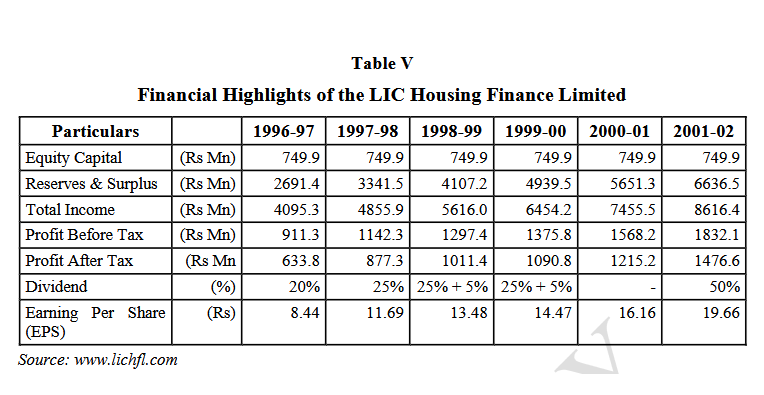
In 2002, LICHFL was one of the largest housing finance companies in the country, and it registered growth of 20.71%. It had disbursed Rs 105.23 billion loans as on March 31, 2002, and had financed 5,25,672 dwellings in the country. Its Profit after Tax (PAT) was Rs 1476.2 million for the financial year 2001-2002 as against Rs 1215.2 million for the financial year 2000-01 (Refer Table V for the financial highlights of LICHFL).
LIC Mutual Fund
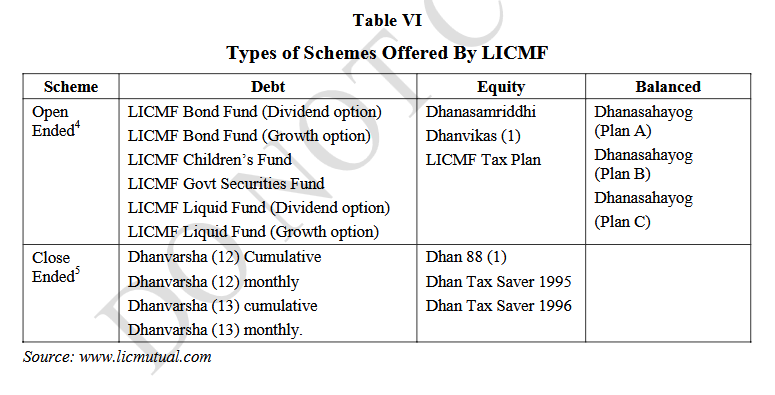
LIC entered the mutual funds business in 1989; it set up LIC Mutual Fund as a trust, with an investment of Rs 20 million. The fund managed 38 schemes including options (2001). In 1994, Jeevan Bima Sahayog Asset Management Company3 Ltd. (JBSAMC) was incorporated to act as the investment manager for LIC Mutual Fund‘s schemes and its (debt, equity and balanced schemes (Refer Table VI for the types of schemes offered by LICMF).
Life Insurance Corporation (International) E.C.
Life Insurance Corporation (International) E.C. was established in the year 1989, as an off shore company by LIC, in partnership with M/s International Agencies Co.Ltd., a leading business enterprise in Bahrain. LIC held 90% of the total share capital of BD 1,100,000. LIC (International) provided housing loans to non-resident Indians who constructed/bought houses in India, in collaboration with LIC Housing Finance Ltd. The company operated in the Kingdom of Saudi Arabia (with centers at Riyadh, Jeddah and Alkhobar) through chief agents.
The main objectives of the company were to provide life insurance to Non Resident Indians (NRIs) and to provide housing loans to NRIs for purchase/construction of houses/flats in India through LIC Housing Finance Ltd.
LIC International issued policies in dollars in order to minimize the currency risk for the NRIs. The company also provided various options for paying premiums according to the convenience of the policyholder. NRIs could pay premium in following way:
- Payment of a single premium
- Irrespective of the term of the policy, the full premium could be paid in 5 years
- The policyholder could opt to pay high premiums for the first 5 years, with smaller premiums to be paid during the rest of the term
- The annual premium could be paid quarterly, half-yearly or yearly
For NRIs returning to India, the company provided various options:
- Policies would be transferred with full existing benefits to any of the 2048 branches located in 1365 cities/towns in India
- Option of retaining the policy with LIC (International) EC with a facility to pay the premium from a foreign currency account (subject to regulations in force)
- Option of paying future premiums in advance at a discount
LIC (International) offered a wide range of products including: risk cover to provide for children's education/marriage; low-cost risk cover; risk cover with periodical return of money; provision of post retirement pension; joint life cover of husband and wife; and, investment plans with
guaranteed returns together with risk cover.
In late 2001, LIC entered into a joint venture with Vishal group of Nepal to start LIC (Nepal). LIC held 55% of the company's stake. A joint venture, Ken-India Assurance was started with LIC holding 10% of the stake. In early 2002, LIC entered Sri Lanka in a joint venture with a Sri Lankan company (In Sri Lanka, a foreign company could operate only through a joint venture with a local partner before starting an insurance business there, though the foreign holding could go up to 90% of the venture).
According to LIC sources, the company was contemplating entering the US as well. However, US legislation required the company to wait for three years, before being allowed to begin operations. US legislation mandates this waiting period, so that new entrants familiarize themselves well with the market. LIC wanted to launch operations in the US (and later, in Canada) because of the potential for business from Indians residing there. LIC expected to start its operations in the –of California and New Jersey in the US. LIC expanded its branch operations in Fuji, the UK and Mauritius.
LIC‘s joint ventures with foreign insurance companies were Ken-India Assurance Company Limited, Nairobi; United Oriental Assurance Company Limited, Kuala Lumpur; and Life Insurance Corporation (International), E.C. Bahrain. In 2002, the corporation entered into an agreement with Sun Life (UK) for marketing unit-linked life insurance and pension policies in the U.K. LIC planned to enter Oman and other Gulf countries by the end of 2002.
THE POST-LIBERALISATION YEARS
The Indian government‘s decision to privatize the insurance industry broke the monopoly of LIC. With the advent of competition, LIC was forced to change its organizational outlook and its business processes. In January 2000, it adopted a three-pronged business strategy for business, which involved reduction in premiums, higher returns and introduction of new products. International consultants Booze Allen & Hamilton were hired in 2000, to advise LIC on the changes needed in the organization.
In 2001, LIC tied up with two payment gateways – Billjunction.com and Timesofmoney.com to set up a facility for policyholders to pay premiums through the Internet. It also tied up with ICICI Bank, HDFC Bank, UTI Bank and Bank of Punjab to directly remit customers' policy premiums and debit their accounts after the transaction. LIC acquired a 27% stake in Corporation Bank in 2001 to make a foray into bancassurance
PRODUCTS AND PRICING
Insurance may be described as a social device to reduce or eliminate risk of loss to life and property. A large number of people form an association that shares the risks attached to individuals. The risks, which can be insured against, include fire, the perils of sea, death, accidents and burglary. Any risk contingent upon these may be insured against at a premium commensurate with the risk involved. Thus, insurance is the collective bearing of risk. The insurance business is broadly divided into two broad categories across the world – life insurance and general insurance. Insurance products and services are classified into categories such as social and private;
commercial and personal; and direct insurance and reinsurance.
Life insurance is termed as a contract for the payment of a sum of money to the person assured (or failing him/her, to the person entitled to receive the same) on the happening of the event insured against. Usually the contract provides for the payment of an amount on the date of maturity, or at specified dates at periodic intervals, or at death, if it occurs earlier. In addition, the contract also provides for the payment of premium periodically to the corporation by the assured. Thus, through life insurance, a person gets assured against two hazards: that of dying prematurely leaving a dependent family to fend for itself, and that of living to old age without visible means of support.
General insurance covers direct or indirect losses from damage to property or damage arising out of legal liability. In the US it is referred to as property/casualty insurance (P&C), while the term general insurance is used in the UK. General insurance has been classified into different classes such as fire insurance, marine insurance, social insurance, miscellaneous insurance and health insurance.
a) Fire Insurance - Fire insurance is a contract to indemnity for the insured against the damage to property caused by fire. The insurer undertakes to pay the amount of the loss suffered by the insured person, subject to the maximum amount stated in the policy.
b) Marine Insurance – A contract of marine insurance is an agreement whereby the insurer undertakes to indemnify the assured in a manner and to the extent thereby agreed, against marine losses, that is, the losses incidental to marine adventure. A marine adventure is one where any insurable property is exposed to marine perils.
c) Social insurance - Social insurance has been developed to provide economic security to the weaker sections of society who are unable to pay the premium for adequate insurance. Pension plans, disability benefits, unemployment benefits and sickness insurance are the various forms of social insurance.
d) Miscellaneous insurance – To provide security against risks and hazards associated with various aspects of life, many other types of insurance also have been developed. The most important among them are: vehicle insurance on buses, trucks, motorcycles; personal accident insurance; burglary insurance (against theft, dacoity); legal liability insurance (insurance whereby the assured is liable to pay the damages to property or to compensate the loss of personal injury or death. (This is in the form of fidelity guarantee insurance, automobile insurance and machines); crop insurance (crops are insured against losses due to heavy rain and floods, cyclone, draughts, crop diseases); and cattle insurance - (insurance for indemnity against loss of castles from diseases)
e) Health insurance – Health insurance provides reimbursement of expenses incurred due to hospitalization and surgery. Reimbursement is subject to the limits provided in the policy, and it is not given for diseases specifically excluded. Mediclaim policies are similar policies issued for individual families, usually taken by employers for the benefit of employees
In addition to the above, insurance policies are available against crime, medical insurance, bullock cart insurance, jewellery insurance, cycle rickshaw insurance, and radio and television (TV) insurance. In India, while LIC took care of the life insurance business, the General Insurance Corporation of India (GIC) offered non-life insurance policies through its four subsidiaries: Orient Insurance Company, New India Assurance Company, United India Insurance Company, and National Insurance Company.
The life insurance market in India was divided into two customer segments: individual and corporate. The individual business was further divided into four sub-segments – protection, investment, savings and pension. Protection products offer only protection from the risk involved to the customer – without any savings option. Investment products offer long-term investment growth and insurance cover. Savings products like endowments and money-backs provide a combination of protection and investment benefits. The last segment, pension, includes products offered to customers as an income during their retirement years.
The corporate segment was divided into three sub-segments – protection, statutory savings and pension. Group term insurance products provided low-cost life insurance cover or cover housing/vehicle loans, as part of employee benefit packages. The statutory savings segment comprised gratuity products for companies.
The pension segment included products such as group superannuation, enabling companies to benefit from the investment and operational expertise of a specialist company to manage their funds. It was reported that in the individual insurance segment, the investment products segment was growing rapidly as they provide long-term investment growth and insurance cover.
LIC catered to both the individual and corporate segments. In the individual segment, it offered endowment policies, money-back policies, term assurance plans, periodic money-back plans and joint life plans. In the corporate segment, it offered group insurance schemes for gratuity, term insurance, savings-linked insurance and group leave encashment. LIC provided an annual return of 7% on average on all policies. Around 80% of LIC‘s premium income was derived from endowment and money back policies (Refer Exhibit I for LIC‘s product portfolio).
During the 1960s and 1970s, many Indians considered life insurance a 'compulsory savings' product. However, in the 1990‘s, factors such as increased life expectancy, disintegration of the traditional joint family system, and the increased cost of health-care opened the way for a variety of insurance products with need-based features. Private insurers developed need-based policies for customers. They offered customers the option of mixing and matching policies according to their needs. Indian consumers became aware of a new range of policies other than the endowment and money back policies of the type, which LIC had promoted earlier. As a result of increased awareness, consumers became more particular about the type of insurance product they wanted.
To meet consumers‘ needs, LIC launched several different products during 2001-02. These were: Jeevan Suraksha – a pension scheme, Anmol Jeevan – a pure insurance product (where the insured got nothing if he survived the whole term of the policy), and Jeevan Rekha – a whole life policy. LIC intended to face the competition from private players by including attractive riders9 with all its policies. In 2002, LIC introduced a new facility — the term assurance rider10 — under select life insurance policies. This facility provided an extra risk cover to the extent of double the existing risk cover under the plan, subject to an overall limit of Rs 250 million. The corporation had not reduced its mortality table and premium till 2001, though life expectancy had increased substantially.
In December 2001, the changing market conditions and decreasing interest rates due to the interest cut of 0.5% by the RBI forced LIC to rework its returns on its policies. LIC withdrew plans like Bima Nivesh, New Jeevan Akshay, New Jeevan Dhara and Jeevan Suraksha, which were high- return plans. Later in March 2002, LIC terminated Jeevan Sanchay, its children's growth schemes and its children‘s money-back policy due to the falling yields on investments.
A survey conducted in June 2002 by the leading research firm, ORG-MARG, indicated that awareness of the LIC brand among the public was the highest of all insurance companies, but the difference in public awareness of LIC and of the new players was becoming smaller.
TECHNOLOGY
In the late 1950s, LIC began using Unit Record Machines (electro mechanical machines) to process data punched into cards. Computers were introduced for the processing of data in 1964. By the 1980s, the Unit Record Machines were phased out and computers based on microprocessors were introduced for back-office computerisation. During the 1990s, the software and hardware infrastructure at the company was standardized. There was a tremendous increase in the use of technology by LIC during the late 1990s. The company launched its website, www.licindia.com, in mid-1995, to offer policyholders basic services such as modifying policies (change of address, change of nominee) and querying the status of the policy. LIC also sent policyholders premium notices by e-mail when requested.
A Metropolitan Area Network (MAN), connecting 74 branches in Mumbai, was commissioned in November 1997. This enabled policyholders to pay their premium and get their status report, surrender value quotation and loan quotation, from any branch in the city.
Following the MAN in Mumbai, seven MAN centers (Chennai, Bangalore, Delhi, Calcutta, Pune, Hyderabad, and Ahmedabad) became operational, in the first phase in 1997. These MAN centers were connected to each other by a Wide Area Network (WAN), using 64kpbs lines, set up in the same year. This WAN was designed for distributed processing without a central database – each division maintained a database of policyholders. The servers at each branch and its district offices contained policy information pertaining to the customers residing within those areas only. The central office in Mumbai maintained an index of policy numbers and the corresponding IP addresses of the servers where the details of the policies were maintained.
During the second phase, 33 MAN centers became operational and these were interconnected on the WAN for data and VoIP (Voice over Internet Protocol) traffic. Towards the end of this phase, 52 divisions, which included 41 MAN centers (each metro had multiple divisions), were connected. By the end of the third phase in 2002, all the zonal offices and MAN centres were connected to WAN.
In 2001, LIC linked its voice communication system with the WAN, instead of going in for the next generation IP phones and VOIP switches/gateways. This link helped LIC to utilize its network bandwidth for voice and data traffic. If the VOIP switches had been used, LIC would have had to duplicate its WAN. The Mumbai central office had 16 voice channels, while the zonal offices had four voice channels.
In an extension of its use of IT to streamline its operations, LIC decided in 2001 to give its agents loans to purchase computers in order to provide better service to policyholders. The corporation wanted to simplify its clients‘ interaction with LIC and its agents. It made a commitment to upgrade its networks continually. LIC‘s reason for this move was summarized by S. Lakshmanan, Chief- Information Technology, "A policy holder will no longer need to visit the branch office and run from pillar to post, to check the status of a policy for he will soon be able to do this online (akin to Internet banking)."
In an attempt to reduce its operational costs, LIC introduced video conferencing between its central office in Mumbai and six other locations in 2002. ISDN connectivity was provided in two locations (Kanpur and Bhopal), while the other four locations (Calcutta, Chennai, Delhi, and Hyderabad) had 2-MB links.
LIC set up eight call centers connected to the WAN in 2002. In addition, there were interactive voice response (IVR) systems at 56 locations. Lakshmanan said, ?Looking forward, we will have an all-India database with data warehousing. We will be interconnecting the call centers. This will enable a person staying in New Delhi to find out the status of the policy which was taken in Mumbai, for instance."
MARKETING
Until the Indian insurance industry was liberalized, LIC did not have any clear marketing strategies. Since it enjoyed monopoly status, it could afford to have a very limited focus on marketing. For the average Indian, LIC became synonymous with life insurance, and over the years it built up an enviable brand image in both rural and urban areas. The company grew by leaps and bounds, with people buying its policies due to the tax concessions attached to it. On account of its position as a monopoly, LIC did not standardize its practices nor did it focused on providing better customer service to the policyholders. In the pre-liberalization era, most of the
agents and development officers were only interested in generating new business, and there were many complaints about the poor customer service offered by them after policy was taken. The reason was that incentives for them were based only on new business generated, and not on satisfying the customer. The absence of customer service showed in the fact that more than 10% of the policies were surrendered or lapsed every year.
LIC‘s advertising and promotion was at a low level till the late 1990s, and, in fact, the company came out with only a few advertisements, which focused mainly on insurance as a tax-saving tool, rather than on its products or the types of policies it offered. According to reports, though LIC had around 60 products in its portfolio only around 7-8 policies of LIC were popular with customers. In addition to the limited advertisements through the media of television, radio and print, the corporation used promotional material like diaries and calendars at the point of purchase. But after the opening up of the insurance industry, LIC was forced to change in the face of
competition. It developed a clear-cut focus on its marketing initiatives and marketing strategies were devised to raise customer satisfaction. In the very first year of the entry of new insurance companies, LIC introduced many new schemes and products, backed by advertisements and publicity campaigns.
In 1998, LIC established certain standards for service to policyholders. These standards were set in respect of general procedures, policy servicing, customer interaction and fairness in dealing with customers. An'Integrated voice response service' (IVRS) was set up in 1998 in Delhi. This service allowed policyholders in all seven zones to access details about their accounts through a telephone number. In early 2001, LIC set up its first touch screen kiosks, advertising its various schemes, in Delhi. This facility was later extended to Jaipur and many other cities.
Another area, on which LIC concentrated, was speeding up the process of settlement of claims. Prompt settlement of claims has been identified as an important aspect of customer service. LIC announced that survival benefit upto Rs 20,000/- would be settled without the submission of the policy bond and discharge voucher. LIC also laid emphasis on the speedy settlement of maturity and death claims. It was reported that during the year 2000-01, LIC settled around 7.5 million claims for Rs 116.37 billion compared to 6.6 million claims for Rs 92.11 billion in 1999-2000. It was reported that the percentage of claims outstanding at year-end came down to 1.67% in 2001 compared to 2.36% in 2000 (Refer Exhibit III). The company reconstituted its Claims Review Committee in its central and zonal offices, inducting former High Court/District Court Judges as members.
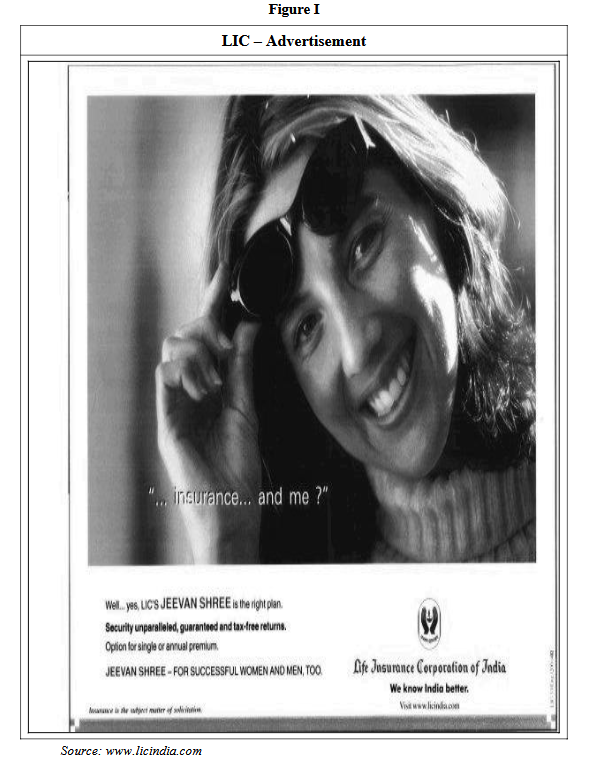
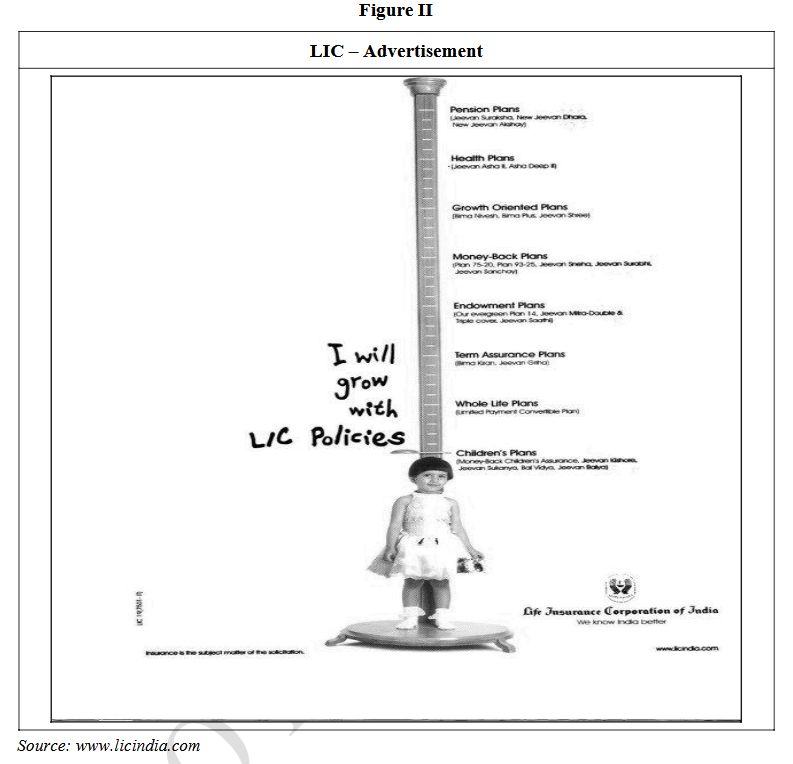
In 2001, LIC launched a corporate advertisement on the television – 'Zindagi Tumhari Roshan Rahe' (May your life be full of light). In its print advertisements, LIC concentrated on creating a corporate image as well as awareness for its individual products through various print ads (Refer Figure I & Figure II). In order to increase its visibility, LIC began to sponsor sports events at the national level. It also started special publicity projects with social purposes to enhance its image as socially responsible corporate entity.
LIC set up an information center for its clients, which enabled them to make enquiries about its products and policy details. The first center was started in Mumbai in 2001. The service was to be extended to the three other metros and Hyderabad, Ahmedabad and Bangalore by the end of 2001. Customer Relationship Management (CRM) committees were constituted in all the zones to discuss and address customers‘ grievances. At the division and branch levels, CRM Executives and Managers were appointed to focus exclusively on acquiring new customers and retaining existing customers.
DISTRIBUTION
LIC had a large network of 8 lakh agents for distributing its products. The company had several marketing personnel designated as 'Development Officers' in each branch. These development officers, in turn, employed and trained a number of agents, and received incentives for the business generated by these agents, in addition to their regular salaries. However, this network was not very cost-effective as LIC had to pay bonuses and commissions twice - to the agents as well as the development officers - for every new policy and every subsequent renewal. Despite the efforts of the development officers, the retention of agents had become difficult. In all probability, the high attrition rate among agents was on account of the selection of unsuitable agents in the first place.
Multi-channel distribution of insurance products assumed great importance. Tied agents became an important element in the distribution network. Other distribution channels such as corporate agents, brokers and bancassurance also came to be used in the industry.
Following this trend, LIC entered into agreements in 2002, with Corporation Bank, Oriental Bank of Commerce, Bank of Punjab and Nedungadi Bank, for the sale of its products through their branches. A senior LIC official said, "We want to get out of our present image of being strong in the rural and middle income groups. Though 60 to 70 per cent of the population lives in the rural areas, the big money is in the urban areas, especially the metros, where we feel we are relatively weak." LIC was also considering asking some new private sector banks to act as its corporate agents, so as to utilize their strong high-end customer base.
Bancassurance, which provided the services of banking and assurance at one source, had become an important channel for distribution of insurance products. It was reported in 2002, that LIC was contemplating buying a bank, in order to start bancassurance services.
CUSTOMER SERVICE
In order to be able to serve its customers better, LIC had an well-organized grievance redressal system. The grievance redressal system consisted of Grievance Redressal Officers, complaint cells, a claims review committee, policyholders‘ councils, an advisory board, a consumers‘ affairs committee and a citizens‘ charter.
Grievance Redressal Officers:
Grievance redressal officers were designated by LIC at all levels of the organization. The following persons acted in the capacity of grievance redressal officers:
- At the branch level: The Senior/Branch Manager
- At the divisional level: The Marketing Manager
- At the Zonal level:
- The Regional Manager (Marketing) in case of ordinary policies,
- The Regional Manager (Pension and Group Schemes [P&GS]) in case of P&GS.
For seeking redressal of their grievances, policyholders were allowed to contact designated officials personally. According to the company, it is mandatory for the grievance officials to be present in their offices for personal interviews with customers without any prior appointment, on all Mondays between 2:30 pm to 4:30 pm. On other days, customers could meet the grievance redressal officers with prior appointment. For the convenience of the policyholders, names of the grievance redressal officers were displayed in the respective offices and also published in the local newspapers periodically.
Complaint Cells:
For the convenience of customers who were not able to meet the grievance redressal officers in person, complaint cells were established at the central, zonal and divisional offices. Customers could send their written complaints, which were registered and monitored by the respective units for proper redressal.
Claims Review Committee:
In cases where death claims a had been rejected by LIC, in order to safeguard the interests of the genuine policyholders, there was a provision for dissatisfied claimants to approach the Claims Review Committees. These committees were set up at all the seven zonal offices and at the central office. The committee comprised senior officials of the corporation and also retired high court/district judges who reviewed the claims objectively to provide justice to the claimant
Complaints received through the Government:
Some dissatisfied policyholders approached the government of India seeking direct redressal of their grievances. For attending to such grievances, LIC set up a special cell at the central office to monitor complaints and redress them speedily.
Policyholder Councils and Zonal Advisory Boards:
Policyholder councils were set up in all the divisional centers. Three policyholders of the area represented the interest of the policyholders and interacted with the divisional management on concerns of customers. Similarly, at all zonal centres, there were Zonal Advisory Boards with consumer activists as board members in order to protect consumer rights.
Consumer Affairs Committee:
At the board level, a Consumer Affairs Committee was constituted. Its members included many eminent consumer activists and members of the public, as well as the Chairman and Managing Directors of the corporation. This committee looked into and advised the corporation on matters relating to consumer interests.
Citizens’ Charter:
A Citizens‘ Charter was adopted by the LIC. Through it, LIC sought to fulfill its commitment to customers and maintain general procedural standards. The charter also laid down the standards for service on policies, for easy access to information for the customer and for fairness in dealing with customers
HUMAN RESOURCES
LIC has had many problems relating to the efficient use of its human resources since the time it was set up. Many of these problems related to the fact that it was a public sector organization. The corporation‘s managers were too bureaucratic. The work culture in the organization was sloppy. Strong trade unions made it difficult for managers to get the work done. The corporation‘s development officers focused on their own earnings and incentives, rather than on customer satisfaction. Government interference also had an adverse effect on the functioning of the organization.
In 1994, the Malhotra Committee was set up by government of India for submitting its recommendations on allowing private companies into Indian insurance market. Government of India had to face severe opposition from all the insurance employee unions against the opening up of the sector. After the liberalisation of the insurance industry, LIC had an evaluation of its organisational structure by consulting firm, BoozAllen and Hamilton. The report by the consultants suggested that there was a need for organisational restructuring, as some of LIC‘s departments did not add value to the organization. In 2002, initiatives for organizational change have been initiated. "We will set up high level cross-functional teams to speed up decision-making," said Mr. Bajpai, Chairman LIC, in response to the report.
Although LIC had an excessively large workforce (1,25,000 employees), it decided not to offer them a voluntary retirement scheme (VRS). LIC planned to adopt a growth path to use its employee strength fully rather than offering VRS. A productivity-linked lump-sum incentive (PLLI), which offered an incentive of up to six per cent, based on the corporation's performance was started in 2001. N.M. Sundaram, general secretary, All India Insurance Employees' Association, said, "The management hasn‘t spelt out in detail its intentions on the staff re-deployment. Taking into account the emerging market and the customer expectations, we have suggested new value-added jobs to the management and also simplification of claim procedures." LIC intended to re-deploy its personnel into revenue-generating activities to reduce cost by 2003.
In 2002, the corporation said it has the full support of its unions in meeting the competition. The unions' acceptance of the new direction for LIC was stated by B.S. Rawat, Joint Secretary, and All-India LIC Employees' Federation (AILICEF) "This is part of a joint effort of the management and the unions to improve the functioning and the profitability of the corporation. The unions have decided to lend whatever support they could professionalise LIC."
A year earlier, in 2001, LIC faced the problem of a major braindrain of top executives from LIC to positions in new private insurance companies. P C Gupta, former LIC executive director, actuarial, left the organization for HDFC Standard Life just a few months after he was denied the top post at LIC. Others who left included P S Pritam joined as an advisor to Allianz V Rajagopalan, chief in charge of investments, who signed up with ICICI Prudential; and Vrinda Kini, senior branch manager for pension and group scheme, who joined AIG to look after their pension business. The drain occurred not only at the top level, but also at the middle management level of LIC.
LIC has established extensive training facilities at all levels. At the apex, it had a Management Development Institute, seven Zonal Training Centres and 35 Sales Training Centres. At the industry level, along with the Government and the GIC, it established the National Insurance Academy14. In 2002, LIC signed a MOU with IIT (Indian Institute of Technology), Chennai, for training LIC officials in the areas of information technology, systems management and IT-enabled services management. LIC announced that it would develop its zonal training center in Chennai into an apex IT-training center with the help of IIT Chennai.
FUTURE OUTLOOK
LIC planned to enter into more alliances with banks and with leading educational institutes for training. It would also increase offshore activities and set up an exclusive technology company for sourcing software. Other priorities were the setting up of special cells and single-window facilitation centers for high-end customers, rapid introduction of innovative policies, and a renewed thrust on mass and group business.
The corporation also decided to offer value-added services to high-end customers, besides special services. At a later stage, it planned to have separate dedicated branches for high-end policyholders. The decision to have its own separate IT set-up was driven by the requirement of software for the sprawling network of LIC's branches and other offices. Having strategic tie-ups with banks was expected to help in widening the distribution reach of the corporation, while alliances with IIMs to impart training would help in professionalising the management.
In an insurance market, which is expected to be around Rs 400 billion by 2002, new insurance players were finding it extremely difficult to gain even a one percent marketshare. On the other hand, LIC managed to post a 60% growth during 2000-2001. Bajpai, former company Chairman, stated that LIC would be achieving a compounded annual growth rate of 30% in the years to come and had budgeted a 40% growth in first premium income in 2002-03.
LIC offices across the country were being given a 'facelift', aimed at creating a friendly ambience for customers. According to LIC sources, the focus of future marketing initiatives would be on enhancing the company's 'caring image.' LIC had started training programs for its agents in groups of 100, at the divisional training centres of the corporation. Analysts expected the company to remain far ahead of its competitors in the number of products offered and in the returns on the products for many years to come. Ironically, the extravagant advertising campaigns of the private players were reportedly resulting in increased business for LIC. Moreover, some analysts predicted that the private players would be competing more against each other and targeting each other's customers, leaving LIC fairly secure.
INDIAN LIFE INSURANCE INDUSTRY
Until the early 21st century, the Indian life insurance industry was completely in the hands of LIC. In the 1950s, the industry had been nationalized in order to increase the penetration of insurance in the country and to make it available to less privileged segments of society. But even after 40 years of nationalization, only 25% of the insurable population was covered under insurance. This was one of major reasons for opening up the sector -- to allow private players to work towards extending the reach and coverage of insurance all over the country.
In the early 1990s, there was a major shift in the macro economic policy of the government due to two developments. The first was the end of the cold war and the collapse of communism. The idea that market dynamics should be the decisive factor in economic matters gained widespread acceptance. The growing negative perception towards government-controlled price regimes gave rise to the liberalization of the economic policies of the country. Another major development was India‘s entry into the World Trade Organization (WTO), which made India a party to certain international commitments. The commitments related to the opening up of sectors like telecom, insurance and power for private participation. For these reasons, the Malhotra committee was set up in 1993. It submitted its report in 1994.
The per capita insurance premium in India was very low as compared to developed countries. In 1999, the per capita insurance premium in India was only $8 while it was $4,800 in Japan, $1,000 in Republic of Korea, $887 in Singapore, $823 in Hong Kong and $144 in Malaysia. India's share in total insurance premiums worldwide was only 0.3%, though it was second most populous country in the world. In the same year, Japan‘s share was 31%, the European Union was the source of 25%of the world total, South Africa 2.3%, and Canada 1.7%. These figures indicate the huge untapped potential in the Indian insurance market, which attracted many private players.
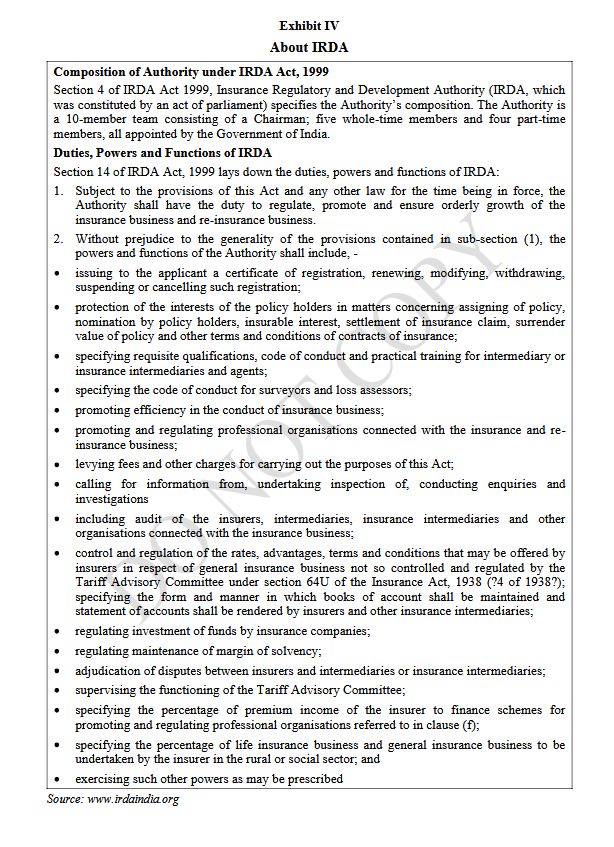
The government faced stiff opposition from both political parties and employees of state insurance companies when it allowed private participation in the insurance sector. After prolonged discussions and debates, the insurance sector was opened up in 1999, when the IRDA Bill was passed. As per the bill, the IRDA became the regulatory authority for the insurance sector in India. It had the power to grant licenses to foreign players to operate in India, and to formulate operational rules and regulations for the working of insurance companies. It would regulate the performance of the insurance companies and monitor strategies adopted by them.
The IRDA also prepared guidelines for foreign participation in the Indian insurance market. According to these guidelines, foreign players were permitted to enter India through partnership ventures with a share of 26% or less. Despite the restrictions, many global players entered into partnerships to start insurance operations in India (Refer Table VII for the collaborations in the industry). According to IRDA regulations, banks too were allowed to enter the insurance sector on the condition that their capital adequacy ratio was around 9%. Many analysts felt that this rule had kept many public sector banks out of the insurance sector except SBI.
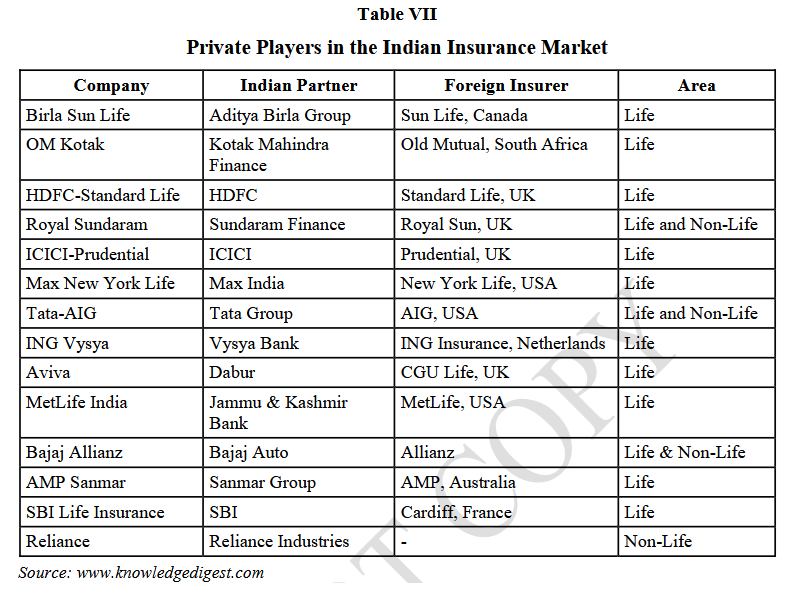
HDFC Standard Life was the first private life insurance player to be allowed to work in India. HDFC was incorporated in 1977, with a share capital of Rs 100 million. Its objective was to provide housing finance in the country. It was the largest residential mortgage finance institution in the country. In 2001-02, the corporation‘s net -worth was Rs 27.03 billion. Standard Life, founded in 1825, was the largest mutual life company in Europe, with total assets of Rs 5,500 billion. It had a 'AAA' rating from both Moody‘s and Standard & Poor's and the independent brokers voted it =Company of the Decade‘ in the UK, in 2001. It offered products and services in
pensions, protection, savings & investments, healthcare and mortgages.
The Aditya Birla group, one of the largest business conglomerates of India, was established in the 1950s and had businesses in key sectors such as aluminum, cement, branded apparel, chemicals, copper, fertilizers, power, telecom, and financial services. The Group‘s turnover for 2001 was Rs 280 billion and it had fixed assets worth Rs 265 billion. Sun Life Financial Services was incorporated in 1871 and was headquartered in Toronto. It had revenues of C$16.7 billion in 2001. It operated in around 17 countries and was the number one life assurance company in Canada. It offered products and services in the categories of insurance, investments, savings & loans, and other services.
ICICI Bank is the largest private sector bank in India with an asset base over Rs 1000 billion. It offered various financial services to individuals and companies. Its services included deposits accounts, commercial banking, mortgages, car loans, personal loans and other banking services. It had a customer base of more than 5 million and has 5 million bondholders across the country. It had around 400 branches, 120 retail centers, 1005 ATMs. ICICI Bank posted a profit of Rs 2.5 billion in the year ending March 2002. Leading financial services company Prudential plc was established in 1848 in the UK. It had around $276 billion funds under its management, and more than 13 million customers worldwide. It offers an integrated range of financial services & products, including life assurance, pensions, mutual funds, banking, investment management and general insurance.
The Tata Group began its activities in 1878, with the trading and manufacture of textiles. Later, the group diversified into steel, electric power, locomotives, automobiles, financial services, hotels and information technology. In 2002, it was India‘s largest conglomerate with over 80 diversified companies. In 2000-01, its total turnover was Rs 4,12,906 million and the value of assets under it was Rs 4,47,341 million. The American International Group is the leading US-based international and financial services organization and the largest underwriter of commercial and industrial insurance in the US. It had operations in over 130 countries throughout the world. AIG‘s global businesses also included financial services and asset management, real estate investment management, and retirement savings products.
The State Bank of India (SBI) was established in 1955 through an act of parliament and is one of the largest banks in India. It had over 9000 branches with an aggregate deposit base of around Rs 1968.21 billion. Together with its 7 associate banks, SBI has 30% of the market share in banking. The France-based Cardiff is a wholly owned subsidiary of BNP Paribas, the third largest bank in Europe. Cardiff was established in 1973, and offers products in long-term savings, protection and creditor insurance. It has specialized the art of selling insurance products through commercial banks.
Max India Limited was incorporated in 1982 a multi business corporation focused on the service- oriented businesses of life insurance, healthcare and information technology. It was ranked among the 'top two hundred most valuable Indian companies' by Business India (October 2000). New York Life was established in 1845 and has been one of the world‘s leading providers of life insurance for over 156years. With over US $ 138 billion in assets under its management and US $21 billion in annual revenues in 2002, it is a Fortune-100 company and was among the top three most admired life and health insurance companies worldwide (October 2000 Fortune Survey). The Bajaj group was founded in 1926. Bajaj Auto was the flagship of the group. It is the largest 2-& 3-wheeler manufacturer in India, and the fourth largest in the world. The group has diversified into various businesses such as herbal healthcare, automobiles, electrical appliances, auto finance, and engineering. In 2002, it had a turnover of Rs 80 billion. Allianz AG is one of the largest global insurers with operations in over 70 countries and over 700 subsidiaries. The group had a presence in over 18 markets in the Asia Pacific region. Based on gross written premiums, it is ranked number one in the world, and on basis of market capitalization it is ranked number two. In 2001, the assets under its management were worth approximately 713 billion euros.
Jammu & Kashmir Bank was incorporated in 1938 and commenced its business in 1939. By 2002, it had around 441 branches all over India. It was the first state- owned bank of the country, with 53% of the equity being held by the state government of Jammu & Kashmir. The New York- based, Metropolitan Life Insurance Company (MetLife) is the number one insurer in the US with life insurance of over US $ 2 trillion in force. Its operations are spread across more than 15 countries covering the Americas, Europe and Asia. It serves around 9 million individual households in the U.S. as well as 87 of the Fortune 100 companies.
In 2001, Vysya Bank was one of India's premier private sector banks. With a seven-decade-old history, with 1.5 million customers, 480 outlets and 6000 employees, it had built a name for its innovative banking services and for pioneering several products and services. The ING group was formed as a result of merger between Nationale Nederlanden and NMB Postbank Group in 1990. By 2002, it had offered insurance cover to over 50 million people across 65 countries. Its services included insurance, pensions, banking and asset management. In 2000, total assets of the group stood at over Rs 28420 billion.
When private players entered the industry, several changes took place. There was increased focus on the customer, and private companies focused a lot of attention on training their agents extensively for this purpose. Innovative products were developed and marketing of these products was pursued aggressively. According to analysts, the new players were successful in creating their mind share through aggressive campaigns and promotional activities. The effective communication skills of the private companies' agents led to their brands coming across successfully to the customers. To keep up with these players, LIC planned to go on the 'offensive' on the advertising front, and allotted Rs 1 billion for advertising, covering print, media, television and outdoor campaigns in 2002.
Analysts said that though advertising would play major role in spreading the awareness and attracting the customers, the critical factor for success in the Indian insurance industry would be distribution. Before liberalization distribution was entirely via individual agents. After the opening up of the industry, many new channels for distribution had opened up. The Government had already granted permission for bancassurance and corporate agents in the industry. And in August 2002, the government gave the go-ahead to insurance brokers in India.
Private players were using several channels to extend their reach in the market and to penetrate the rural market too. (According to IRDA regulations, new private players had to have a minimum of 5% of their premium income from rural areas in the first year of their business.) It was expected that bancassurance would emerge as a major channel for distribution in India, with many banks entering into the insurance business in joint ventures. Analysts also pointed out that many banks that were not allowed to enter the insurance business were likely to become corporate agents for insurance companies due to the pressures of competition.
The insurance industry was also expected to have many product innovations in the coming years. Analysts said that to attract the customers, private players would bring out customized products for them based on their needs. They felt that private insurers would try to score over LIC in terms of the products offered and customer service.
Some new players had already introduced many innovative products such as unit-linked and unitized-with-profit policies. LIC sources commented that LIC too would shift towards these products in keeping with worldwide trends. The players who had launched these policies claimed that unit-linked and unitized-with-profit schemes were better than traditional policies – they were more transparent, simpler for customers to understand, and offered greater flexibility and control to customers. Those who had not launched these policies said they were more risky, since they transferred risk (of investment return) to the customer. With private players being allowed into pension funds too, analysts felt that the Indian insurance sector was all set for more action.
EXHIBITS
Exhibit I
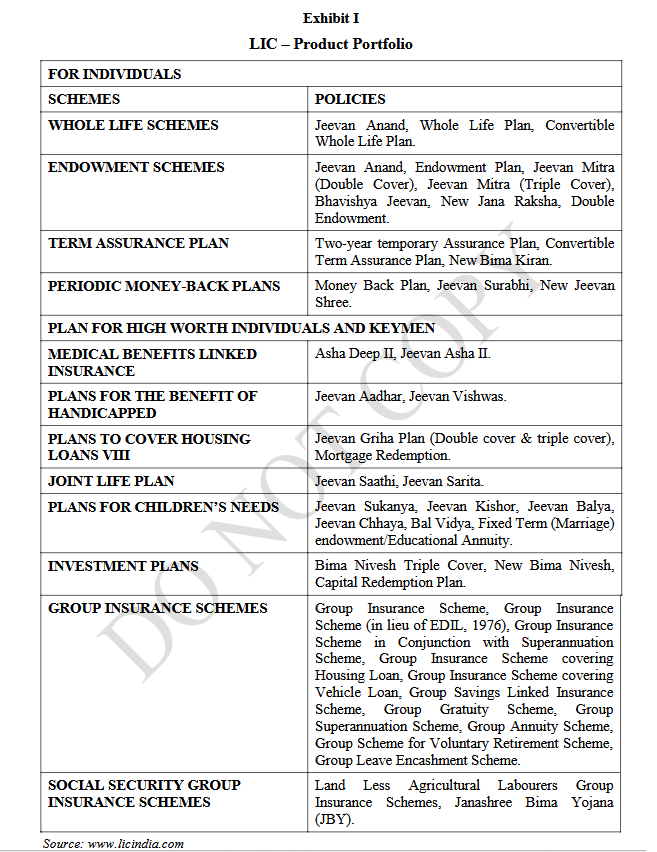
Exhibit II
Exhibit III
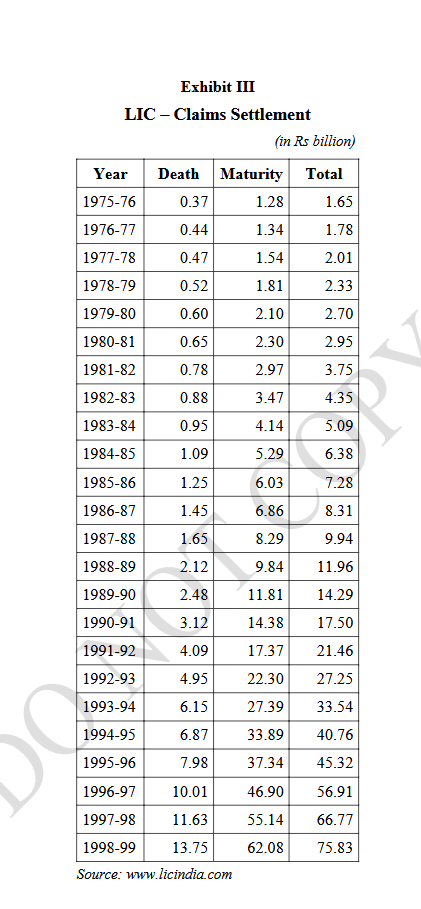
Exhibit IV
Keywords
Indian life insurance industry, Life Insurance Corporation, History of LIC, Insurance Regulatory and Development Authority (IRDA), Entry of new players, Competition in the Indian insurance industry, Products and pricing, Marketing strategies, Human resources strategies, Technology usage
Related Case Studies
| Case Title | Details |
|---|---|
|
Case Title IBM in 2004: The Linux OptionCase Code: BSTA110 |
Details |
|
Case Title Oracle’s PeopleSoft Bid (Part C)Case Code: BSTA106 |
Details |
|
Case Title Oracle’s PeopleSoft Bid (Part B)Case Code: BSTA105 |
Details |
|
Case Title Oracle’s PeopleSoft Bid (Part A)Case Code: BSTA104 |
Details |
|
Case Title Ispat: Sidbec: Entering North AmericaCase Code: BSTA006 |
Details |