
American International Group Inc.
Details
BSTR115
34
2002
YES
500
American International Group Inc.
Insurance
US
Corporate Strategy
Abstract
The case provides detailed information on various functional areas of American International Group Inc. (AIG) including human resources and finance. The case discusses the company's history since inception, product segments including general insurance, life insurance, financial services, retirement savings and asset management and the various geographic regions in which the company operates and the revenues derived from these regions. The case also includes information regarding company's social responsibility initiatives and corporate governance standards. It covers the future prospects of AIG and problems faced by the company due to the lack of succession planning. Finally, the case includes a detailed note on the global insurance industry outlook.
Learning Objectives
The case is structured to achieve the following Learning Objectives:
- Management of global operations by AIG.
Contents
American International Group Inc.
“AIG shouldn’t be all about Greenberg. The insurer's legendary 77-year-old CEO, is reluctant to name a successor, fostering the false notion that he's irreplaceable.”
- BusinessWeek, May 2, 2002.
INTRODUCTION
With revenues of $62.402 billion in 2001, the US-based American International Group Inc (AIG) was the world's leading insurance and financial services company. It was the largest underwriter of commercial and industrial insurance, and the second largest life insurer in the US. The company reported a net income of $7.67 billion and had assets worth $492.98 billion in 2001 (Refer Exhibit I). AIG was ranked 12th by Fortune magazine's list of America's 500 largest companies based on revenues in 2002. The company was ranked 2nd in the 'Insurance (Property and casualty)' section of Fortune's survey of 'America's Most Admired Companies. Founded in 1921, AIG's shares were listed on the New York Stock Exchange (NYSE) and on the stock exchanges of London, Paris, Switzerland and Tokyo.
AIG served commercial, institutional and individual customers in more than 130 countries in the world. AIG's global businesses included insurance, financial services, retirement savings and asset management. The company offered a wide variety of general and life insurance products to its customers. Its financial services businesses included leasing of aircraft, financial products, trading and market making and consumer finance.
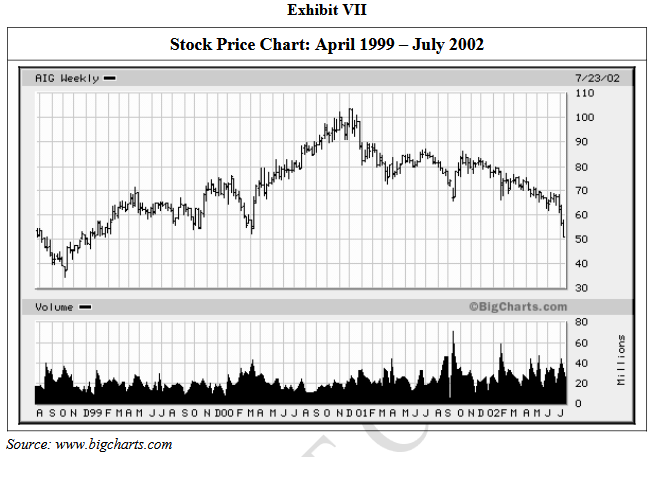
AIG?s expanding global network and its strong presence in commercial insurance, financial services and life insurance businesses made it one of the global leaders in insurance and financial services business. However, analysts said that in recent years, it had been facing problems. The September 11, 2001 attacks on the World Trade Centre in the US costed AIG more than $800 million in claims. The company also incurred losses of $69 million owing to the collapse of Enron. By early-2002, the share price of AIG had fallen by 30% from a 2000 high of $104 to $69, despite strong earnings. With so much going against AIG, industry observers expressed doubts
about AIG?s ability to perform well in the future.
AIG had also been criticized as it lacked a succession plan. Maurice R Greenberg (Greenberg), the chairman of the company had not announced his retirement nor a succession plan, although he was 77 years old in 2002, and had spent 35 years as chairman. AIG's annual reports were said to lack transparency, as they did not disclose directors' fees and other required details. In response to the mounting criticism. Greenberg finally unveiled a succession strategy in May 2002. It included the appointment of two co-Chief Operating Officers (COO), and a chairman of the executive committee. The plan also included the creation of a new seven-member office to assist the chairman of the executive committee.
HISTORY
EARLY HISTORY
In 1919, an American entrepreneur, Cornelius Vander Starr (Starr), started a small insurance agency called American Asiatic Underwriters (AAU), in Shanghai. In its early years, AAU underwrote business for other insurers. It underwrote for many American insurance companies in China and also offered fire and marine insurance. In 1921, AAU started selling life insurance policies to the Chinese population when it incorporated the Asia Life Insurance Company (Asia Life). Soon, Asia Life was prospering. By the late 1920s, Asia Life opened its offices and agencies in China, Hong Kong, Indochina, Jakarta, Kuala Lumpur and Philippines. Starr's efficient management fueled the growth of Asia Life's business. He hired and trained local people, who were later promoted to managerial positions. This practice later became the hallmark of AIG's work culture.
In 1926, AAU entered the US and established American International Underwriters (AIU) in New York. AIU functioned as a general agent for US insurers and specialized in foreign risks incurred by American companies. Though the business witnessed very little growth in the initial years, it was the first important diversification for AAU.
In the 1930s, AIU entered the Latin American insurance market, which was then dominated by European insurers. AIU established itself in these markets over a period of time. The war in Europe in 1940 also helped the company to grow. As a result of the war, European insurers were forced to stop operating in Latin America, and AIU soon became a major player in the market. AIU established offices in many Latin American countries. The company's premium income from Latin American surpassed the income from its Asian operations. To look after its growing activities in Latin America, AIU established a regional headquarters in Havana, Cuba.
Along with general insurance, Starr also expanded AAU's life insurance operations. In 1931, Asia Life entered Southeast Asia with the incorporation of the American International Assurance Company Ltd. (AIA) in Hong Kong. The company soon expanded to Malaysia, Singapore and Thailand. By the end of the century, AIA had emerged as the number one life insurer in Southeast Asia.
In 1939, due to political unrest in China and East Asia, Starr shifted AAU's headquarters to New York, USA. In the early 1940s, the Far Eastern operations of the company, including those in China, had to be stopped due to the Pacific War. However, even before the war came to an end, Starr moved towards the re-establishment of AIU's Far Eastern operations. The Shanghai and Manila offices reopened before the war ended.
Gradually, the company's operations in the Far East began to gain momentum. In 1946, the US military asked AIU to insure the property of US troops in Japan after World War II. Initially, AIU's services were limited to insuring the property of the US troops, as there was a ban on foreign companies underwriting general insurance in Japan. In 1947, Asia Life entered Philippines with the incorporation of Philippines American Life Insurance Company (Philamlife). In 1949, the Far East regional office of AIU was shifted to Hong Kong. In 1950, the communist government in China forced the closure of Shanghai office. In 1951, Japan lifted its ban on foreign companies,
and AIU established itself in Tokyo. Its Japanese operations started flourishing, and Japan went on to become AIG's largest overseas property casualty market.
AIG's subsidiary in the Philippines, Philamlife, grew rapidly and by the mid-1950s, it had 60 offices in Philippines. It also received international attention for promoting middle-income housing when the country was going through an acute housing shortage. The company mobilized savings from the people in the country through its endowment policies,6 and offered funds to promote the country's development. Philamlife went on to become the largest life insurance company in Philippines.
In 1946, AIU entered Germany too to insure the property of American troops. Prior to World War II (1939-45), AIU's operations in Europe were limited to agencies in Belgium, France, and the Netherlands. The war helped AIU to expand as the large European insurers were left in deep financial trouble. During the 1950s, AIU expanded strongly in Western Europe. At the same time, it established offices in the Middle East, North Africa and Australia.
By 1950, the company's life insurance operations were growing rapidly in South East Asia. In 1951, Asia Life was renamed American Life Insurance Company (ALICO). The company also entered the Middle East and Africa offering life insurance to the local people. In the US, AIU acquired a majority stake in the Globe & Rutgers Fire Insurance Company (Globe & Rutgers) and its subsidiaries including American Home Assurance Company (American Home), in 1952. This acquisition was an important step for the company and strengthened its position in the domestic insurance market.
In 1962, Greenberg was appointed president of American Home. Greenberg sold American Home's unprofitable businesses and restructured the company to make it a commercially viable insurer. He also developed the company's re-insurance operations. Greenberg introduced innovative products and services while restructuring the company. Under Greenberg, American Home introduced personal accident insurance. Greenberg insisted on underwriting profits. He built up an underwriting and management team to accomplish this. Greenberg?s strategy was successful, and American Home's financial performance improved significantly in the following two years. The company also gained more credibility in the domestic market.
In 1967, Greenberg was elected as the President of AIU. He established the American International Group (AIG), which initially held the shares of all the domestic companies of the group. In 1968, Starr died and in 1969, AIG went public. Greenberg became the Chief Executive Officer. AIU and all its affiliated agencies and companies were made subsidiaries of AIG. Soon after Greenberg took over, he started acquiring other domestic companies. He identified companies in difficulty and companies, which were facing takeover threats. He then acquired controlling stakes in such companies and integrated them with AIG. Some of the acquired companies were New Hampshire Insurance Company; National Union Fire Insurance Company of Pittsburgh, and its subsidiaries Lexington Insurance Company, Commerce and Industry Insurance Company; and Transatlantic Reinsurance Company. During the 1970s, AIG witnessed exceptional growth under Greenberg's leadership. He transformed the company into a leading global insurance organization. Over the years, AIG developed a strong agent network and a good capital base. This enabled the group's domestic companies to underwrite large risks. This ability made AIG one of the major players in markets requiring underwriting expertise. The group emphasized customized products and services in niche segments. It also focused on improving technical expertise in underwriting, and risk management for large companies. It had specialized units for aviation insurance, mortgage guarantee insurance, claims management8, vocational and rehabilitation services, and managed health care. AIG either acquired these specialized units or set them up on its own.
In 1972, the life insurance operations of the group were extended to Japan. AIG was granted a license by the Japanese government and became the first foreign life insurer to be permitted to operate in the country. By 1975, AIG became the largest foreign life insurer in many parts of Asia. It was also the only insurance company with global sales and support facilities.
In 1980, AIG entered China through a joint venture with People's Insurance Company. During the 1980s, AIG became the first insurance company from the west to enter into alliances with companies in Hungary, Poland, Czech Republic and Romania. This was to gain a foothold in the emerging economies of Central and Eastern Europe. By the late 1980s, AIG became renowned throughout the world for its innovative strategies and market leadership. In this period, AIG also started expanding its presence in the health-care segment of the Asian markets through heavy investment. After almost a decade, in 1992, AIG was granted a license to establish its operations.
RECENT HISTORY
During the 1990s, AIG's growth was based on focused diversification into specialized financial services (Refer Table I). In 1990, AIG acquired International Lease Finance Corporation (ILFC), in order to increase its presence in the market for financial services. ILFC was involved in the leasing and re-marketing of jets to airline companies. In 1996, AIG acquired SPC Credit, a consumer and commercial finance company, with offices in Philippines, Taiwan, and Thailand. SPC Credit was the consumer finance subsidiary of BankAmerica Corp. In the late 1990s, AIG entered Russia and Vietnam.
In January 1999, AIG bought SunAmerica for $18.3 billion. Through the merger, AIG acquired access to SunAmerica's sales-driven distribution network. Under the acquisition agreement, AIG issued 187.5 million shares of its common stock in exchange for all the outstanding common stock and Class B stock10 of SunAmerica. The exchange ratio was 0.855 shares of AIG common stock for each share of SunAmerica stock.
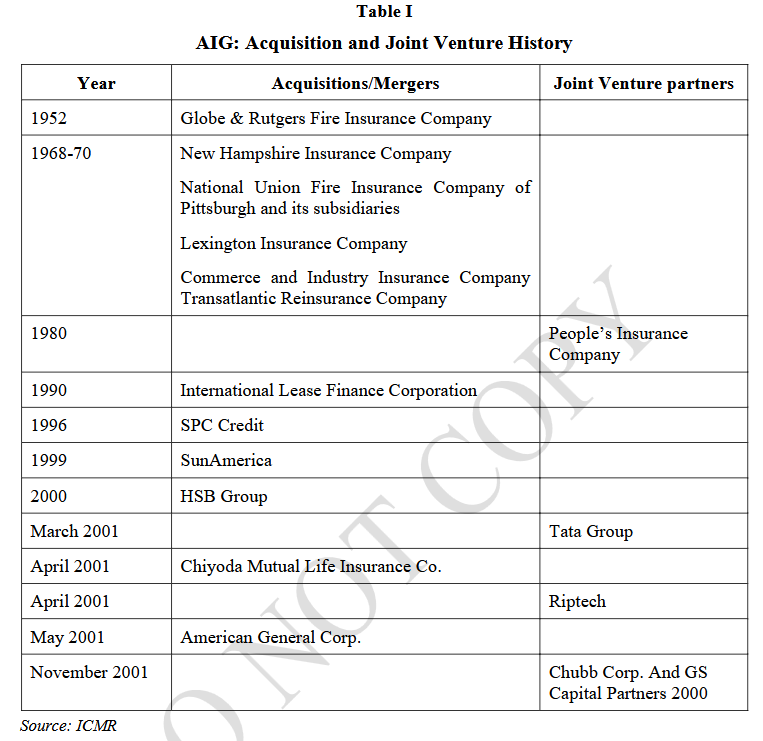
In early 2000, AIG decided to strengthen its specialty insurance business. As a part of this plan, on November 22, 2000, AIG acquired the HSB Group, the parent company of The Hartford Steam Boiler Inspection and Insurance Company, in an all-stock deal with an exchange ratio of 0.4178 of a share of AIG per share of HSB.
In March 2001, AIG entered India through a joint venture with the Tata Group. The joint venture was called Tata-AIG Ltd. Tata held 74% of the equity in the venture in accordance with the regulations of the Insurance Regulatory and Development Authority (IRDA). AIG had a 26% stake in the venture through its subsidiary. The joint venture had two companies – The Tata AIG General Insurance Co. and the Tata AIG Life Insurance Co.
In April 2001, AIG acquired Chiyoda Mutual Life Insurance Co. (Chiyoda) of Japan. Chiyoda had filed for bankruptcy in October 2000 after running into huge losses of about $27 billion. AIG acquired the debt-ridden company for $513 million. AIG announced that Chiyoda had become a joint stock company, and a wholly owned subsidiary of AIG. Chiyoda was renamed AIG Star Life Insurance. It was also announced that the new company would operate as a separate entity from the existing Japanese life insurance operations of AIG.
In April 2001, AIG entered into a strategic alliance with Riptech, a real-time-managed security services company, through its division AIG eBusiness Risk Solutions. AIG's eBusiness division was a leading provider of internet-risk and network security insurance. As per the agreement, Riptech offered its real-time monitoring, management, analysis and response services to AIG.
In May 2001, AIG entered into a merger agreement with American General Corp. (AGC) breaking a deal between American General and the UK-based Prudential PLC group. Prudential PLC had offered $49.52 per share or $26.6 billion. However, Prudential?s share price had decreased drastically after the bid, and hence the agreement was broken. As per the agreement between AIG and AGC, AIG issued about 290 million shares of its common stock in exchange for all the outstanding common stock of AGC. The exchange ratio was 0.5790 of AIG common stock for each share of AGC common stock. The merger anticipated synergies in terms of reduction in human resources costs in both AIG and AGC.
In November 2001, AIG, together with Chubb Corp. and GS Capital Partners established Allied World Assurance Holdings Ltd. in Bermuda. Chubb was a specialty insurer and GS Capital Partners was an investment fund managed by Goldman Sachs & Company. Allied World Assurance Holdings had a total equity of $1.5 billion. The new holding company was formed to operate Allied World Assurance company (AWAC), which was involved in underwriting of insurance and reinsurance11 across the world. AIG established AWAC expecting an increase in insurance rates and demand for coverage after the September 11 terrorist attacks. In the first quarter ended March 2002, AWAC reported an operating income of $18.3 million.
PRODUCT SEGMENTS
AIG carried out its operations through four product segments, namely, life insurance, general insurance, financial services, retirement savings and asset management.
LIFE INSURANCE
AIG was the second largest life insurance company in the US. Life insurance was AIG's largest product segment in terms of revenues generated and its operations were spread over more than 70 countries. This segment was highly successful because the company had a broad product range, trained its agents well, and used a variety of distribution channels like banks, retail stores and the Internet. The life insurance operations were divided into foreign and domestic life insurance. These divisions conducted their operations through several subsidiary companies of AIG.
In 2001, the life insurance segment of AIG reported a total premium income, deposits and other considerations of $44.029 billion, and income before realized capital gains of $5.55 billion. Domestic operations generated premium income, deposits and other considerations of $23.556 billion, while foreign operations generated $20.473 billion.
The foreign life insurance segment of AIG operated through five units, namely American International Assurance (AIA), ALICO, Non Shane Life Insurance, PhilamLife, and AIG Star Life Insurance. The domestic life insurance segment included the companies, American General Life and Sun America. American General was one of the leading life insurance companies in the US and offered life insurance and annuity products. SunAmerica had under it, SunAmerica Life Insurance, Anchor National Life Insurance and First SunAmerica Life Insurance. These businesses were among the largest issuers of annuities12 and guaranteed investment contracts13 in the US.
GENERAL INSURANCE
Under its general insurance operations, AIG undertook underwriting of commercial and industrial insurance, property casualty insurance in many markets across the world; personal insurance focusing particularly on auto-insurance and high net worth clients; and mortgage guarantee insurance through a subsidiary company.
The general insurance segment of AIG wrote net premiums worth $20.10 billion in 2001 and reported pre-tax income before realized capital gains of $2.98 billion. The general insurance segment had the following subsidiary companies under it: Domestic Brokerage Group (DBG), Domestic Personal Lines (DPL), United Guaranty Corp (UGC), Foreign General Group, and Transatlantic Holdings.
DBG contributed the largest share of premiums – about 50% of the net premiums written by this segment. DBG offered commercial and industrial coverage in the US and operated through seven principal units, including American Home Assurance Co. (AHA) and Hartford Steam Boiler (HSB). DPL offered insurance cover for automobiles, homeowners and high net-worth individuals, and operated through divisions such as the Mass Marketing Division, Specialty Auto Division, 21st Century Insurance Group and the AIG Private Client Group. The United Guaranty Corp offered residential mortgage guaranty insurance and reinsurance for financial institutions and mortgage investors.
The Foreign General Group comprised the international property and casualty operations of AIG, conducted through AIU and HSB. AIU managed AIG's overseas property-casualty operations and marketed property-casualty products to both consumer and commercial clients across Asia Pacific, Latin America, Europe, Africa, and the Mideast. HSB Inspection and Insurance Company (a subsidiary of HSB Group), which also came under the Foreign General Group, was one of the world's leading providers of equipment breakdown insurance. Transatlantic Holdings was the largest publicly traded US-based reinsurance organization. From 2001 onwards, this unit's results were reported as a separate segment within General Insurance.
FINANCIAL SERVICES
The financial services segment had interest revenues of $3.98 billion and an operating income of $1.99 billion in 2001. This segment complemented AIG's core insurance operations. AIG's financial services business specialized in aircraft leasing, financial products, trading, consumer finance and premium finance. In 2001, financial services segment became the leader in the consumer finance market in the US. The segment had a competitive advantage as it capitalized on AIG's global network. AIG's financial services were conducted through six divisions including International Lease Finance Corporation (ILFC), AIG Financial Products (AIGFP), American
General Finance, (AGF), AIG Consumer Finance Group (AIGCFG), AIG Trading Group (AIGTG) and Imperial AI Credit Companies.
ILFC was the leader in the world market for leasing and re-marketing of commercial jet aircraft with technologically advanced features. AIGFP, AGF, and AIGCFG offered financial services in the areas of consumer finance, and interest rate, currency, equity and credit derivative transactions. AIGTG operations included hedged trading and market making in foreign exchange, debt in emerging markets, precious and base metals, energy products, and commodities.
RETIREMENT SAVINGS AND ASSET MANAGEMENT
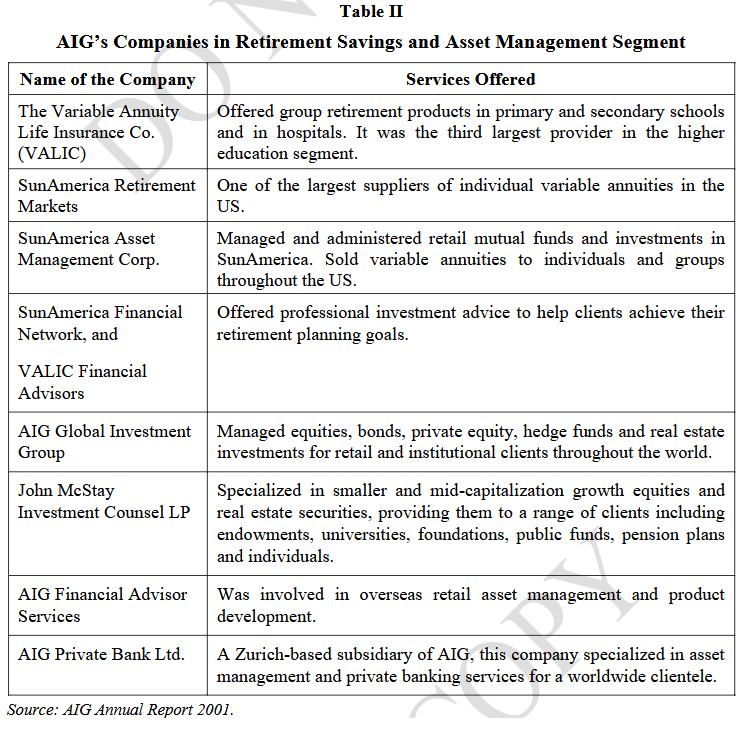
AIG was one of the leading companies in the retirement savings industry in the US. Over the years, AIG had developed expertise in various asset classes and offered asset management services in several markets across the globe. AIG acted as a manager of third-party institutional, retail and private equity funds assets. The segment reported an operating income of $1.06 billion in 2001. This business segment carried out its operations through the following companies (Refer Table II).
GEOGRAPHIC SEGMENTS
AIG had subsidiaries in more than 130 countries. The company segmented its global operations into Domestic, Far East and Other Foreign operations (Refer Exhibit II). The Far East operations included the company's Chinese, Japanese and Korean operations. 'Other foreign operations' was further divided into nine geographic segments namely Africa, Australasia, Central Europe and CIS, Europe, Latin America, Middle East, South Asia, Southeast Asia and UK/Ireland.
DOMESTIC
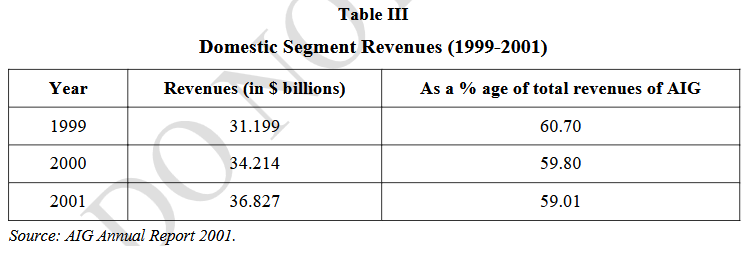
The domestic segment comprised Canada and the US. This segment generated $36.83 billion in revenues, which accounted for 59.01% of AIG?s total revenues in 2001 (Refer Table III).
In Canada, AIG operated through four companies namely AIU Canada, AIG Global Investment (Canada), AIG Life Insurance of Canada and Imperial AI Credit Companies. The 'property and casualty' business segment of the US operations was further divided into six regions with centers at Atlanta, Boston, Hawaii, Houston, Louisiana, and New York. The financial services segment operated through six companies, and the life insurance segment through four companies.
FAR EAST
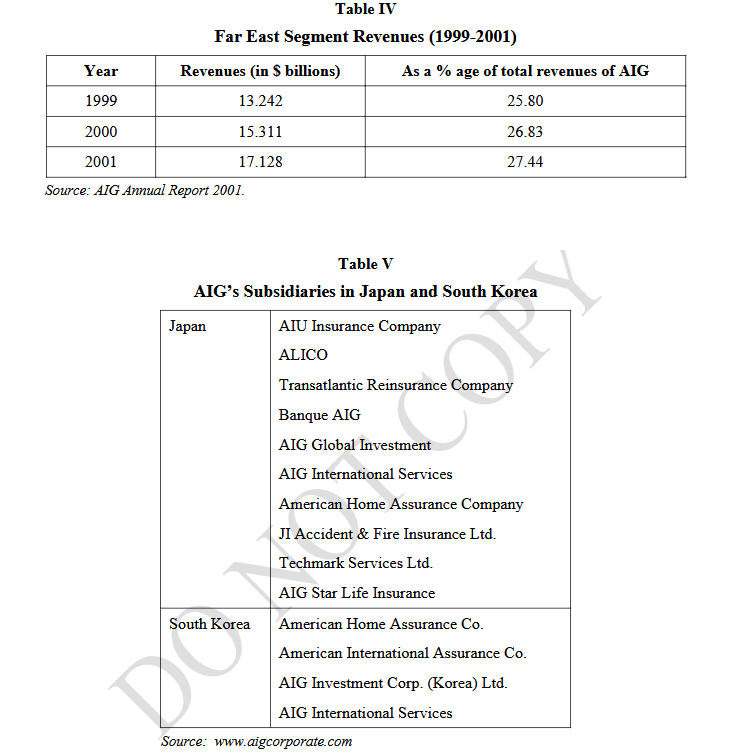
The Far East segment covered China, Japan and South Korea. This segment was the second largest contributor to AIG?s revenues. In 2001, this segment generated revenues of $17.13 billion, accounting for 27.44% of total revenues (Refer Table IV). In China, AIG operated through four companies namely 1) AIU Insurance Company, 2) AIA Co. Ltd. China, 3) AIG China, and 4) Transatlantic Reinsurance Company. AIG also operated in Japan and South Korea through its subsidiaries (Refer Table V). Japan was the company's largest overseas property casualty market.
OTHER FOREIGN OPERATIONS
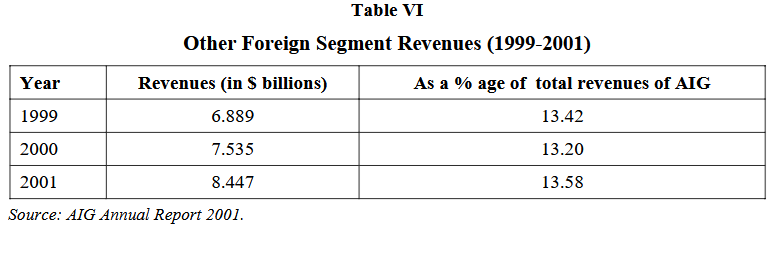
This segment comprised all the other regions in which AIG operated. This was the smallest contributor to the company's revenues accounting for 13.58% of total revenues in 2001 (Refer Table VI). Some of the major regions in this segment were Africa, Australasia, South Asia, and UK/Ireland.
AFRICA
AIG operated in five countries in Africa – Kenya, Nigeria, South Africa, Uganda and Zimbabwe. In Kenya, the company operated through American Life Insurance Company (Kenya) Ltd. (ALICO Kenya), and AIG Global Investment Company. In Nigeria, it operated through American International Insurance Co. (Nigeria) Ltd. and in South Africa through AIG South Africa.
 AUSTRALASIA
This segment included Australia, New Zealand and Papua New Guinea. AIG operated in Australia through American Home Assurance and American International Assurance Company (Australia) Ltd. AIG operated through American Home Assurance in New Zealand and in Papua New Guinea. In New Zealand, AIG also operated through AIA (Bermuda) Ltd. New Zealand.
SOUTH ASIA
AIG operated in four countries in this region, namely Bangladesh, India, Pakistan and Sri Lanka. In Bangladesh, AIG operated through ALICO and in Sri Lanka through Hayleys AIG Insurance Ltd. In Pakistan, AIG had two subsidiaries: New Hampshire Insurance Company and American Life Insurance Company (Pakistan) Ltd. AIG had also entered India through a joint venture with the Tata Group. Under the joint venture, AIG had formed two companies Tata-AIG General Insurance Ltd. and Tata-AIG Life Insurance Ltd.
UK/IRELAND
AIG operated in Ireland and the UK. In Ireland, AIG had two companies namely AIG Europe (Ireland) Ltd. and AIG Global Investment Group. In the UK, AIG had seven companies namely AIG Europe (UK) Ltd., Transatlantic Reinsurance, ALICO, AIG Global Investment Corp. (Europe) Ltd., Imperial Al Credit Companies, Banque AIG (London branch) and AIG International Limited.
HUMAN RESOURCES
AIG was known for its performance-based career advancement policy. Employees usually joined at an early age and left the company after several years of service. The company fostered an informal and open environment. The CEO, Greenberg, himself met employees at all levels to keep track of the developments in the company.
The organizational culture of the company was described as dynamic, innovative, result-oriented and opportunity-driven. AIG believed that just the bi-weekly salary was not enough to motivate employees. In addition to the comprehensive basic benefits package (Refer Exhibit III), AIG also provided a wide range of supplementary benefits to its employees. The basic pay structure of the company was low, but employees were offered stock options which fetched huge returns. The additional benefits included work/life initiatives16 and „perks? depending on the location of the branch.
AIG?s employees were also covered under various funded and insured retirement plans. The retirement plan was based on the service and age of the employee. There was a supplemental executive retirement plan with additional benefits for key employees. AIG also offered a post- retirement benefit program for medical care and life insurance. It had a voluntary savings plan for domestic employees. Employees who performed exceptionally well were offered special compensation agreements, which involved a large lumpsum payment upon retirement. On account of AIG's very generous compensation packages and allowances, there were millionaires, and even a few billionaires, in the ranks of AIG's senior management.
AIG always showed concern for its employees in need of help. In some instances, Greenberg's own aircraft was sent to bring sick employees from other branches to New York for better hospital care. AIG declared itself an Equal Opportunity Employer. It recruited, trained and promoted the most qualified applicants to all levels irrespective of race, color, religion, sex, and national origin. All decisions relating to employees were made on the basis of certain well-defined norms, relating to the individual's qualifications and suitability for a particular job. AIG also made other decisions relating to personnel, such as compensation, benefits, transfer, company-sponsored training, tuition assistance, social and recreation programs, on the basis of the employees' qualifications and performance.
FINANCE
In 2001, AIG generated revenues of $62.40 billion, an increase of 9.4% over its revenues of $57.06 billion in 2000. The company's assets increased by 15.5% to $492.98 billion in 2001, while shareholders' equity stood at $52.15 billion compared to $47.44 billion in 2000. AIG reported a return on equity (ROE) of 11.9% for the year 2001. However, excluding the losses due to the US terrorist attacks, and charges related to the acquisition and restructuring of American General, the ROE was 15.5 %. (Refer Exhibits IV and V)
In 2001, AIG reported a significant increase in net premiums for general and life insurance, both in the US and overseas. The net premiums written by AIG's general insurance segment increased by 14.7% from $17.526 billion in 2000 to $20.10 billion in 2001. Net premiums written for general insurance in the domestic market amounted to $15.05 billion and those from foreign operations amounted to $5.05 billion.
The life insurance segment reported a 14.0% increase over the previous year in premium income, deposits and other considerations to $44.03 billion. The premium income, deposits and other considerations from domestic operations totalled $23.556 billion, and from foreign operations, $20.473 billion. In this segment, the conventional individual life products contributed mainly to growth in the premium income from foreign operations.
The retirement savings & asset management segment had over $38 billion in assets under management for external clients and earned $1.06 billion in 2001. Operating income from retirement and asset management operations declined by 8.7% in 2001 compared to 2000. This segment accounted for 10.4% of AIG's total income.
The revenues of the financial services group increased to $6.485 billion in 2001 from $5.954 billion in 2000, registering an increase of 19.2%. In 2001, this segment recorded an operating income of $1.999 billion compared to the $1.677 billion earned in 2000.
The company reported a 19.2% decrease in its net income to $5.36 billion from $6.63 billion in 2000, mainly due to the September 11, 2001 terrorist attacks in the US, and losses related to the incidents.
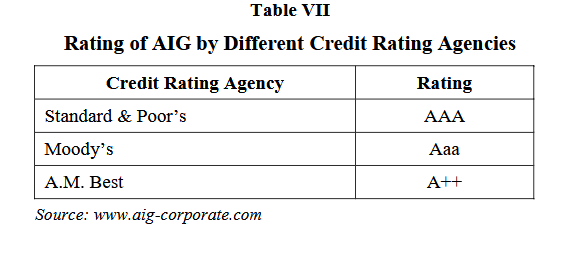
In 2001, AIG was rated as 'very good' and 'excellent' by various rating agencies. (Refer Table VII). S&P's 'AAA' represented the highest rating for an insurer with very strong financial characteristics. Moody's 'Aaa' indicated excellent financial security. A.M. Best's 'A++' indicated the company's strong ability to meet its obligations to policyholders over a long period of time.
SOCIAL RESPONSIBILITY
Since its early years, AIG had participated actively in social welfare. In 1955, the company established the Starr Foundation in New York. The Foundation was created mainly to support education and projects in medicine and healthcare, public policy and culture. It offered scholarships to about 80 colleges, universities and secondary schools. The foundation also supported organizations that offered need-based financial aid to students attending secondary and post-secondary schools. It had a special scholarship programs for the children of AIG employees. The Foundation's support in medical and health care areas included aid for research, and for care to neglected communities. It also gave aid for meeting other human needs like literacy, housing and nutrition programs. It made grants for cultural activities to museums and to community-based groups of artists.
AIG and its subsidiaries were also involved in community projects and activities. AIG offered many educational scholarships to needy students and also gave donations to educational institutions. The senior management staff of AIG spent some time with high school children, helping them develop leadership qualities. The company also encouraged its senior staff to take up positions of influence in educational and community development organizations.
In 1994, AIA at Singapore raised more than $65,000 for the Disabled People's Association by organizing an event called „Fund on Wheels' Motor Rally. AIA aimed at developing a sense of social responsibility in its agents too. It encouraged its agents to participate in community events. The company instituted achievement wards and scholarships, and conducted activities like Children's Day celebrations for under-privileged children. It also made donations to poorer countries.
In late 1995, the Starr Foundation donated $5 million to establish the Starr Center for Human Genetics, jointly with the Rockefeller University. The center, one of the largest in the US, enabled scientists to do research on heart disease, diabetes and Alzheimer's disease17. The Rockefeller scientists also studied other genetic disorders like obesity, autoimmune disease, mental illness and cancer. In 2001, AIG created „AIG Disaster Relief Fund' to offer financial support to the families of victims of September 11 attacks and also to carry out the rescue and recovery operations. The company collected donations from all its employees for the fund. The Fund raised about $1,800,000, which included a matching contribution from Starr Foundation. The Fund did not offer support directly to the victims' families. The money was distributed through various non- profit organizations, which offered support services. The Fund was also used for other purposes. For example, The Starr Foundation contributed $10 million to the New York City's non-profit organizations to support firefighters and police officers.
AIA at Hong Kong set up the AIG Foundation, a non-profit organization for supporting charitable activities, in 1995. The Foundation aimed to help educational, medical, sports and community programs. In February 2002, AIG Foundation (Hong Kong) supported the MSF Orienteering Competition 2002. The competition was a fund raising event jointly organized by the Medicins Sans Frontiers, Hong Kong Commercial Broadcasting Co., Ltd. and Orienteering Association of Hong Kong. The event raised more than HK$1 million for charity purposes. AIG also gave donations to the International Research and Exchanges Board (IREX), a non-profit organization specializing in higher education, internet development and civil society programs in the US, Europe and Asia.
CORPORATE GOVERNANCE
According to analysts, though AIG had a remarkable record of growth and profitability for more than two decades and was rated as one of the best insurance companies by many rating agencies, the company followed poor corporate governance practices. At AIG's AGM of 1999, three stockholder resolutions denouncing its corporate governance practices, were presented. The criticisms were mainly about the composition of AIG's board. They said that the board was composed largely of insiders. When the board was presented with the resolutions asking for a change in the composition of the board, the board of directors gave a „no' vote to all of them. They
said that “the firm had done well with its current board, which represented deep industry and professional knowledge.”
The AIG board had 18 directors, 10 were senior executives at AIG and its various subsidiaries. One of them was the son of Greenberg, Evan Greenberg (who resigned in 2000 to head ACE Ltd as Vice Chairman and CEO). Of the eight remaining outside directors, one was a lawyer and the other was a popular trade-consultant. The lawyer's firm served AIG, and the trade-consultant's firm was retained by AIG. Of the six truly independent directors, two were academicians and four retired executives.
In addition, analysts said that the board did not have a nominating committee. However, AIG said that the executive committee formally served as a nominating committee and also determined nominees for membership. The executive committee of the board had six members, of whom four were insiders, including the CEO and the COO.
The compensation given to senior management and directors was not clearly disclosed. The senior management received very attractive perks including chauffered cars, use of a yacht and corporate aircraft, club memberships etc. It was not easy to evaluate their non-monetary compensation in these forms. The total pay of executives was also difficult to evaluate because of the complex arrangements of the executives with the two corporate entities Starr and SICO19. According to the Securities Exchange Commission (SEC), the two corporate entities were the parent companies of AIG. Many of the senior executives served as directors and officers at Starr, SICO, and Starr Foundation and received separate compensation, which was not disclosed.
It was also reported that AIG's proxy statement did not disclose several items such as fees paid to some outside directors. The matter was covered as follows: “certain outside directors also served as directors of various subsidiaries, and receive fees for their service in this capacity20.” Payments to these directors were not disclosed. The total director's fee was also not disclosed.
FUTURE OUTLOOK
At the beginning of the new millenium, AIG had emerged as a global leader in the insurance and financial services industry. AIG was also a leader in asset management for individual and institutional markets in the US. The company had one of the largest retirement savings businesses in the US.
After the IT boom in the late 1990s, there was a widely felt need in the IT industry for network security insurance like coverage for virus attacks, denial-of-service problems, disruption of a company's systems by hackers, and website defacements. Several IT companies opted for this type of insurance, and the e-insurance market witnessed significant growth in 2000-2001. In 2000, AIG entered the e-insurance market with the formation of AIG e-Business risk solutions. In 2002, the company was as a leader in the global e-insurance market with a market share of more than 70%. The company had written about 1500 policies for small and large conglomerates. Other major players like Chubb Corp. and Zurich North America had also started offering insurance products for e-business markets. E-Business insurance products sold at a huge premium compared to traditional insurance products due to the high risks involved.
In 2000, AIG rolled out a series of e-business initiatives to improve its own functioning. This included websites to support product distribution, customer service and informational needs of businesses, brokers, agents and others served by the AIG Group. The initiatives improved the company's service and distribution. All the websites could be now accessed through the AIG Internet gateway page www.aig.com (Refer Exhibit VI).
In 2001, AIG focused mainly on expanding its global operations. The acquisition of Chiyoda further strengthened the company's presence in the Japanese life insurance market. During the year, AIG was also granted permission by the Chinese government to open its life insurance operations in four other cities including Beijing, Suzhou, Dongguan and Jiangmen.
In early 2002, most of the leading insurance companies in the US were in deep financial trouble due to the claims made by victims of the September 11, 2001 terrorist attacks. Some companies had also suffered greatly from the decade-long price war in the industry. The insurance industry also witnessed significant changes in some of the segments in which AIG was operating. In the general insurance segment, the insurance premiums began to stabilize after almost a decade. The lack of a proper succession plan at AIG was a cause for concern, according to many analysts. They felt this could have a significant negative impact on the company in the future. Greenberg seemed to be very reluctant to step down. He had initially groomed his son Evan and made him the President of AIG. However, Evan Greenberg left the company in 2000 for personal reasons. To stem the criticism, Greenberg announced a succession plan on May 1, 2002. He appointed Martin Sullivan and Edmund Tse as two co-COOS, and Frank Zarb as chairman of the executive committee. But, Greenberg did not announce the date of his retirement. When he was asked for the date of his retirement, he said, “It ain't going to be ten years from now!.” It was reported that he had not answered any further questions.
Analysts criticized the succession plan and commented that if Greenberg continued for long, he would be sending the wrong signal – that he was irreplaceable. An analyst at BusinessWeek said22, “Even if Greenberg is still in fighting form in the boardroom and on the tennis courts, it's time for him to truly prepare to hand the mantle to somebody else. After all, Jack Welch of General Electric knew he had to step aside at the age of 65.” Greenberg defended his decision, saying that both GE and IBM had witnessed a fall in their share prices after naming new CEOs. Analysts, on the other hand, felt that there were many qualified managers in the group's diversified businesses, who could take over as CEO. Some executives at AIG reportedly felt that Greenberg's eldest son Jeffrey might become CEO. Jeffrey was the head of Marsh & McLennan.
However, a section of Wall Street analysts and AIG's shareholders wanted Greenberg to continue as CEO in order to keep the earnings growing. Al Capra of Putnam Lovell NBS Securities said, “He's still very much at the top of his game.” Bijan Moazami, Analyst, Friedman, Billings, Ramsey added, “Nobody can manage this company better than Hank.”24 Greenberg had very good relations with important people in political and corporate circles. Analysts felt that he needed to expose other important executives at AIG, to these people as it would be very difficult to replicate Greenberg's reach. Michael Paisan of Williams Capital Group commented, “He's one of the only people who can knock on the door of the premier of China and have the guy answer it.”
THE GLOBAL INSURANCE INDUSTRY
The global insurance industry was being influenced by external factors including emerging distribution channels to market insurance products, consolidation and globalization of insurance companies, rapidly developing technology and changing laws and regulations.
In the late 1990s, insurance companies around the world believed that the size of the company influenced market power and helped in reaping the benefits of economies of scale in the insurance industry. Industry watchers felt that a huge capital and a thorough knowledge of language, culture and legislation was necessary to achieve global dominance and establish a presence in all the lines of highly competitive insurance industry. Explaining about the insurance industry scenario in China, Zhou Yan Li, Commissioner of China's Insurance Regulatory Commission25 said, “Although foreign companies have certain advantages in some aspects, our domestic companies are in the same market with the same language, culture and legislation. It is easier for domestic companies to contact each other. In these aspects, the foreign companies are no match at all.” Analysts felt that the global insurance companies must focus on key areas where they had significant competitive advantage over their competitors and exit those areas in which they were lagging. They also expected that outsourcing of non-core activities in the insurance industry would increase and there would be more strategic alliances with financial services and non-financial services companies.
The Internet was expected to become a strong distribution channel for simple insurance products in the industry. However, analysts remarked that distribution in this industry was 'self-selected' by the consumer. In a internet world, nobody 'owned' the customer and the customer had more knowledge than before. Therefore it would be difficult to retain customers. There was also a lack of awareness of this channel in some regions of the world. The Internet had some definite advantages to offer – it could support complex business models to handle many processes of an insurance firm, help in getting new customers, and was an effective distribution channel. The
Internet also reduced costs for companies and simplified the claims-management process.
In the initial years of the new millenium, all major global insurance companies were spending billions of dollars on new business strategies. Online selling was very popular in the personal lines segment of the industry. Analysts felt that insurers should use the Internet first to re-organize business processes, then to enhance existing distribution channels, and only then for creating new distribution channels.
Technological advancements in health care have increased the lifespan of most people. Many governments across the world were reducing provision of social security. These factors fuelled the growth of retirement savings and health care. Although conventional life products continued to dominate the market, rapid growth in wealth management products was expected, giving consumers wider investment choice. In the US, life insurance was expected to be associated with greater choice in the mode of investment for consumers and the provision of fund management. Also, many life insurance agents were expected to become personal financial planners.
Markets were deregulated worldwide and this led to the emergence of universal financial services rather than the conventional stand-alone banks, insurers and brokerage27 firms. This trend was also attracting new and non-traditional players into the market. This seemed to have happened particularly in the Asian insurance industries. Simultaneously, there was more regulation on the way products were sold. An analyst at PriceWaterhouse Coopers said, “There is a shift from regulation of what is sold by a particular institution to regulation of how it is sold.” Many countries were forming regulatory bodies for this purpose like the FSA28 in the UK and the APRA in Australia. Customers too became more demanding and had more detailed knowledge than ever before. So companies had to meet the demands of their customers and had to put in place and follow good practices in corporate governance.
National borders were collapsing in the industry. Labor-intensive tasks were shifted to low-wage countries, using the Internet. Many US companies shifted service centers to Canada to reduce processing costs. The most suitable processes for relocation were claims management, administration of policies, accounting and underwriting. Several European companies were establishing back-office operations in countries like India.
Branding had also come to play an important role in the insurance industry. Financial services brands were being promoted in the same way as consumer product brands like Coca-Cola and Levi's. It was advantageous for global companies to build a brand. Many global companies, like Allianz, AXA and ING, were bringing their insurance operations across the world under the name of the parent company. Some companies like Sun Life of Canada, HSBC in Hong Kong and Tokio Marine and Fire in Japan had strong domestic brands. But analysts felt that it was important for such companies too to build a global brand.
In 2002, the insurance industry in the US contributed significantly to the US economy, the P&C insurance market30 reported about $380 billion in earned premiums. All through the 1990s, the premium rates had not increased significantly. During 2001-02, the scenario changed and the insurance companies increased their premium rates. In addition, casualty losses were also reported to be high during this period. Despite the increase in premium rates, many companies in the US had posted losses.
The September 11, 2001 terrorist attacks on the US resulted in an increase in premium rates for several types of insurance coverage. It was estimated that the rates would increase by 16% in 2002. Apart from the general insecurity arising out of the terrrorist attacks, the premium rates rose because of the large number of workers' compensation claims and homeowners' insurance claims. Insurance companies withdrew many types of insurance and the terms of the remaining types of coverage were also changed. The September 11, 2001 attacks also resulted in a sharp increase in the sale of life insurance products. It was estimated that, in 2001-02, the premium rates in the US for coverage of private homes and automobiles increased by 6%, commercial business coverage by 30% and other specialty insurance by 400%.
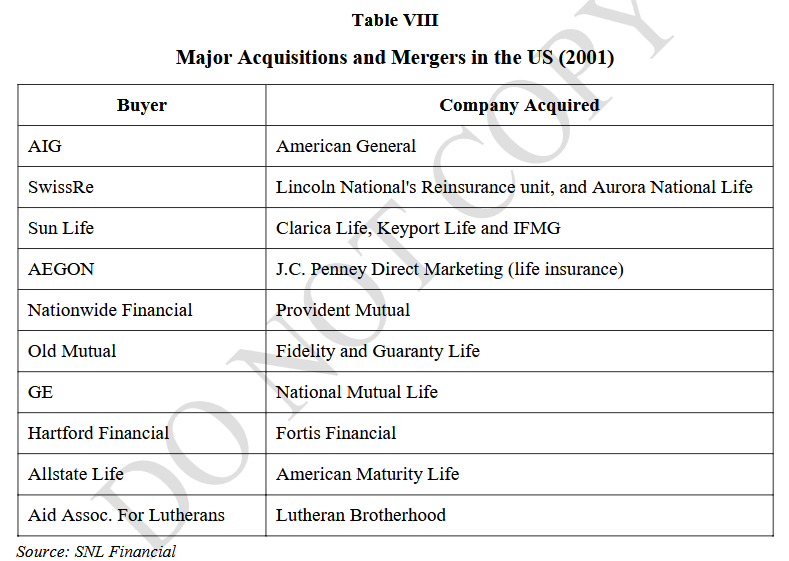
Mergers and acquisitions continued at a rapid pace in the insurance industry in the US during 2001-02. There were reportedly 201 mergers during the period January to September 2001, in the segments of life, P&C, and health care. Most of the mergers were of life and health care insurance companies (Refer Table VIII). However, consolidation among insurance companies seemed to be slower than among commercial banks. The reasons might have been differences in insurance policies between one insurer and another, and the different types of distribution, marketing and claims processing adopted by the companies.
Another major trend witnessed in the US insurance industry was „demutualization,' that enabled the companies to distribute their assets in the form of shares through an IPO and enrich the stockholders. Some of the major companies like Prudential Financial, John Hancock and others were demutualized during 2000-01.
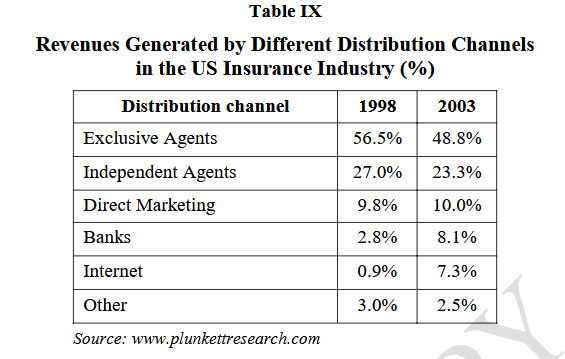
Distribution channels in the US insurance industry also witnessed significant changes. The sale of insurance through banks and the Internet gained momentum and the role of traditional agents began to decline (Refer Table IX). Customers were first acquired online and then assigned to an agent, who would receive less commission on such customers. This mode of operation was first used by Allstate, a major player in the US insurance industry.
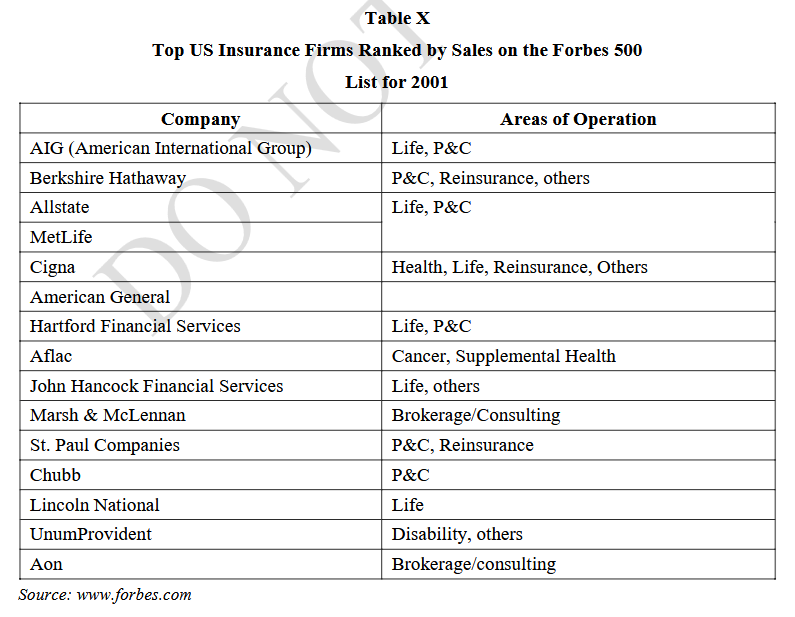
AIG was the leader in the US insurance industry in terms of revenues, and was followed by Berkshire Hathaway and Allstate (Refer Table X). Berkshire Hathaway was a holding company operating in the P&C insurance industry through its subsidiaries, National Indemnity and GEICO Corp.; and in the reinsurance industry through General Cologne Re. Allstate was the second largest personal lines insurer in the US. About 75% of the company's sales came from auto insurance and homeowners' insurance. The company also sold P&C and life products in the US, Asia and Europe. The company operated its life insurance business through Allstate Life and Gleenbrook Life, while Allstate Financial offered investment products.
QUESTIONS FOR DISCUSSION
1. AIG had a presence in a broad range of product segments. What factors, according to you, lead AIG to become the second largest company in the life insurance segment and the one of the leading players in the retirement and asset management segment? Explain.
2. Employees at AIG usually joined at an early age and left the company after several years of service. What do you think are the factors responsible for the low employee turnover rate at AIG? What were the various strategies adopted by AIG to motivate its employees?
3. AIG's board of directors reportedly had many insiders. What are the other corporate governance problems of AIG? Do you think it is justified on part of AIG, a leading and respected company in the world, not to comply to the corporate governance norms? Justify your stand.
4. While some analysts criticized the succession plan and commented that Greenberg should not continue for long, others felt that Greenberg should continue at AIG to keep the earnings high. Keeping in view the various problems faced by the company, device a viable succession plan for AIG.
5. Some analysts felt that AIG might not be successful in the long run due to its poor succession plan and other corporate governance problems. What strategies do you think, AIG should adopt to deal with the increasing competition and its internal problems?
EXHIBITS
Exhibit I
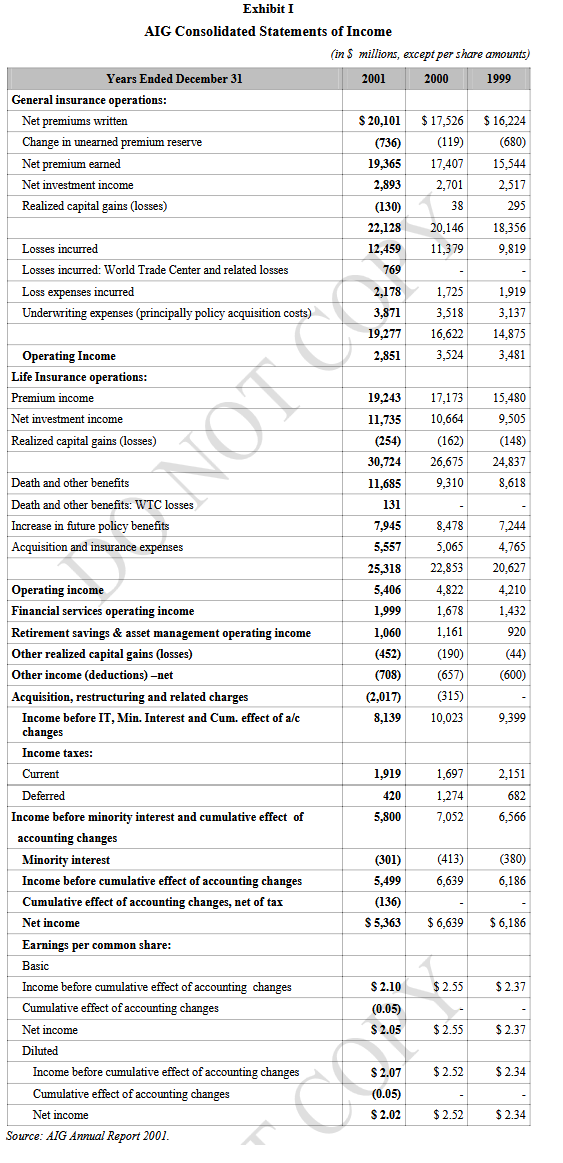
Exhibit II
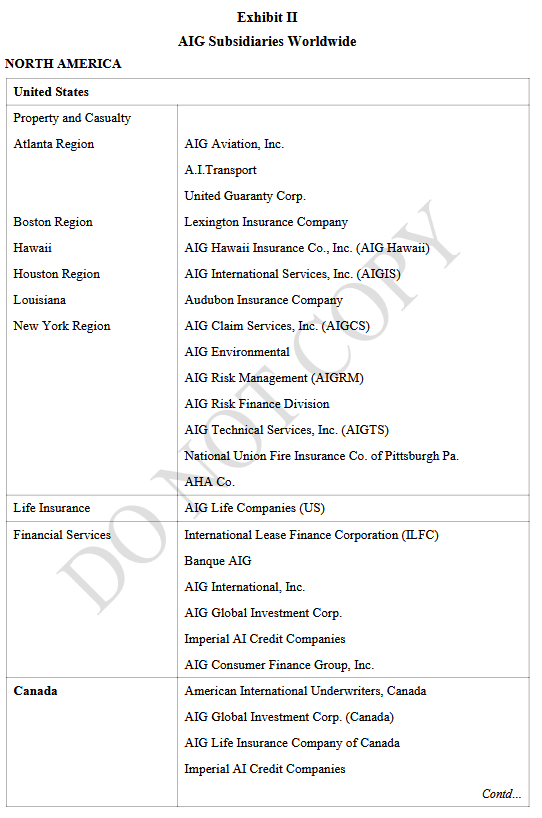
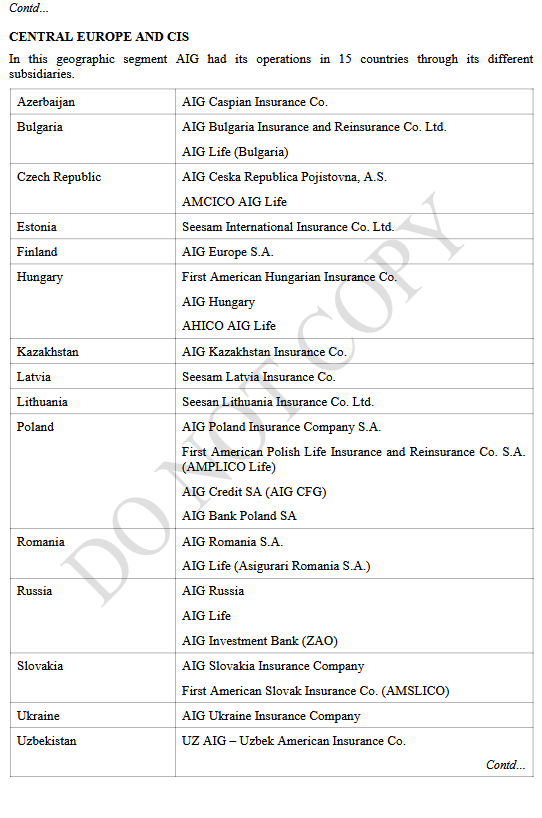
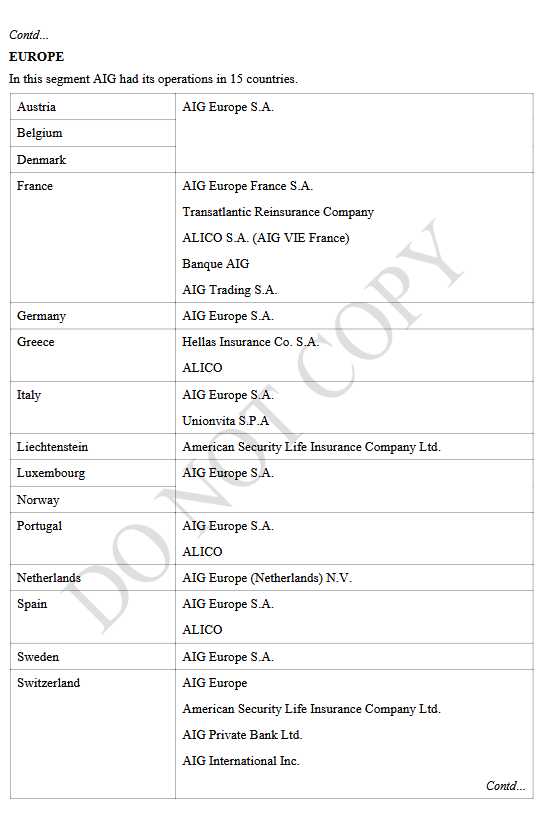
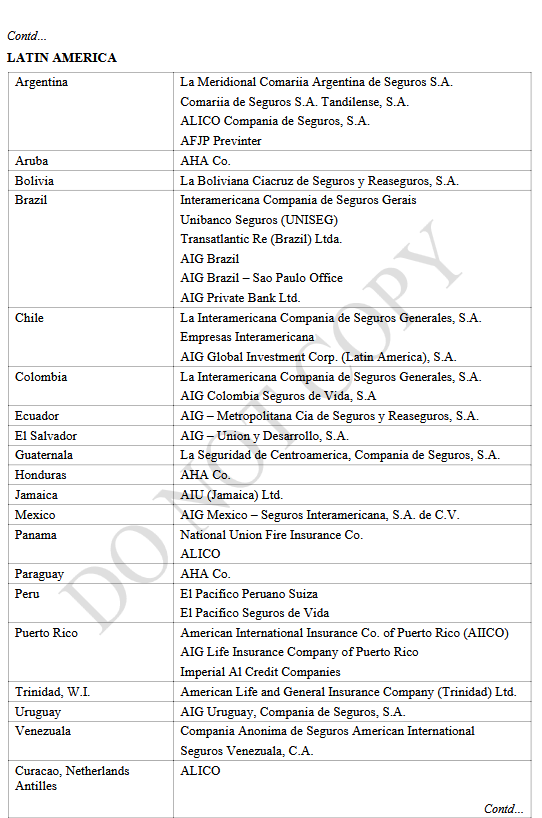
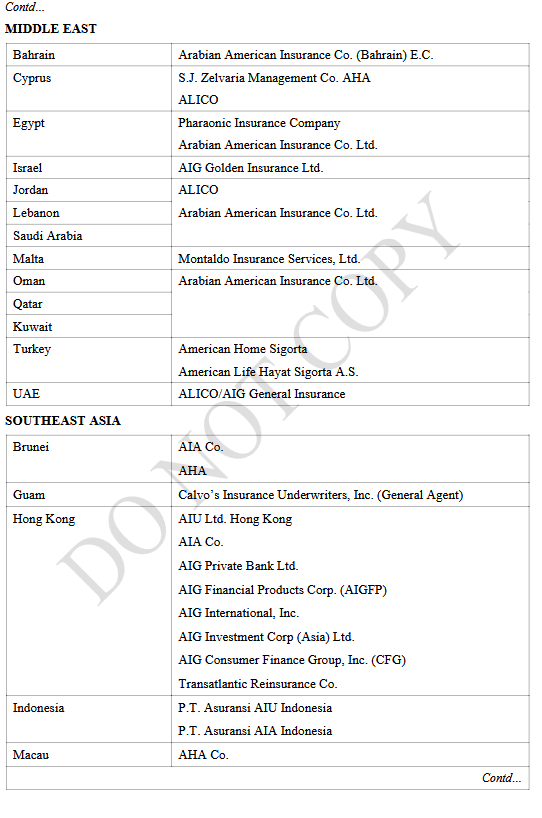
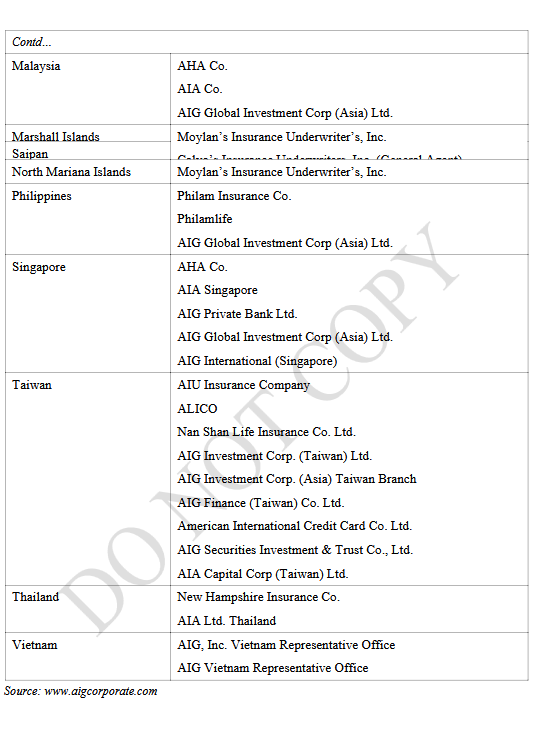
Exhibit III
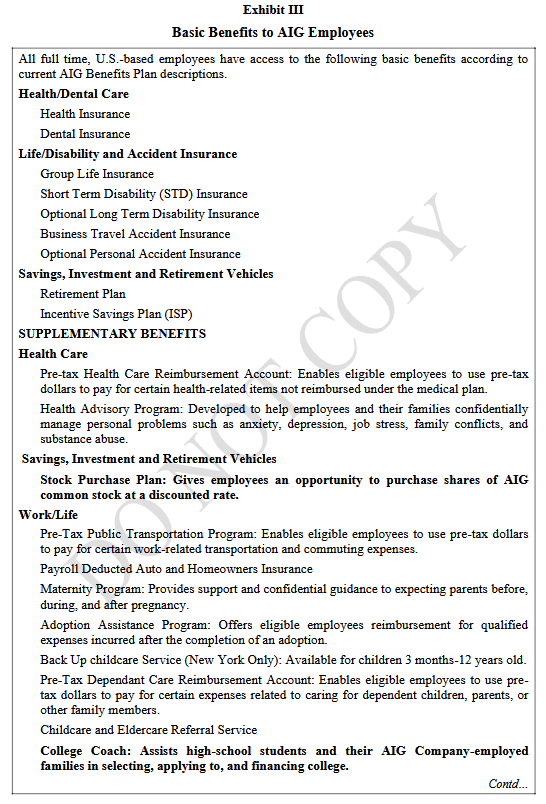
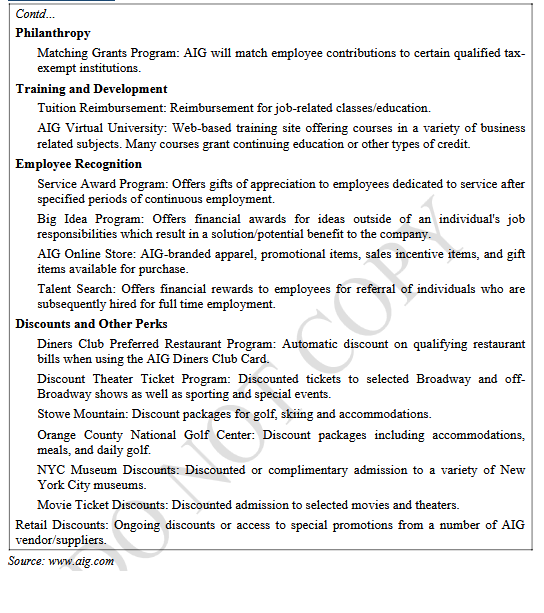
Exhibit IV
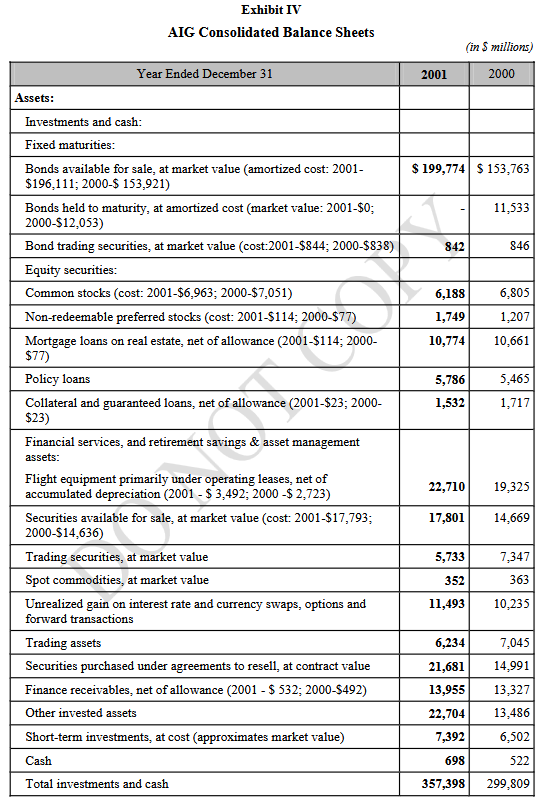
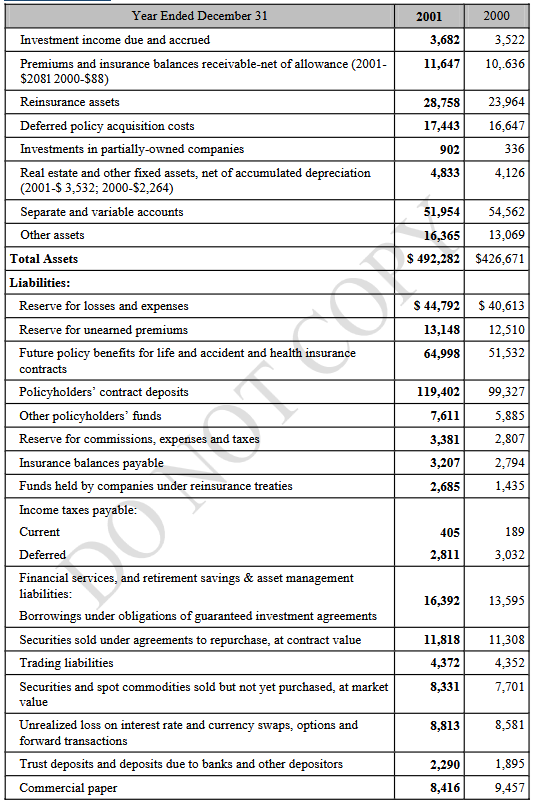
Exhibit V
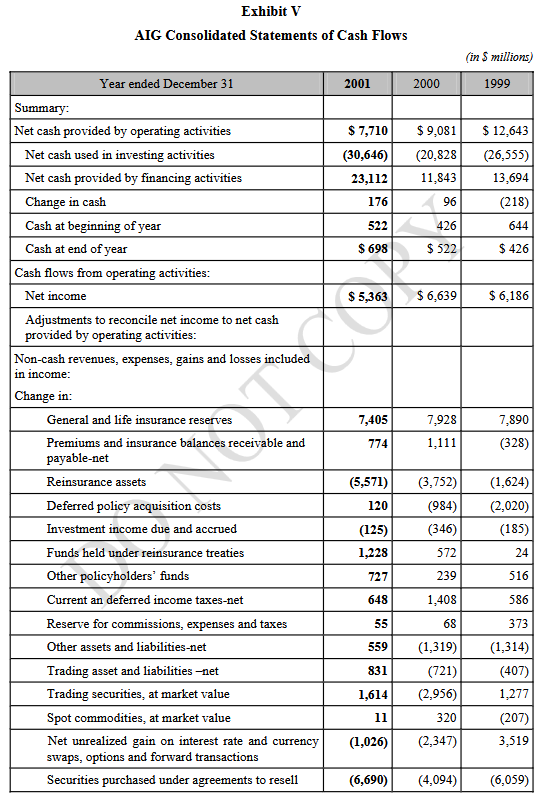
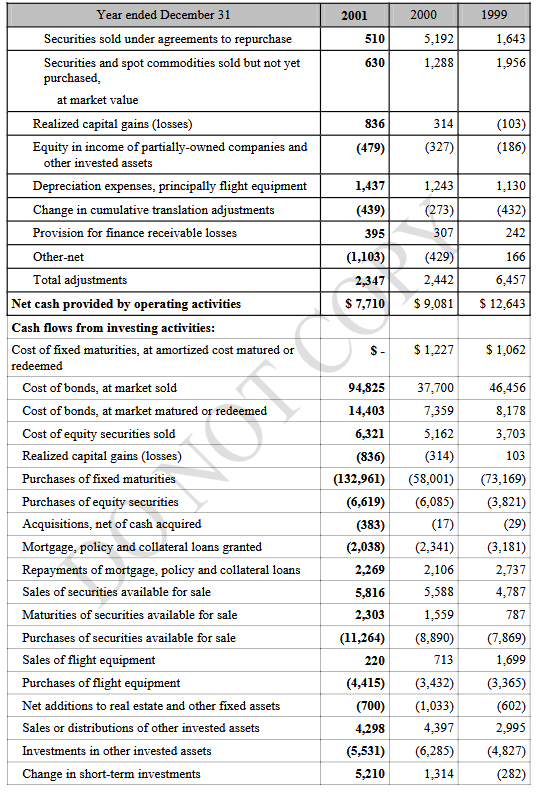
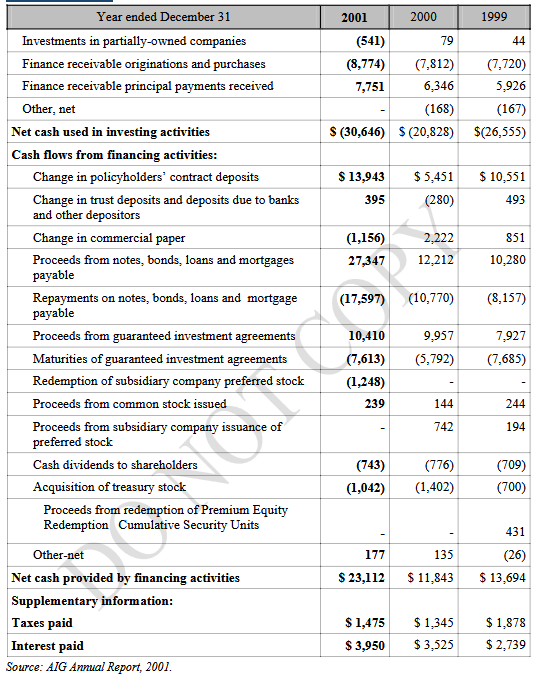
Exhibit VI
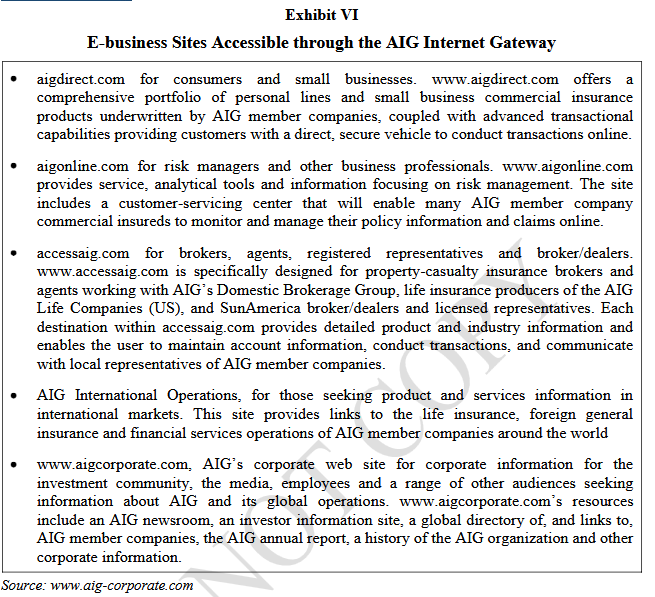
Exhibit VII
Keywords
Functional areas, American International Group Inc, human resources, finance, inception, product segments, general insurance, life insurance, financial services, retirement savings, asset management
Related Case Studies
| Case Title | Details |
|---|---|
|
Case Title Iridium: Making a ComebackCase Code: CLBS048 |
Details |
|
Case Title Evolution of InfosysCase Code: CLBS034 |
Details |
|
Case Title The Fall of Daewoo MotorsCase Code: CLBS030 |
Details |
|
Case Title Reinventing Cadbury (Caselet)Case Code: CLBS024 |
Details |
|
Case Title The Resurgence of Radio in IndiaCase Code: CLBS021 |
Details |