
Air Deccan: The First Low Cost Airline in India
🌐 International Buyers — Pay via PayPal
Details
BSTR134
20
2004
YES
500
Air Deccan
Transport & Logistics
India
Market Entry ,Growth Strategy
Abstract
The case describes the entry and expansion strategies of Air Deccan, the first low cost airlines in India. It discusses in detail the low cost business model of Air Deccan, its target market and the efforts made by the company to promote its services. Finally, the case highlights the challenges facing Air Deccan and examines whether the company's business model would be successful in India or not. The case includes a detailed note on the Indian civil aviation industry covering the profile of major players, India's civil aviation policy and the statutory requirements to be fulfilled by a company to enter and operate in the industry.
Learning Objectives
The case is structured to achieve the following Learning Objectives:
- Study and analyze the structure of the Indian civil aviation industry
- Develop an understanding on the operations of low cost carriers in India
- Examine the viability of low cost business model in the Indian aviation industry.
Contents
“I believe that for India to be a developed country, every Indian should be able to fly. In all developed countries, the common man flies.”
- GR Gopinath, Managing Director, Air Deccan.
On September 24, 2003, Air Deccan, the first low cost airline (LCA) in India, was ready to take off on its inaugural flight from Hyderabad to Vijayawada. The flight had 33 passengers, who included the Bharatiya Janata Party president, Venkaiah Naidu (Naidu), the then civil aviation minister Rajiv Pratap Rudy (Rudy) and some journalists. A few seconds before take-off one of the aircraft engines caught fire and panic gripped everyone. The fire was extinguished and the passengers had a miraculous escape. The flight had to be aborted.
Analysts felt that the accident would earn a bad name for Air Deccan, which had started business, just a month back. An analyst commented that the accident was “Enough to hurt consumer sentiment. Fragile consumer sentiment! Enough to cause a consumer to associate the otherwise USP of cost advantage (low fares) to low quality and therefore high risk to life.”
Despite the initial setback, in December 2003, Air Deccan announced that it was expanding its fleet and introducing flights on several new routes. The airline, which had started operations mainly in South India, said it would foray into Western India before entering the Northern and Eastern routes. The fares for Air Deccan flights were 40% to 50% less than that of other leading full service airlines (FSAs) in the country. Stressing the safety aspect, Gopinath said, “We assure that our low fares come with high standards of flight safety. We have very stringent safety regulations in place, approved by the regulatory authorities.”4 Soon, Air Deccan services attracted
a positive response from customers.
In July 2004, Air Deccan stunned FSAs and industry experts by announcing its 'Dynafares' wherein it introduced tickets for as low as Rs 700 for flights between major metropolitan cities in India. Economy class fares between these cities ranged between Rs 6,500 and Rs 10,000 on FSAs. Analysts and aviation industry experts began discussing the implications of such low fares and wondered whether other carriers would enter the LCAs market. One analyst described the impact of LCAs on the Indian civil aviation industry saying, “A full service airline will not be able to compete with no-frills carriers due to comparatively high operating cost. Hence, all existing full
service airlines will have to respond to the new challenge.”
The history of Indian aviation industry dated back to the early 1930s, when one of the leading Indian business houses, the Tatas established Tata Airlines. There was limited activity in the sector over the next two decades despite of eight more private companies entering the airline industry. In 1953, the Air Corporations Act came into force and all the assets of the then existing nine airline companies were transferred to two corporations – Indian Airlines Corporation (IA) and Air India International (Air India). While Air India offered international air services, IA offered domestic services. The Air Corporations Act 1953 prohibited any person or company to operate any scheduled air transport services from, to or across India. Therefore, two corporations enjoyed a monopoly status in the scheduled air transport services market. In 1962, Air India International was renamed as Air India Limited.
In 1986, the winds of change blew and private airlines were allowed to operate chartered and non-scheduled services under an 'Air Taxi' scheme. The scheme was introduced to boost tourism and augment domestic air services. The carriers were however, not allowed to publish time schedules or issue tickets to passengers. The government's aviation policy was progressively liberalized in the early 1990s. In 1993, the Air Corporations Act 1953 was abolished, which put an end to the monopoly of IA and Air India in the scheduled air transport services market. After the abolition of the Act, there was a considerable change in the India government's aviation policy.
From March 1994, the market was opened to any company that fulfilled the statutory requirements of scheduled airline services (Refer Exhibit I statutory requirements). The government approved eight private carriers to start domestic operations. They were Jet Airways (JA), Air Sahara (Sahara), Indian International, Archana Airways, East West Airlines, NEPC Airlines, Modiluft and Damania Airways. While Indian International was the first licensee after the open skies policy came into force, East West was the first scheduled airline to take off from the ground. In 1995, the Airports Authority of India (AAI) was formed after the merger of the National Airports Authority (NAA) and the International Airport Authority of India (IAAI). The AAI offered infrastructure facilities to all airlines. There were five international airports – Delhi, Mumbai, Kolkata, Chennai and Thiruvananthapuram – for scheduled international operations by Indian and foreign carriers.
By late 2000, however, most private players went out of business after incurring heavy losses. The reasons included lack of experience in the aviation field, inadequate planning and poor promoter support. According to analysts, none of the private carriers had the staying power or the professional expertise required for the aviation industry. Rasheed Jung, an aviation consultant said, “All of them, bar none, were riff-raff. All of them were financially extremely weak and almost all of them had extremely poor management.”
As a result, by mid-2001, only JA and Sahara managed to stay afloat among the private carriers. In fact, they went a step ahead by grabbing a major market share from IA, which had been enjoying a monopoly. By mid-2001, JA commanded 42% of the domestic market and Sahara claimed another 7%, leaving 51% for IA (Refer Exhibit II for a note on Jet Airways). The September 11, 2001, terrorist attacks in the US adversely affected the global airline industry. Reportedly, the industry suffered a loss of $18 bn and about 400,000 aviation-related jobs were lost. However, the Indian aviation industry was not badly hit by the attack.
In early 2003, the Indian government expressed concerns that the civil aviation industry remained a part-monopoly, with only three players. To introduce more reforms, in August 2003, the government established a committee under the chairmanship of Naresh Chandra, former cabinet secretary, to prepare a road map for a civil aviation policy (Refer Exhibit III for aviation policy on passenger and air cargo transport). The committee recommended that the foreign direct investment limit in the domestic civil aviation sector should be increased to 49% from the permitted 40%, which the government accepted (Refer Exhibit IV for the key proposals by Naresh Chandra committee). The committee also stressed the need for making air travel more affordable. The recommendations were accepted and excise duty on Aviation Turbine Fuel (ATF) was cut to 8% from 16%. The government also did away with the 15% inland air travel tax. By August 2004, the government started reviewing other guidelines pertaining to the aviation sector including the ban on financial arrangements with foreign airlines for lease finance, hire purchase and other loan arrangements. The existing policy prevented any such financing arrangements. Industry analysts realized that the government was clear in its intention of bringing air travel within the reach of the common man. Taking advantage of liberal policies, Air Deccan started operating in short haul routes in Southern India.
Gopinath was in the Indian army till 1980, when he left his job and started trying his hands at various things like multi-culture farming, sericulture and agri-consultancy. In the early 1990s, Gopinath was in Singapore, where he read about a helicopter company, founded by a girl in Vietnam. The company was set up to carry tourists in the US to Vietnam after the war had destroyed infrastructure in the country. The story reportedly inspired Gopinath to do something similar in India.
In 1995, Gopinath started Deccan Aviation Private Limited (DAPL), a private helicopter charter company, providing helicopter services for company charters, tourism, medical evacuation, offshore logistics and a host of other services. DAPL soon emerged as a pioneer in helicopter tourism in India. While serving tourists, the company encountered demands for flights to many smaller tourist places. Gopinath claimed that government representatives from the states of Andhra Pradesh and Karnataka met him and asked whether DAPL could provide air links to smaller cities in these states.
Following this, Gopinath mooted the idea of setting up an LCA. After finding the business idea lucrative, he roped in two of his friends – Captain Samuel (Samuel) and Jayant Pooviah (Pooviah) for the project. Air Deccan was born and Samuel held the post of executive director while Pooviah became the company's vice- president. Gopinath and Samuel held an equity stake of 26% each while Vishnu Rawal, a Hong-Kong based friend of Gopinath, held 10% equity. Golden Ventures, which was promoted by an NRI group, held another 20% equity stake and the rest 18% was held by the Bangalore based Brindavan Beverages.
On August 25, 2003, the first flight of Air Deccan took-off from Bangalore to Mangalore. Rudy, former defense minister of India, George Fernandes and former chief minister of Karnataka SM Krishna flagged-off the first flight. On the same day, a flight from Bangalore to Hubli was also flagged-off. The company had started its two flights with only two 48-seater aircrafts, which it had obtained on dry lease from the French-based aviation major ATR. In September 2003, Air Deccan introduced flights for various cities in Andhra Pradesh and Tamil Nadu.
In December 2003, Air Deccan announced that it would fly long haul routes in India such as Delhi-Mumbai, Delhi-Bangalore and Chennai-Delhi. Disclosing the company's plans to media, Gopinath said, “We have major expansion plans and are going to increase our operations four times by April 2004. The airline is also going to break the image of a regional, low-frills airline and enter the trunk route market.” Gopinath promised that Air Deccan would maintain its fares at 50% less than economy class tickets of other FSAs. The company said it had leased seven latest A- 320 aircraft from the leading European manufacturer Airbus. The aircraft had the capacity to seat 140 passengers (Refer Exhibit V for Air Deccan's aircraft).
Apart from low fares, Air Deccan also stressed that it would take all necessary safety measures. The airline claimed that the leased aircraft were modern and did not have any safety problem. It further said that it had employed experienced engineers, crew and administrators. Air Deccan also made public the guidelines for safety and security on flights (Refer Exhibit VI for security regulations of Air Deccan).
In early July 2004, Air Deccan stunned its competitors and industry analysts by announcing that the lowest fare on various long haul routes would be just Rs 700. The average economy class fare of FSAs on a typical long haul route was about Rs 7,500 and Air Deccan was offering tickets at virtually 10% of these rates. Several analysts and customers took the announcement in disbelief saying there must be some hidden costs.
There was a clause. To be eligible for the Rs 700 fare, the ticket would have to be bought and confirmed at least 90 days in advance. Further, the company kept 25% of the seats priced between Rs 700 to Rs 1500 for all major trunk routes. Another 50% seats were reserved at 50% of the fares of the FSAs' economy class. The remaining 25% seats were at 70% of the price of economy class tickets of FSAs. The different rates were to be charged depending on when the customer actually got his ticket booked. Gopinath explained, “The earlier you book, the cheaper the fare will be. For instance, if you book 90 days in advance, it will be the cheapest; if you book 80 days in advance, you will pay a little more. The fare gets progressively costlier closer to the date of journey. If a passenger buys a ticket on the day he wants to fly, he would have paid more than many fellow passengers.”
Industry experts felt that by adopting this pricing model, Air Deccan ensured that the average cost of flying from one destination to other on major trunk routes remained at about 50% of economy class fares of other FSAs (Refer Exhibit VII for the comparison of regular fares of Air Deccan, FSAs and the Indian Railways).The pricing strategy was good enough to stimulate demand for the company's services.
Air Deccan's business model was inspired by the globally successful low cost model pioneered by the US-based Southwest Airlines10 in the 1970s. In the fiscal year 2003-04, the LCAs commanded a global market share of 25% and their revenues had grown by 40%. LCAs were continuously offering lower flying rates by inventing innovative ways to cut operational costs. Analysts claimed that the overall costs for LCAs were 45% to 60% to that incurred by FSAs.
To keep overall costs of the company low, Air Deccan took the following measures:
Food: Unlike FSAs, Air Deccan did not provide any food on board. However, it sold snacks and water bottles on its flights for a price. Serving and consumption of alcohol were not permitted. The company felt that for short distance domestic flights, most passengers did not want food. It said the savings on food were passed on to passengers in the form of lower fares.
Extra Seats: Since Air Deccan did not provide food, it did not require space for storing meals. The saved space was utilized for putting in extra seats. The company also reduced leg space compared to an FSA. This helped increase the seating capacity by another 20%. Gopinath explained, “An A-320 is having 140 seats in case of existing airlines. We have an advantage of over 20 per cent extra seating capacity as our aircraft will have 180 seats.”
Turnaround Time: Air Deccan preferred operating small planes, which took less time to be maintained and be ready again for flights after landing. As no food was served, it took less time to clean the aircraft. Moreover, the aircraft did not have to wait for food loading or unloading. Compared to FSAs, which took an hour after landing, Air Deccan's aircrafts took only 20 minutes to be prepared for flying. This enabled extra trips. On average, FSAs flew for eight to nine hours a day whereas Air Deccan flew for 11 hours a day. The company used the same kind of aircraft in its fleet. This helped in quickly moving cabin crew and the company did not have to worry about carrying spare parts for different aircraft. This too reduced turnaround time.
Distribution Costs: Air Deccan did not sell tickets through travel agents but did so through its web sites and call centres. At the time of booking, passengers got a booking number, which they had to quote to Air Deccan staff at the airport and show an ID with a photograph to collect a boarding pass. This system did away with commission charges for agents, printing charges for tickets and saved the company close to 11 to 15% of total costs. Air Deccan outsourced its call center connectivity to Bharti12 and Internet reservation system to the Delhi-based InterGlobe Enterprises.
Lower Employee Costs: Air Deccan operated with a small crew size, which ranged between four and six and used only one air hostess per flight (Refer Exhibit VIII for an inside view of Air Deccan's ATR aircraft). The company recruited employees on contracts. This helped reduce employee costs significantly. Moreover, the compensation package of Air Deccan was also 20% less than that of FSAs.
On Flight Advertisements: To generate additional revenues, Air Deccan decided to carry advertisements of other companies on its flights. It tied-up with Cutting Edge Media14 for this. Air Deccan utilized spaces such as baggage tags, ladder steps, cockpit doors, headrests, full centre aisle carpet and the reverse of the boarding pass for putting up advertisements.
Connecting Flights: Air Deccan did not provide any connecting flights. The company felt that the flights of airlines which offered connecting flights could not leave from one place unless all the flights connected to it had arrived. This many a times resulted in flight delays. Air Deccan offered point to point service in which passengers flying from point A to B and willing to take another flight from B were issued two different tickets. Once the flight landed at the point A, the passengers were supposed to carry their luggage on their own and board another flight from point B. Air Deccan made its clear that it was not answerable if passengers missed their onward flights in case, the first flight got delayed. Therefore, this service did not require flights at point B to wait resulting in lesser turnaround time.
Other Measures: Air Deccan did not hire any consultants for its various operations or for preparing the company's project report, thus saving on project costs. Gopinath claimed that saving costs was an obsession with Air Deccan. He said in an interview, “Now because of this obsession to cut costs, you would use every element in the organization to the least. We tell the pilots: Don't break earlier than required. Go to the end of exit and only then turn. You will save the tyres.”
Analysts felt that there was huge growth potential for LCAs in India due to the country's huge 200 mn middle income group population. Gopinath expected that at least one fourth of this population would use LCAs in the near term. He pointed out that India had 15 mn rail travellers every day. Of these 1,70,000 travelled in the air conditioned class and were potential customers for Air Deccan owing to the comparable prices.
Gopinath further said that the US had 40,000 commercial flights every day whereas India had only 400 flights a day. But India had four times more population than the US, so it could theoretically run 1,60,000 flights daily! Gopinath said, “Assuming that we had tapped 1 per cent of this potential, we still need 1,600 flights a day. Therefore, we need a quadruple jump in the number of commercial flights.”
Air Deccan defined its target segment as upper middle class in the short term but planned to tap the lower middle class aggressively in a couple of years. The company targeted middle level corporate employees, small and medium enterprises and visiting friends and relatives (VFR). Gopinath claimed that VFRs had always been price conscious and would extensively utilize Air Deccan's services. He also said that there were several companies in India, which sent their employees for corporate trips by train. He hoped that these employees would now switch to Air Deccan and save time.
Air Deccan also attempted to position its services for the common people of India. The company roped in Orchard Advertising, an Indian subsidiary of Leo Burnett; the US-based advertising company, for all its promotional activities. Orchard highlighted the low cost advantage of Air Deccan flights. It came up with a television advertisement featuring a cardboard cut out of a well built super hero. The advertisement showed people of different ages, hailing from different walks of life, taking turns to stand behind the cardboard cut out. These people included a school girl, a housewife, a business man, a small boy and a young motorcyclist. As they came behind the cut out, their positioning their heads in place of super hero's head, it was shown that they were ready to fly. The advertisement ended with a punch line, “Now everyone can fly – Air Deccan up to 50% lower airfares.”
Air Deccan concentrated more on the print media to save costs. The print advertisements essentially focussed on the company's low fares. After giving details of the flights, the advertisement discussed how 'Dynafares' worked. Analysts appreciated the airline for not going in for glossy ads and targeting the common man instead. (Refer Exhibit IX for Air Deccan's print advertisements).
Orchard claimed that the ads' positioning philosophy was 'Empowerment' as for the first time; flying was possible for many Indians. The advertisements did not harp on the low airfares but rather highlighted that the company had given an opportunity for many Indians to fly. Nitish Mukherjee, managing director, Orchard Advertising, explained the rationale behind the company's ad strategy, “Air Deccan was giving many their first flight ever. Therefore, it wasn't just a 'low fare airline,' but an airline that was empowering a nation. Hence, the film about real people who wished to fly, and an airline that is making it possible.”17An advertising expert commented, “Despite the communication essentially being about 'saving money and travelling smart,' the agency chose not to simply hammer in the brand's value-for-money proposition.”
All Air Deccan advertisements carried the tag line, which read “simplify.” The advertisements were simple and significantly different from traditional airline advertisements, which featured smiling air hostesses, plush seats, elegant atmosphere and a comfortable journey. Analysts felt Air Deccan successfully projected itself as an inexpensive carrier.
The media reported that passenger feedback for Air Deccan was largely positive. A few passengers felt they had a similar experience to that in FSAs. They said that though there was only one air hostess per flight, she was very efficient. One traveller commented, “The best part of Air Deccan is their Air Hostess. There is only a single air hostess and yes she manages well.”19 Gopinath explained that the air hostesses were instructed to behave with utmost politeness to everybody. He added, “They are not to judge them (customers) by their clothes or their knowledge of English. In fact, I have advised them to speak to passengers in whatever regional languages the passengers are comfortable with, and have tried to pick multilingual airhostesses.”
Travellers found the seats comfortable and the in-flight magazine fine. Some travellers, accustomed to the low sound in FSA flights, complained that the noise made by the propeller of the ATR aircraft was unsettling. However, they agreed that the service quality was acceptable and as it was offered at 50% of FSA fares, Air Deccan was worth flying.
Industry analysts agreed that the low fare business model of Air Deccan would attract many customers. However, they felt that passengers must be told in advance of the “no frills” experience on Air Deccan flights. Analysts felt that the company faced a tough task in conditioning prospective customers for the rather rugged in-flight experience without allowing any blow on the airline's image.
Even before Air Deccan started operating on long haul routes, leading newspapers in India reported that all air tickets in the Rs 700 category were sold out for 2004. The response for the flights was reportedly such that Air Deccan's website was jammed and the call centre flooded with calls requesting booking. Since the announcement of the Rs 700 category fares, the airline received 10,000 calls a day as against 5,000 a day earlier.
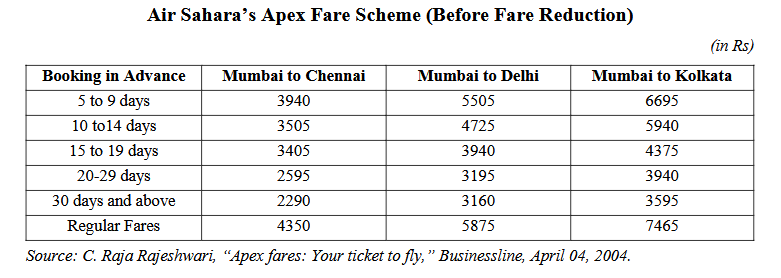
In response to Air Deccan's plans to offer services on major trunk routes, the FSAs quickly announced a fare reduction on these routes (Refer Exhibit X for new flight services of Air Deccan between April and September 2004). Sahara announced its “Apex fare scheme” for metros and reduced its fares by 30% (Refer Table I for Sahara's Apex Fare Schemes). JA followed by cutting prices on major metro routes by as much as 69%. IA also launched a super apex scheme and cut its prices to match that of JA.
Table I
 |
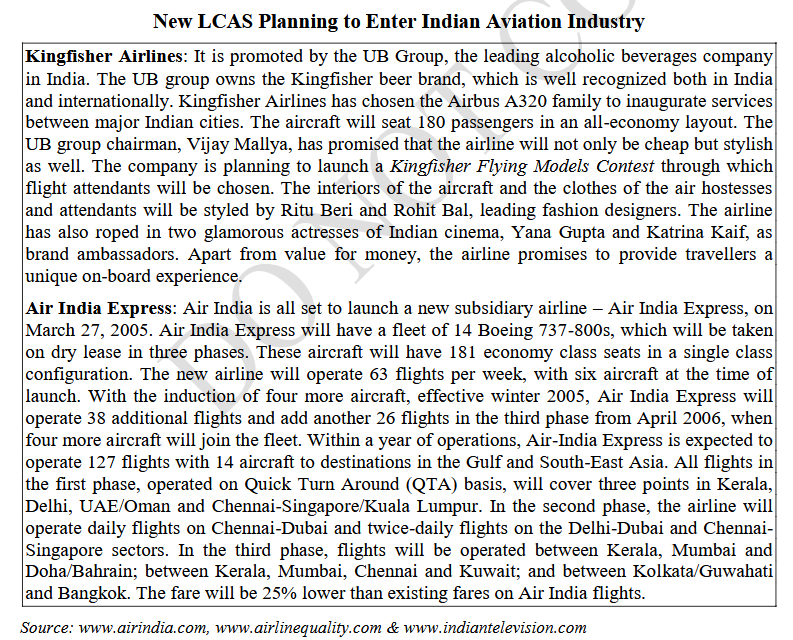
Air Deccan's success encouraged many other companies to establish LCAs. Prominent among them were Kingfisher Airlines launched by the UB group, Royal Airlines, which was a modified version of Modiluft, Air India Express launched by AI and Air One and Visa, to be launched by a group of former IA pilots. (Refer Exhibit XI for a note on King Fisher Airlines and Air India Express).
Industry analysts felt the entrance of new players and reduction of fares by the three FSAs would put pressure on Air Deccan. However, Gopinath was confident. He said, “I am ready for the war. Already my fares are low. I can afford to bring it down further, I will break even. They (FSAs) are already losing money, and they will bleed. What they have to realize is that this is a different model.”
Notwithstanding his optimism, industry analysts cautioned that there was a long way to go for the LCA model to be successful in India. A few analysts expressed doubts whether what was a success in the US and European countries could be so in India. One analyst commented, “Operating an LCA in India isn't as simple as transplanting a model. It will mean reworking the model for the Indian context.”
Analysts pointed out various pitfalls in the globally acceptable LCA model for India. They argued that since the wage rates were high in foreign countries, LCAs globally were able to cut a major portion of their costs by keeping a few crew members. On the other hand, manpower costs in India was very less compared to that in other countries so the Indian LCAs were not expected to reduce their costs significantly by keeping the crew size small. On the contrary, reducing the crew below the threshold level could in fact backfire and affect customer service.
Analysts also commented that it would be difficult for LCAs in India to cut distribution costs significantly. They argued that Internet penetration in India was just 1.65% of the population by January 2004. Further, the fuel cost accounted for 20% of the total cost of FSAs. In India, flying was still perceived as a luxury and the government had imposed higher taxes on ATF. So, Air Deccan could not save much on fuel costs, which formed a substantial part of total costs. They also pointed out the problem of airport charges in India. Airlines in India had no option but to use AAI airports, while in other countries airlines could use secondary airports where airport charges were less.
Analysts also said that the mortality rate in the airline business was very high. They said that the business was not as profitable as it might seem. In this regard, they quoted Richard Branson, the founder of Air Virgin who said, “The safest way to become a millionaire is to start as a billionaire and invest in airline industry.” Analysts felt that the LCAs must have the financial strength as usually an LCA had to incur losses in the first few years.
Exhibit I
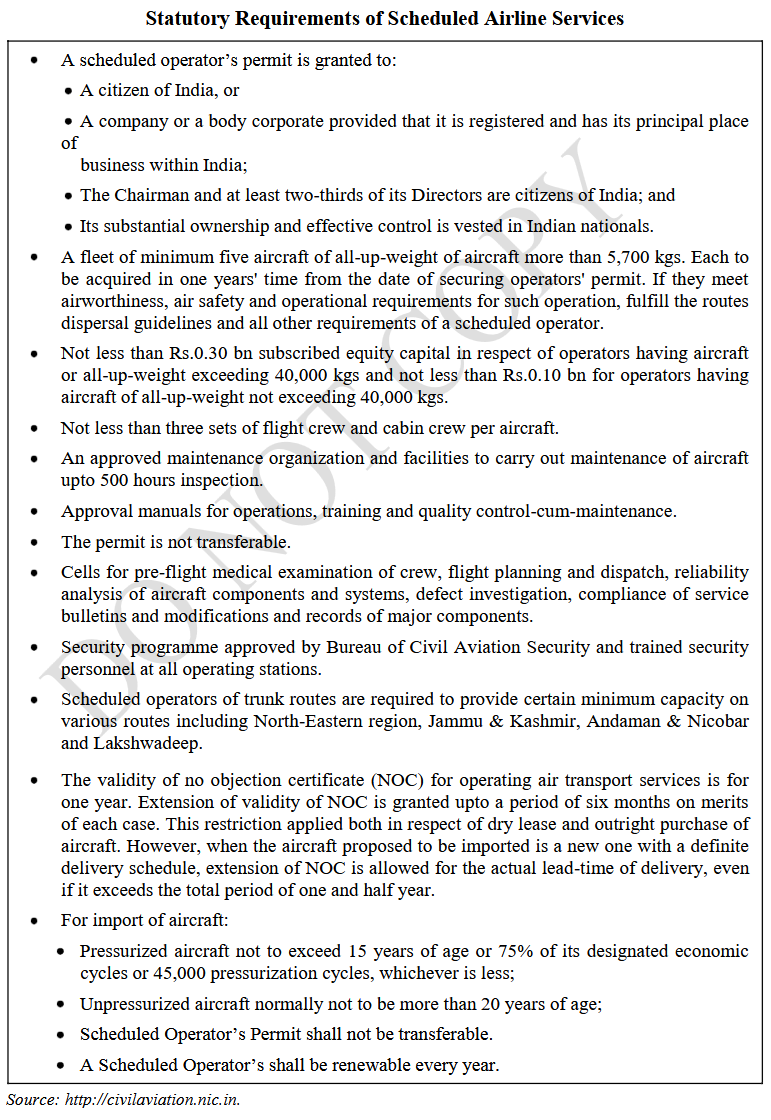 |
Exhibit II
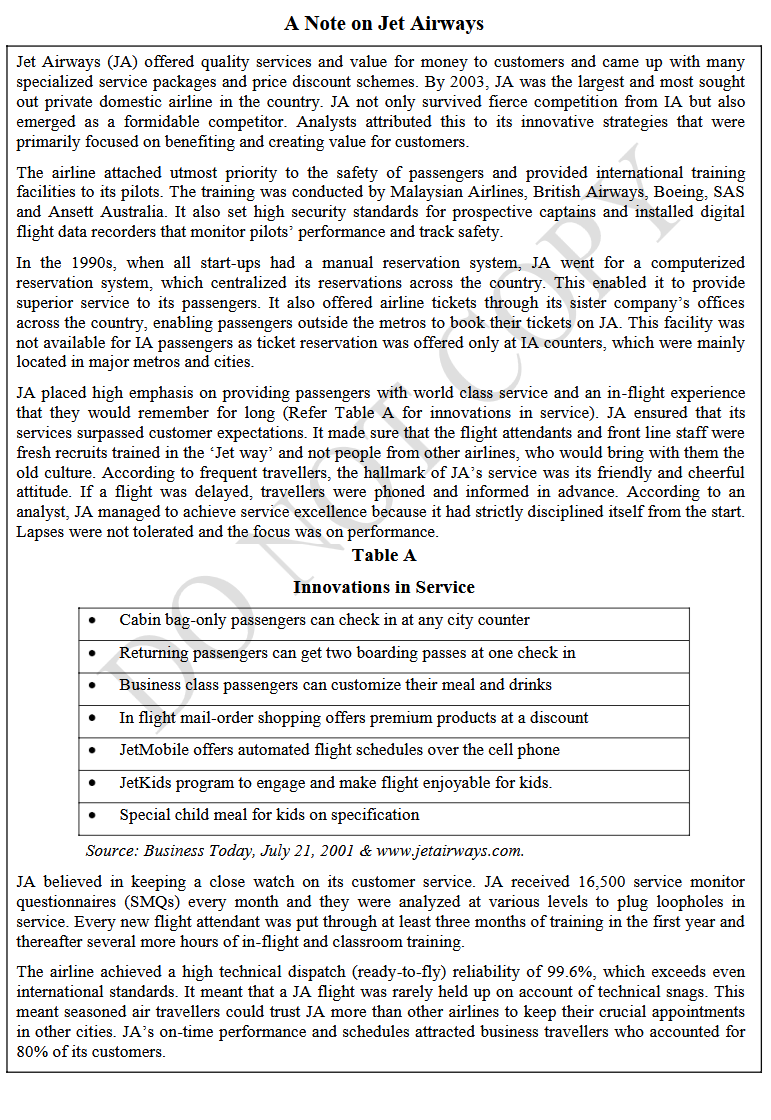 |
Exhibit II (Contd.)
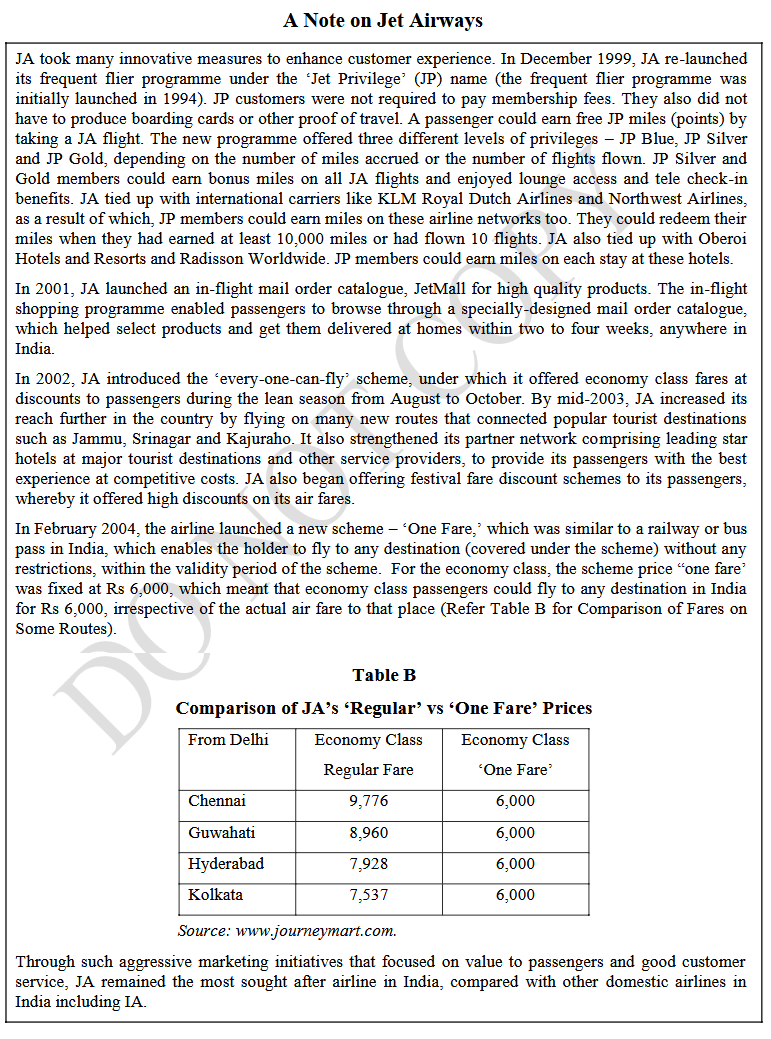 |
Exhibit III
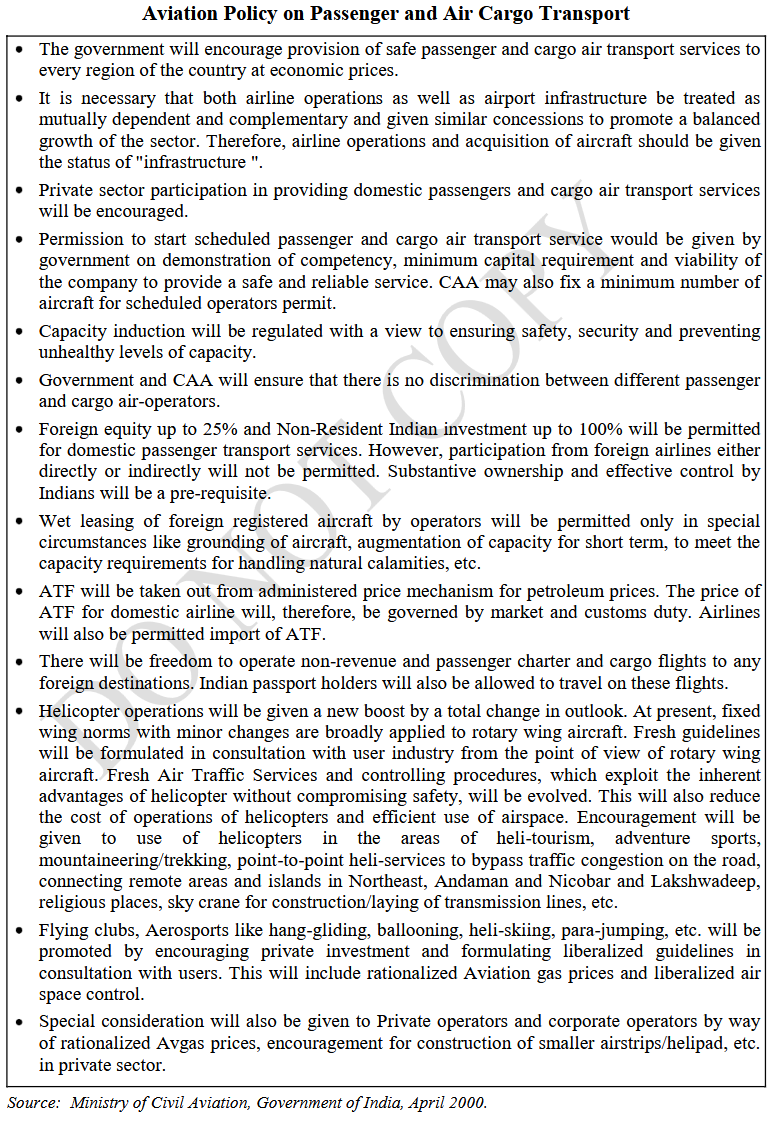 |
Exhibit IV
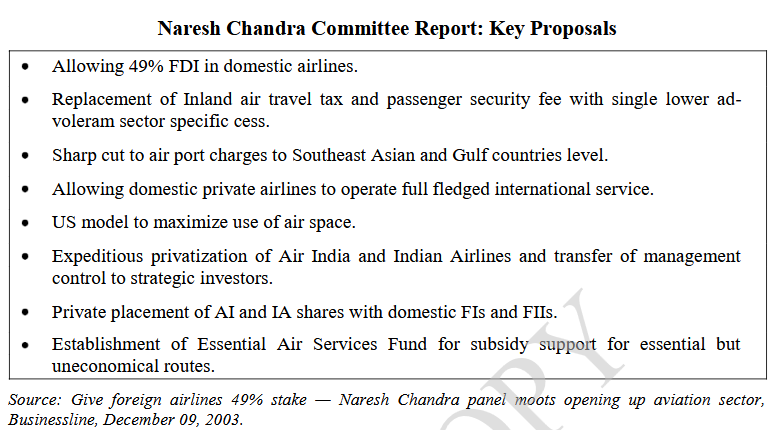 |
Exhibit V
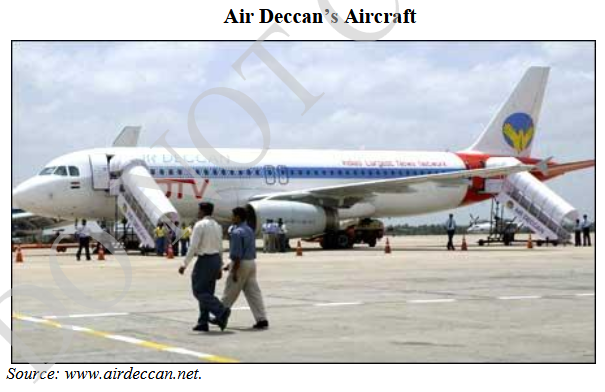 |
Exhibit VI
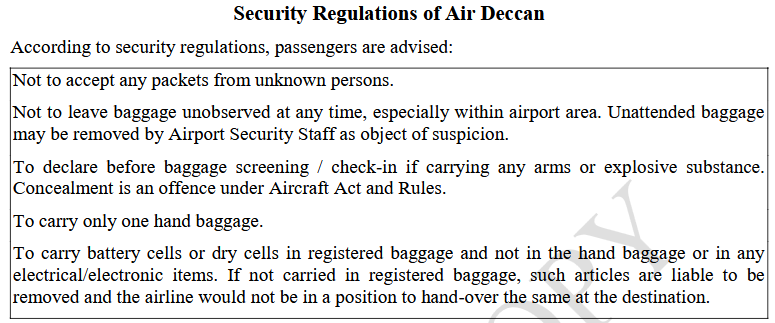 |
Keeping safety of passengers & equipment in mind, the following Security process has to be followed:
- All tickets will be checked at the time of entering the Terminal building; all checked baggage would be screened through an X-ray machine before check in. Random physical checks are also carried out for checked baggage in addition to x-ray screening.
- Passengers will be required to undergo personal frisking & their hand baggage x-rayed before entering the pre-boarding sterile area.
- Checked baggage reconciliation is carried out through an internal matching system, however passengers of connecting flights of Air Deccan must physically identify their checked baggage at transit point. Unidentified baggage will not be loaded into the aircraft.
- A secondary security check is also carried out near the step ladder/boarding gate before embarkation.
Dangerous Articles in Baggage
For safety reasons, dangerous articles, such as those listed below, must not be carried in passenger's baggage.
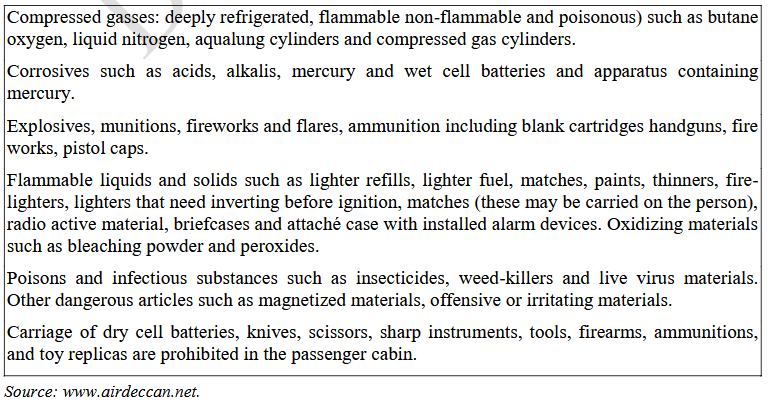 |
Exhibit VII
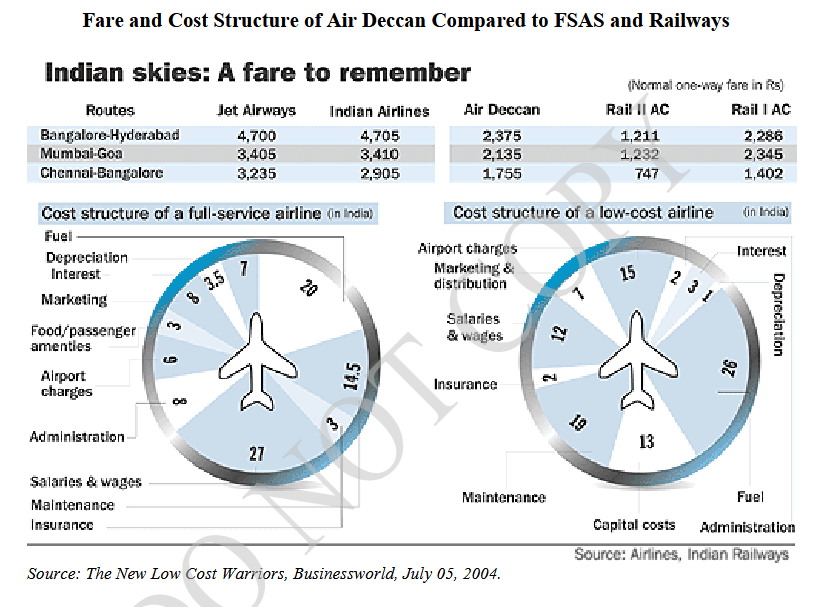 |
Exhibit VIII
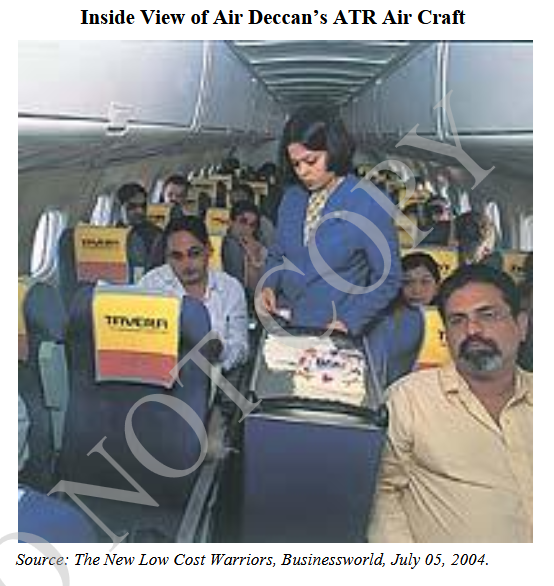 |
Exhibit IX
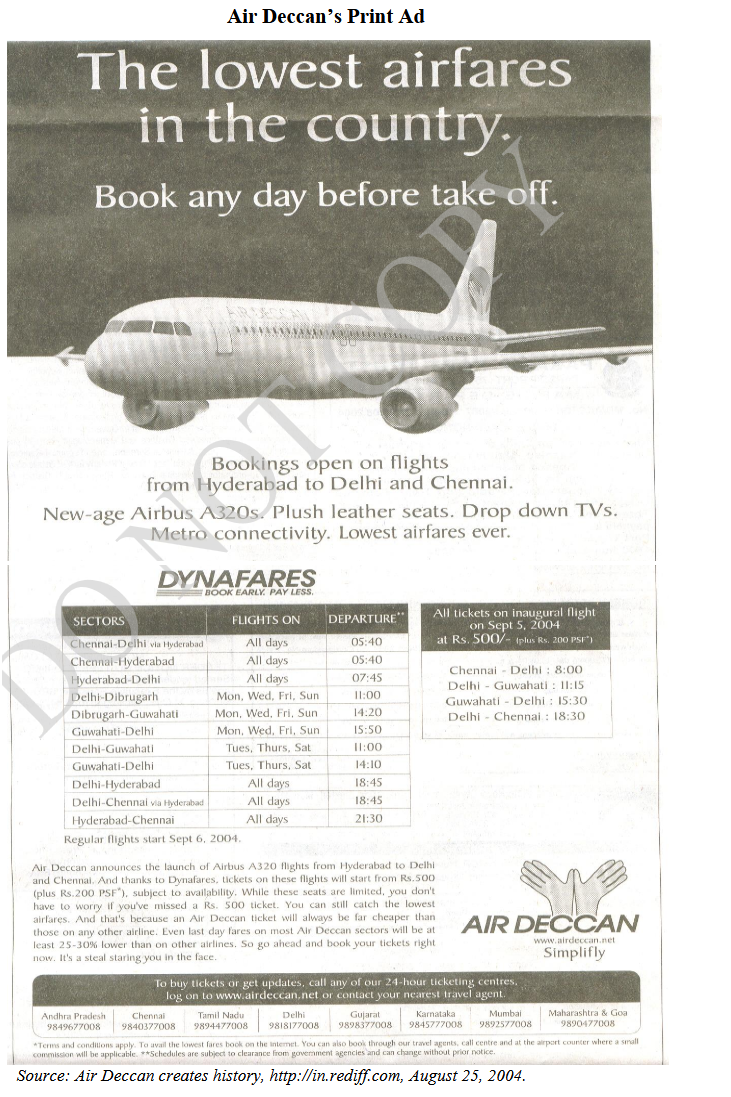 |
Exhibit X
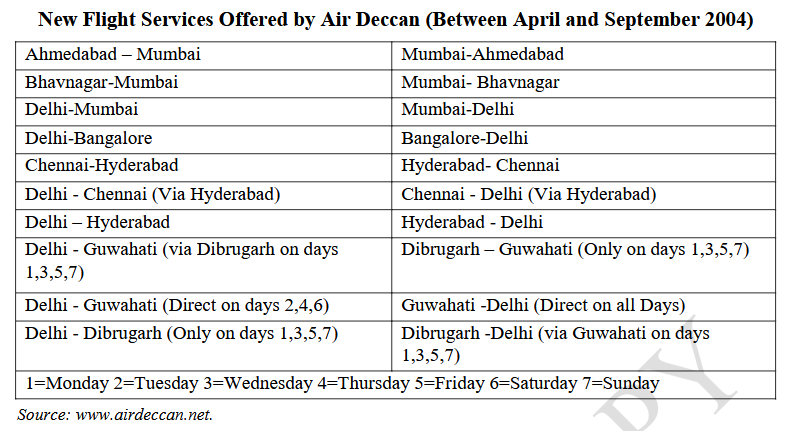 |
Exhibit XI
 |
Keywords
Air Deccan, Indian Civil Aviation Industry, Low Cost Airlines in India, Low Cost Business Model, Target Market, Positioning, Statutory Requirements of Scheduled Airline Services, Jet Airways, Full Services Airlines in India, Aviation Policy of India