
Life Insurance Marketing in India (B)
🌐 International Buyers — Pay via PayPal
Details
MKTG027
10
2002
YES
300
Life Insurance Corporation
Insurance
India
Market Analysis,Competitive Strategy
Abstract
The case is the second of a three-part series on the changes sweeping the Indian insurance industry (in particular, the marketing of insurance products) after the sector was opened for private players in 2000. The case examines the distribution strategies, specifically the bancassurance channel adopted by the new, private players. A brief history of the Indian insurance industry before 2000 is provided, highlighting the absence of a variety of distribution channels and the important role played by individual agents in distributing insurance products in India. The case provides a detailed account of the kind of distribution channels available in the insurance market and the new methods of distribution being adopted by various players. The case also discusses the changes being made by LIC to remain competitive, and examines the implications of the industry-wide changes in distribution practices on the insurance business.
Learning Objectives
The case is structured to achieve the following Learning Objectives:
- LIC’s stranglehold on the life insurance market, insurance distribution channels.
Contents
“The key task is to grow the distribution network and tap the huge potential in an underinsured, under serviced market.”
- Saugata Gupta, Chief (Marketing), ICICI Prudential Life Insurance, in 2001.
In early 2002, India‘s state owned insurer, Life Insurance Corporation (LIC), announced tie-ups with Corporation Bank, Oriental Bank of Commerce, Bank of Punjab and Nedungadi Bank for sale of its products through their branches. The aim of the tie-ups was to diversify LIC‘s distribution channels and increase product penetration. Industry observers were not surprised by this move. They felt that LIC had no option but to explore new channels of distribution to maintain its position as the market leader.
The liberalization of the Indian insurance industry in 2000 led to the entry of private insurance companies with MNC as their partners. Reaching anywhere near LIC‘s vast network, built over decades, was going to be extremely tough for the new players. Consequently, private insurers decided to rely on aggressive advertising and promotional measures and use hitherto untried distribution channels.
Private insurers began exploring the various distribution channels available instead of concentrating on individual agents, a channel LIC had been using for decades. To minimize cost, these companies tied up with established financial services companies and used their distribution network instead of setting up their own network.
According to insurance industry observers, distribution was expected to emerge as one of the key factors for the success of private insurers in India. They also felt that insurance intermediaries and new distribution channels would become the strongest drivers of growth for the insurance sector and that multi-channel distribution would become the norm. With even LIC adapting these new channels of distribution, the distribution of insurance products/services seemed all set to undergo a radical overhaul.
The life insurance industry in India dates back to 1818, when the Oriental Life Insurance Company set up office in Kolkata. In 1823, the Bombay Life Assurance Company started operations in Mumbai, India. The 'Indian Life Assurance Companies Act‘ was passed in 1912; this was followed by the Indian Insurance Companies Act, 1928. These acts allowed the government to collect data regarding life and non-life businesses conducted by both Indian and foreign insurance companies. Later, the 1928 act was amended and a new act, the 'Insurance Act‘ was passed in 1938.
By the mid-1950s, 154 Indian insurers, 16 foreign insurers and 75 provident societies were operating in the country. The life insurance business was concentrated in urban areas and was confined to the higher strata of society. In 1956, the management of these companies was taken over by the Government of India. LIC was formed in September 1956 through the LIC Act 1956, with a capital of Rs 50 million. One of the main objectives of forming LIC was to make insurance cover available to a large number of people, particularly to the lower segments of society. In 1972, the government took over management control of 106 private general insurance companies and formed the General Insurance Corporation (GIC). Over the years, LIC expanded its network all over the country and became one of the largest corporations in India. LIC had seven zonal offices, 100 divisional offices, 2,048 branch offices and army of agents totaling 6,28,031.
Growth in Indian insurance industry was minimal in the 1960s and 1970s because of low savings and the low level of literacy. In addition, the insurance industry lacked sufficient funding and infrastructure. However, changes in the economy in the 1980s, such as growth in the rate of industrialization, improvement in infrastructure, the capital markets, increase in the savings rate and substantial capital formation resulted in tremendous growth in the life insurance industry. Over the years, LIC launched several group insurance and social security schemes to enhance its reach in the rural areas.
In the early 1990s, the government felt it necessary to reform the industry, provide better coverage to the citizens and to increase the flow of long-term financial resources to finance the growth of infrastructure. In 1993, the Indian government set up the Malhotra Committee to suggest reforms in the industry. The committee, which submitted its report in 1994, recommended opening of the insurance sector to private players, improving service standards, and extending insurance cover to larger sections of the population.
Various labor unions and political parties in the country opposed the committee‘s suggestions. They felt that the entry of private players would lead to job cuts by the nationalized players to make them more competitive. There were a host of other arguments against these reforms. As a result, the government decided to restrict foreign stake in insurance companies to only 26%, which was well below the 51% required by the Insurance Bill for controlling the management of the company.
Though one of LIC‘s basic objectives was to 'provide insurance cover to all Indians,‘ insurance penetration in India remained very low. According to reports, only 65 million people were covered by insurance. R N Jha, LIC‘s former Executive Director, commented in his book, Insurance in India, ?Insurance coverage has been extended only to about 25% of the insurable population in 40 years?. In other words, the insurance market in India was largely untapped.
In developed countries, per capita insurance premium1 was much higher than in India. In 1999, per capita insurance premium was only $8 in India while it was $4,800 in Japan, $1000 in Republic of Korea, $887 in Singapore, $823 in Hong Kong and $144 in Malaysia. In the world market, in terms of gross insurance premium, India‘s share was only 0.3%, though it had the second highest population in the world. In the same year (1999), Japan‘s share was 31%, the European Union‘s 25%, South Africa‘s 2.3% and Canada‘s – 1.7%. And in 2001, while the ratio of insurance premium to the Gross Domestic Product (GDP)2 was 9% in UK and Japan, and 5% in the US, it was only 1.9% in India.
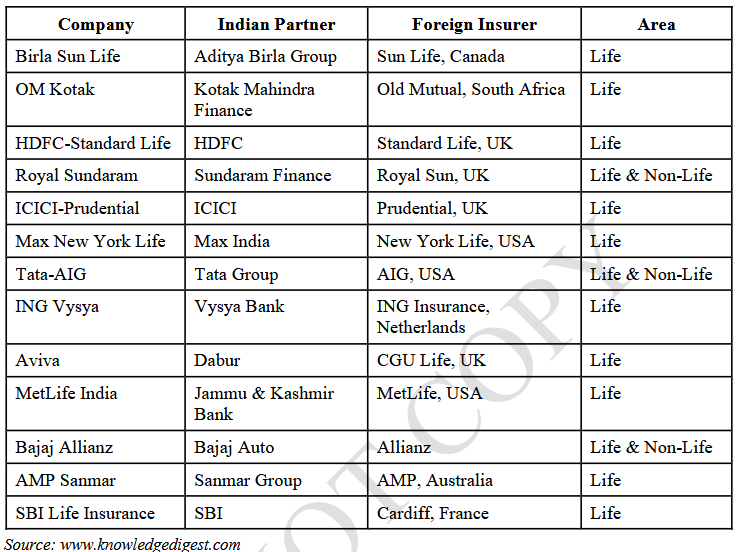
Attracted by the huge, untapped insurance market in India, many private players entered the market after the Insurance Bill was passed in late 2000. A majority of these were collaborations between an Indian company and a leading MNC insurance/financial services company (Refer Table I).
Table I
Private Players in the Indian Insurance Market
 |
By 2002, with 0.8 million agents all over the country, LIC had an enviable reach. However, the fact remained that more than 75% of the Indian insurable population was untapped. According to industry observers, one of the main reasons for the low insurance penetration was the poor distribution and marketing strategies adopted by LIC. Prior to liberalization, due to its monopoly status, LIC seemed to have had no strategically devised distribution strategies in place. It depended entirely on individual agents, which it had trained over the years to distribute its products. LIC made no efforts to use other distribution channels (Refer Exhibit I for various distribution channels for selling life insurance).
LIC‘s agents were not well qualified for their work. Prior to liberalization of the Indian insurance industry, no minimum qualification was laid down for people who wanted to become insurance agents. Agents generally acted like brokers; they cared more for their commissions than the needs of the customer. As a result, they did not make the effort to educate customers about the insurance products being offered. To distribute insurance products, LIC employed a large number of marketing people as 'Development Officers‘. These officers employed and trained a number of agents. Development Officers received bonuses from the business generated by their agents, in addition to their salary.
Consequently, LIC ended up paying bonuses and commissions twice for every new policy and subsequent renewal of premiums – to both agents and Development Officers. It was reported that after only a few years of recruitment of agents, Development Officers earned huge amounts as commissions. Despite this, the attrition rate among the agents was very high, largely because LIC selected the wrong kind of people in the first place. LIC‘s bid to implement strict incentive schemes and 'career agent‘ type of distribution failed due to the powerful Union of Development Officers.
However, with the entry of new players, the insurance market changed dramatically. Analysts commented that the private insurers seemed all set to make the industry market-driven, wherein technical expertise and service excellence would be the key success factors. The private companies, to make their presence felt and expand their reach, experimented with new distribution channels.
Post-liberalization, a fierce battle commenced in the Indian insurance industry for garnering market share. New insurance companies used all available channels of distribution, right from individual agents and corporate agents to bancassurance. Bancassurance soon emerged as one of the most lucrative insurance distribution channels. According to analysts, it not only helped insurance companies increase market penetration and premium turnover, it also helped banks increase their Return on Assets (ROA – annual earnings divided by total assets). This was because, even with a constant asset base, bancassurance contributed to enhanced ROA through fee income. (Refer Table III for various bancassurance agreements).
Table II
Bancassurance Arrangements of the Indian Insurance Companies
| Insurance Company | Bancassurance Partner |
| Allianz Bajaj | Standard Chartered Bank |
| Birla Sun Life | Citibank |
| Dabur – CGU | Canara Bank/ Lakshmi Vilas Bank, ABN Amro Bank & American Express Bank |
| HDFC-Standard Life | Union Bank/ Indian Bank |
| ICICI Prudential Life | ICICI Bank |
| ING Vysya Life | Vysya Bank |
| LIC | Corporation Bank, Oriental Bank of Commerce, Indian Overseas Bank |
| Met Life | J & K Bank |
| SBI-Cardiff Life Insurance | SBI |
| Tata-AIG Life Insurance | Citibank |
Source: www.watsonwyatt.com
Allianz Bajaj Life Insurance (Allianz Bajaj) planned to build a multi-channel distribution network, which included agents, corporate agents and strategic alliances with banks, Bajaj Auto network and other direct marketing initiatives. In late 2001, it signed a Memorandum of Understanding (MOU) with Standard Chartered Bank for an exclusive bancassurance distribution agreement. According to reports, Standard Chartered was to act as the corporate agent for the company, and the partnership was expected to leverage the bank‘s 60 branches across the country. Standard Chartered Finance (a subsidiary of Standard Chartered Bank) was also expected to market Allianz Bajaj‘s products.
Companies such as HDFC Standard Life, ICICI Prudential Life, and SBI Life insurance planned to leverage the branch network of their parent companies, HDFC, ICICI Bank and SBI respectively, for distributing their products. Reaching out to the bank‘s existing customers would be very easy for the insurance companies as the banks already had a well-established relationship with their customers. Since SBI had a network of over 9,000 branches, SBI stood to gain a lot by utilizing the bancassurance channel. It was reported that by the end of 2001, 21 branches of SBI were distributing SBI-Cardiff‘s group policies.
Many analysts believed that bancassurance would play a very important role in India because banks were familiar with the target customers‘ needs, had a strong service delivery mechanism, good quality administration, complete integration of insurance and bank products and services, qualified personnel and an organized tracking system for reporting on agents‘ time and the results of bank referrals.
However, it was also pointed out that the partnership between insurers and banks could run into problems. The most common problems that partners could face were inefficient manpower management, lack of sales culture within the bank, lack of branch personnel‘s involvement, insufficient product promotions, failure in integrating marketing plans of both bank and insurance company, limited database expertise of the bank and inadequate incentives to the bank personnel involved in sales of insurance products.
Despite the growing thrust on bancassurance, most of the players believed that individual agents would continue to play a major role in the Indian insurance industry. According to Anuroop Singh, CEO, Max New York Life, the new distribution channels would not be able to completely replace individual agents. He said, ?Over 90% of the life insurance schemes the world over are sold through individual agents. Agents will be the primary channel of distribution in India and so we have invested substantially in training our life insurance agent advisers here.'
Max New York worked towards making the quality of its agents its main differentiating factor. The company adopted the career agent system instead of LIC‘s general agent system. Max New York paid attention to the agent selection process so as to recruit the best talent available. The selection process comprised four stages – screening, psychometric tests, career seminars and final interview. Agents were trained in the various products the company offered and the insurance needs of the customers so that they were in a position to offer them sound advise. The training covered 152-hours, instead of the mandatory 100 hours stipulated by IRDA.
The program involved modules on understanding the consumer psyche and the financial market, and developing selling skills and the right attitude. Commenting on the need for training agents, Mr. Debashis Sarkar, senior vice president, marketing, Max New York, said, ?Internal employees are all opinion shapers and indirect brand-builders and brand promise needs to be replicated down the chain at every customer touch point.‘‘ The company also made training an ongoing process, and ensured that the training program addressed the needs of agents through development of skills and knowledge through a program spreading over 500 hours over two years.
HDFC Standard Life decided to rely on individual consultants and corporate agents for distributing its products. According to company sources, individual consultants were expected to play a key role in the sales process. The company therefore invested 20 man-months in developing training programs for consultants. The company also trained its consultants through institutions approved by IRDA. In addition, HDFC Standard Life tied up with corporate agents all over country. It had already tied up with HDFC and some other banks to distribute its products. To increase its coverage in rural areas, HDFC Standard Life held talks with NGOs that were involved with HDFC‘s housing schemes in rural areas.
Birla Sun Life announced the appointment of Village Extension Workers (VEWs) who would help create awareness about insurance in villages. Generally, these VEWs were from social improvement projects promoted by the Aditya Birla Group of companies. Each VEW was put in charge of a cluster of 10-15 villages.
Many other major private insurers were laying emphasis on the recruitment and development of quality agents to enhance their brand image in the market and attract customers. LIC ran an advertisement campaign that featured one of its most successful agents to highlight its belief in the individual agent system.
Meanwhile, the Government of India opened up yet another avenue for distributing insurance products in August 2002: brokers (Refer Exhibit II). Foreign brokerage firms were also allowed, but only through a tie-up with an Indian partner and a 26% cap on equity. IRDA planned to finalize regulations by September 2002 and issue licenses to four categories of brokers - direct general insurance broker, direct life insurance broker, reinsurance broker, composite broker, and insurance consultant (Refer Exhibit III).
After the decision to allow brokerage firms was announced, many Indian and foreign firms expressed their interest in entering the Indian insurance market. HSBC Bank announced its intention to set up an insurance brokerage firm in India. The Tatas also planned to enter the insurance brokerage business, focusing on both corporate and retail clients (reportedly through a strategic partnership with the Hong Kong based Jardine Matheson group).
As marketing, distribution and technical superiority were expected to be the decisive factors for success in the Indian insurance sector in the future, the new players seemed to have a good chance. With the growing popularity of new distribution channels in the Indian insurance market, Private insurers hoped to effectively leverage the strengths of the new distribution channels. The above belief was strengthened by the emergence of another new channel – the Internet.
According to reports, in 2001, around 12% of the insurance products were sold through the Internet, and this figure was expected to grow as Internet penetration increased. Because of increasing competition in a crowded market, private insurers were trying to leverage every possible medium. According to analysts, in the not-too-distant future, even departmental stores, ATMs, Internet kiosks and supermarkets would be selling insurance.
1. Discuss the evolution of the Indian insurance industry over the decades. Why is the penetration of insurance products in India much lower than in other parts of the world? Analyze.
2. Examine the bancassurance agreements that were entered into by various insurance companies in India in the early 21st century. Why did bancassurance become popular as a distribution channel for insurance products? Discuss.
3. Examine the various channels of distribution in the insurance industry besides bancassurance, and discuss their distinguishing characteristics by comparing and contrasting them critically. Will the importance of individual agents as distributors of insurance products decrease overtime? Discuss.
Exhibit I
Distribution Channels in Life Insurance
|
The distribution system for life insurance products involves various intermediaries between the insurer and the insured. Following are the different distribution channels:
|
Source: IBS Center for Management Research
Exhibit II
Insurance Regulatory and Development Authority
(Insurance Brokers and Insurance Consultants) Regulations, 2002
|
Functions of direct general insurance broker and direct life insurance broker — The functions of a direct general insurance broker and direct life insurance broker shall be to:
Functions of reinsurance broker — The functions of a re-insurance broker shall be to —
Functions of composite broker — The functions of a composite broker shall be those mentioned in regulations 4 and 5. Functions of an insurance consultant — An insurance consultant, risk management consultant or any other nomenclature as may be approved by the Authority shall mean a person, other than an insurance broker and excluding an insurance surveyor and loss assessor, who for a consideration or otherwise offers insurance consultancy or related services to his clients and to whom a licence has been granted by the Authority. |
Source: www.irdaindia.org
Exhibit III
Categories of Brokers
|
Source: www.irdaindia.org
Keywords
Indian insurance, sector, private players, 2000, distribution strategies, bancassurance, channel, Indian insurance industry, distribution channels, individual agents, detailed accounts.
Related Case Studies
| Case Title | Details | Price | Add to Cart |
|---|---|---|---|
|
Case Title The Nirma StoryCase Code: MKTG008 |
Details | 200 | Add to Cart |
|
Case Title Xiaomi: Charging Ahead in China’s EV RaceCase Code: BSTR714 |
Details | 500 | Add to Cart |
|
Case Title Ulta Beauty under CEO Kecia Steelman: Unleashing Growth in a Slowdown?Case Code: BSTR713 |
Details | 500 | Add to Cart |
|
Case Title BYD VS. Tesla: The Electric Vehicle Race in ChinaCase Code: BSTR711 |
Details | 400 | Add to Cart |
|
Case Title Digital Transformation at Qatar AirwaysCase Code: ITSY151 |
Details | 500 | Add to Cart |